Why Sleep Habits Matter More Than Willpower
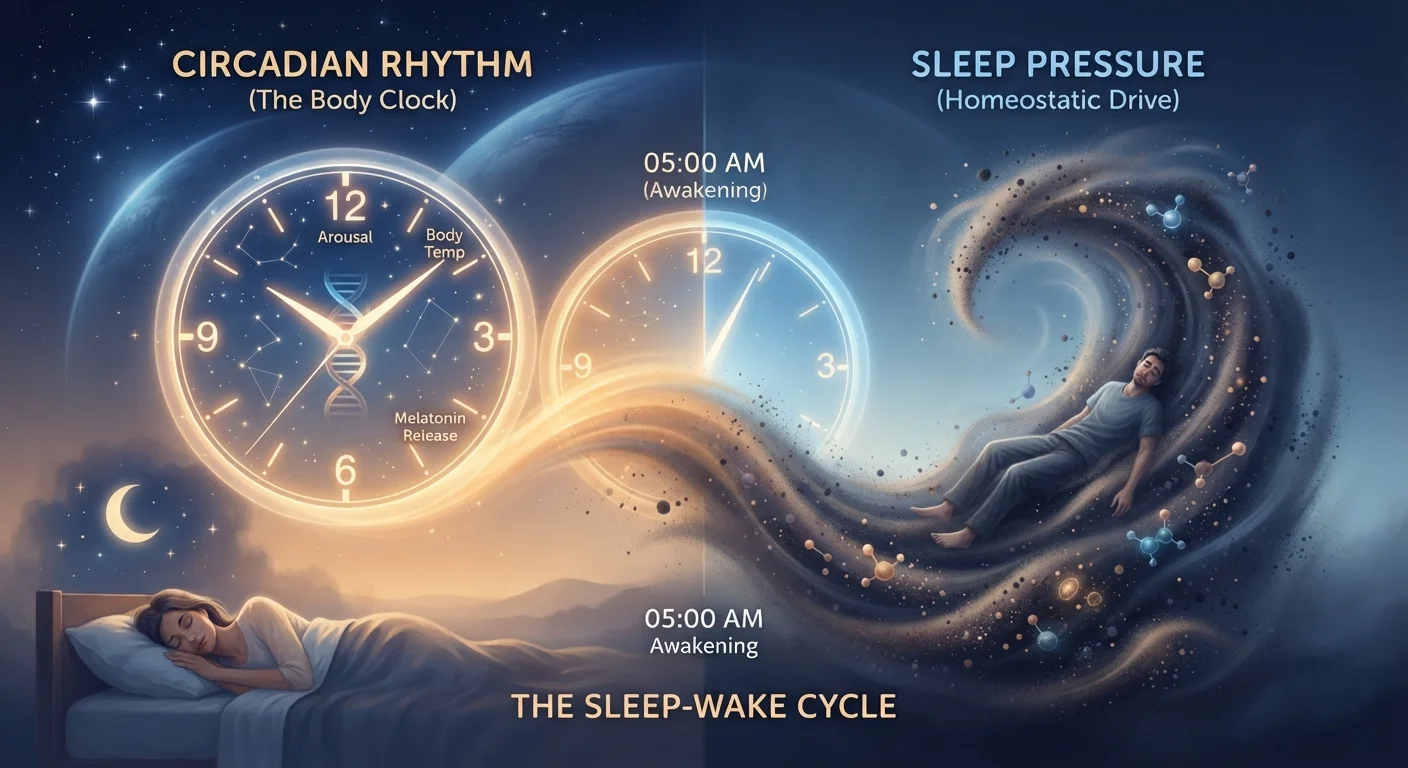
Sleep is not a reward for productivity — it is a biological necessity governed by two interlocking systems: the circadian clock (a roughly 24-hour internal timer synchronized primarily by light) and homeostatic sleep pressure (the gradual accumulation of adenosine in the brain during waking hours). Neither system responds to motivation alone. Attempting to force better sleep through willpower, without adjusting the environmental and behavioral inputs these systems depend on, is likely to fail.
This is why habits outperform intentions. Consistent behavioral cues — a regular wake time, a predictable wind-down sequence, a dark and cool bedroom — train both systems simultaneously. Over time, these cues become automatic, reducing the cognitive effort required to fall and stay asleep. For a foundational overview of sleep science, see the Sleep Science hub.
The research case for prioritizing sleep is substantial. Insufficient sleep is associated with impaired immune function, disrupted glucose regulation, reduced emotional resilience, and cognitive deficits that accumulate even when subjective sleepiness fades. For readers who have historically treated sleep as optional, this foundational guide covers the core science.
Understanding Your Personal Sleep Needs
The National Sleep Foundation and American Academy of Sleep Medicine both recommend 7–9 hours of nightly sleep for most adults, with individual variation influenced by genetics, age, health status, and activity level. There is no single correct number — but the idea that some people reliably thrive on five or six hours is not supported by controlled laboratory research for the vast majority of people.
1 in 3
U.S. adults not getting enough sleep
According to CDC surveillance data, approximately one-third of American adults regularly sleep fewer than the recommended 7 hours per night.
7–9 hrs
Recommended nightly sleep for adults
The American Academy of Sleep Medicine and Sleep Research Society jointly endorse this range for adults aged 18–60 to promote optimal health.
~5–7 hrs
Caffeine half-life in healthy adults
Research in pharmacokinetics shows caffeine's half-life means a midday cup can still measurably affect sleep architecture at bedtime.
A practical way to assess your needs: during a period without an alarm (such as a vacation), track how many hours you naturally sleep until you feel fully rested. After paying off accumulated sleep debt over several nights, the stabilized nightly total is a reasonable approximation of your individual requirement. Tracking subjective energy, mood, and focus during the day provides additional signal.
This article provides general health information and is not a substitute for personalized medical advice. Consult a qualified healthcare professional if you have concerns about your sleep or health.
The Pillars of Sleep Hygiene
Sleep hygiene refers to the set of behavioral and environmental practices that support consistent, restorative sleep. The term is sometimes dismissed as overly simplistic, but when applied systematically, these practices address the core regulatory inputs of the circadian and homeostatic systems.
- Consistent timing: Waking at the same time every day — including weekends — is the most evidence-supported habit for circadian anchoring. It controls the homeostatic pressure cycle and keeps your internal clock calibrated.
- Morning light: Bright natural light in the first hour after waking suppresses residual melatonin and advances the circadian clock, making it easier to feel alert in the morning and sleepy at night.
- Caffeine management: Caffeine blocks adenosine receptors, delaying the buildup of sleep pressure. Its half-life in healthy adults is approximately 5–7 hours, meaning afternoon consumption can measurably reduce sleep quality even when you feel like you can fall asleep.
- Movement: Regular physical activity is associated with deeper slow-wave sleep, though vigorous exercise close to bedtime may delay sleep onset for some individuals.
Set your alarm for the same wake time every day before worrying about your bedtime. Anchoring the wake time first is the fastest way to stabilize your circadian rhythm.
Chronobiological research consistently shows that wake-time consistency is a stronger circadian anchor than bedtime consistency, because it directly controls homeostatic sleep pressure accumulation.
If you lie awake for more than 20 minutes, get up and do something calm in dim light until you feel sleepy again — never watch the clock from bed.
This is a core component of stimulus control therapy, a first-line behavioral treatment for insomnia, because it prevents the bed from becoming associated with wakefulness and frustration.
For a deeper look at how these habits layer into a daily structure, see Building a Daily Routine That Supports Long-Term Cognitive Health.
Redesigning Your Evening Routine
The 60–90 minutes before bed function as a physiological transition zone. Core body temperature naturally begins to drop, melatonin secretion rises, and the nervous system shifts from sympathetic (alert) to parasympathetic (restful) dominance. Evening behaviors either support or disrupt this transition.
Practices that support it: dim lighting after sunset, avoiding screens with high blue-light emission close to bedtime or using night-mode settings, setting a consistent "wind-down" cue (reading, light stretching, or a warm shower — the post-shower cooling accelerates the core temperature drop that promotes sleep onset), and avoiding large meals or alcohol within a few hours of bed.
Practices that quietly work against it are often less obvious. Intense work tasks, emotionally activating content, and even well-intentioned habits like vigorous late-night exercise can sustain sympathetic nervous system activation past the point where it is helpful. The article Evening Habits That Work Against a Restful Night details the most common culprits and the mechanisms behind them.
For a practical, layered approach to building this routine over time, Sleep Hygiene: Building a Nightly Routine That Actually Sticks is a useful companion resource.
Your Sleep Environment: Small Changes, Real Impact
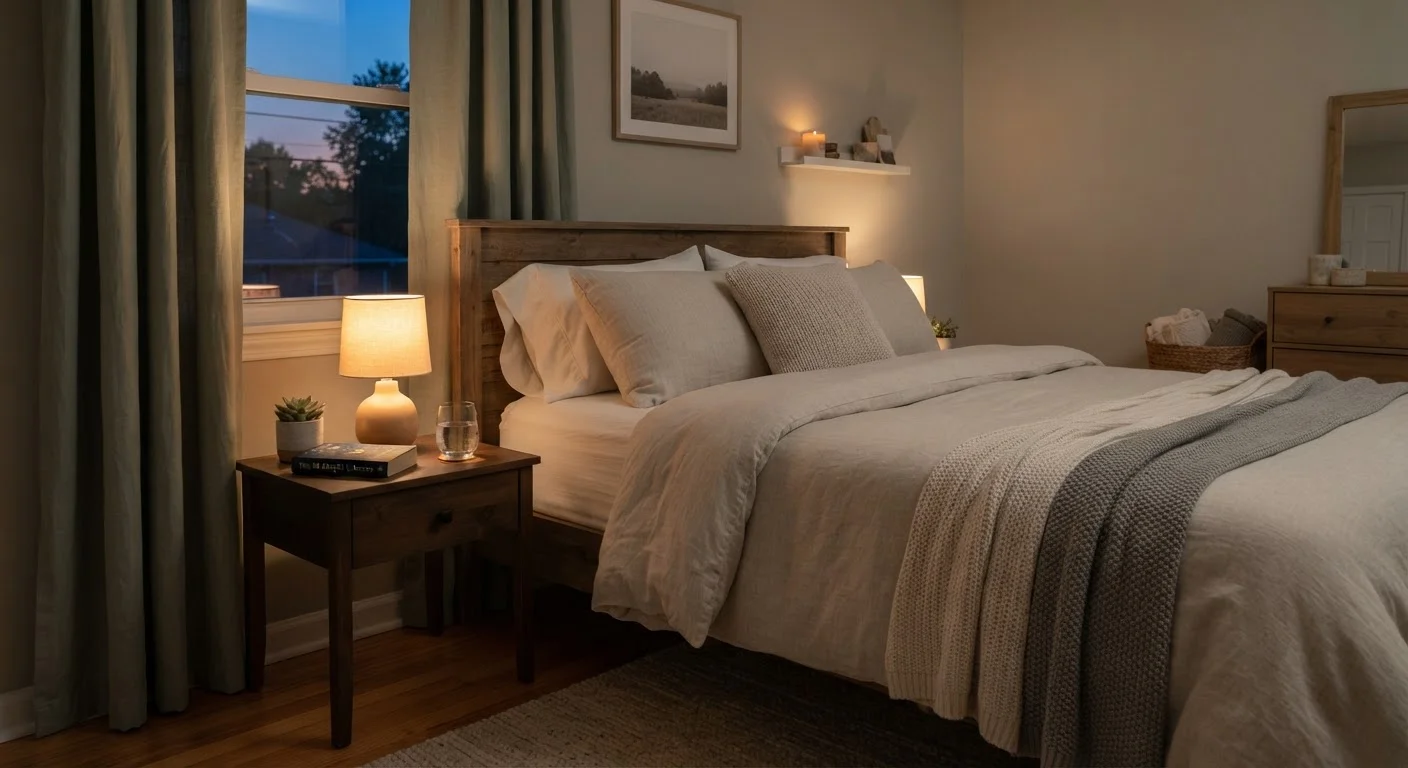
The bedroom environment sends constant signals to the brain about whether sleep is appropriate. Three variables have the strongest evidence base:
- Temperature
- A cool sleeping environment — generally considered to be in the range of 65–68°F (18–20°C) for most people — facilitates the core body temperature drop that is mechanistically linked to sleep onset and maintenance. Individual comfort varies, but erring toward cooler tends to be more sleep-supportive than warmer.
- Darkness
- Even low-level ambient light can suppress melatonin and fragment sleep, particularly in the second half of the night. Blackout curtains or a sleep mask meaningfully reduce this exposure.
- Noise
- Intermittent noise — not just loud noise — is a common source of sleep fragmentation. Continuous background sound (such as white or pink noise) can mask disruptive spikes. Earplugs are an equally effective low-tech solution.
Associating the bedroom exclusively with sleep and intimacy (stimulus control) is a behaviorally well-supported strategy. Working, eating, or watching television in bed can erode the conditioned association between the bedroom and sleepiness.
When Habits Aren't Enough: Recognizing Sleep Disorders
Consistent sleep hygiene resolves many common sleep difficulties, but it is not a universal solution. If you have maintained good sleep habits for several weeks and still experience persistent difficulty falling asleep, staying asleep, or feeling rested, a sleep disorder may be a contributing factor.
Common sleep disorders that warrant clinical evaluation include insomnia disorder, obstructive sleep apnea (characterized by repeated breathing interruptions during sleep, often associated with loud snoring and daytime fatigue), restless legs syndrome, and circadian rhythm disorders. These conditions have established, evidence-based treatments — including Cognitive Behavioral Therapy for Insomnia (CBT-I), which is considered a first-line treatment for chronic insomnia by major clinical guidelines — and they are best identified and managed in partnership with a qualified healthcare provider.
Self-diagnosis based on symptoms is unreliable. If sleep problems are affecting your daytime functioning, mood, or health, consult a physician or a sleep specialist rather than escalating sleep hygiene efforts indefinitely. The Sleep & Recovery hub offers further evidence-based resources to support your broader sleep health journey.
This article is for general informational and educational purposes only and does not constitute medical advice. Always consult a qualified healthcare professional for concerns about your health or sleep.