
Why Sleep Gets Deprioritized
For a lot of people, sleep is the first thing to go when life gets busy. Work deadlines, late-night scrolling, social commitments, and the general pace of modern American life can all quietly push bedtime later and later. There's also a cultural undercurrent that frames needing sleep as a weakness — something productive people power through.
If you've never really thought of sleep as something worth protecting, you're in good company. But that mindset has a cost. Sleep isn't just downtime; it's an active biological process your body depends on to function at its best. Starting to understand that is the first meaningful step.
Give Yourself Permission to Rest
If you've spent years treating sleep as optional, shifting your mindset is itself a meaningful first step. Recognizing that rest is productive — not a sign of laziness — makes it easier to protect time for it. Start small: even adding 30 minutes of sleep per night can begin to make a measurable difference in mood and alertness within a week.
What Sleep Actually Does for You
Sleep touches almost every system in the body. During a full night's rest, the brain consolidates memories and clears metabolic waste products that accumulate during waking hours. Stress hormones like cortisol are regulated, and emotional memories are processed — which is a key reason poor sleep is so closely linked to anxiety, irritability, and low mood.
Physically, immune cells are produced and deployed, tissues repair, and hormones that regulate appetite are rebalanced. When sleep is consistently short or disrupted, these processes are interrupted. Over time, the effects compound — affecting concentration, emotional resilience, and even how effectively the immune system responds to illness.
Explore the Sleep Habits hub to see practical routines built around protecting these biological processes.
The Basics of How Sleep Works
Sleep isn't a single uniform state. It moves through a series of stages — lighter sleep, deeper sleep, and REM (rapid eye movement) sleep — cycling roughly every 90 minutes throughout the night. Each stage serves a different purpose: deep sleep is especially important for physical restoration, while REM sleep plays a central role in emotional processing and memory consolidation.
Your body's internal clock, called the circadian rhythm, governs when you feel sleepy and when you feel alert. Light exposure — particularly morning sunlight — is one of the most powerful regulators of this clock. Disrupting your schedule with irregular bedtimes or late-night bright screens can throw this system off balance.
For a deeper look at how these mechanisms work, this complete introduction to sleep science walks through the biology in plain language. You can also explore sleep science for beginners for a friendly overview of stages and hormones.
Circadian rhythm
Your body's internal 24-hour clock that regulates when you feel alert and when you feel sleepy, primarily driven by light and darkness.
REM sleep
A stage of sleep characterized by rapid eye movements and vivid dreaming, believed to be critical for emotional processing and memory consolidation.
Sleep debt
The cumulative deficit that builds when you consistently get less sleep than your body needs, impairing function even when you feel adapted to it.
Melatonin
A hormone produced by the brain in response to darkness that signals to the body it is time to prepare for sleep.
Sleep hygiene
A set of behavioral and environmental practices that support consistent, good-quality sleep — such as regular sleep timing and limiting screens before bed.
Cortisol
A stress hormone that follows a daily rhythm — typically peaking in the morning to promote alertness and dropping at night. Poor sleep disrupts this cycle.
Simple Habits to Start Tonight
You don't need a complete lifestyle overhaul to improve your sleep. A few consistent changes can shift things meaningfully over days to weeks.
- Set a consistent wake time. Waking up at the same time every day — even on weekends — anchors your circadian rhythm more reliably than a fixed bedtime alone.
- Dim screens an hour before bed. The blue-wavelength light emitted by phones and monitors suppresses melatonin, the hormone that signals your body it's time to sleep.
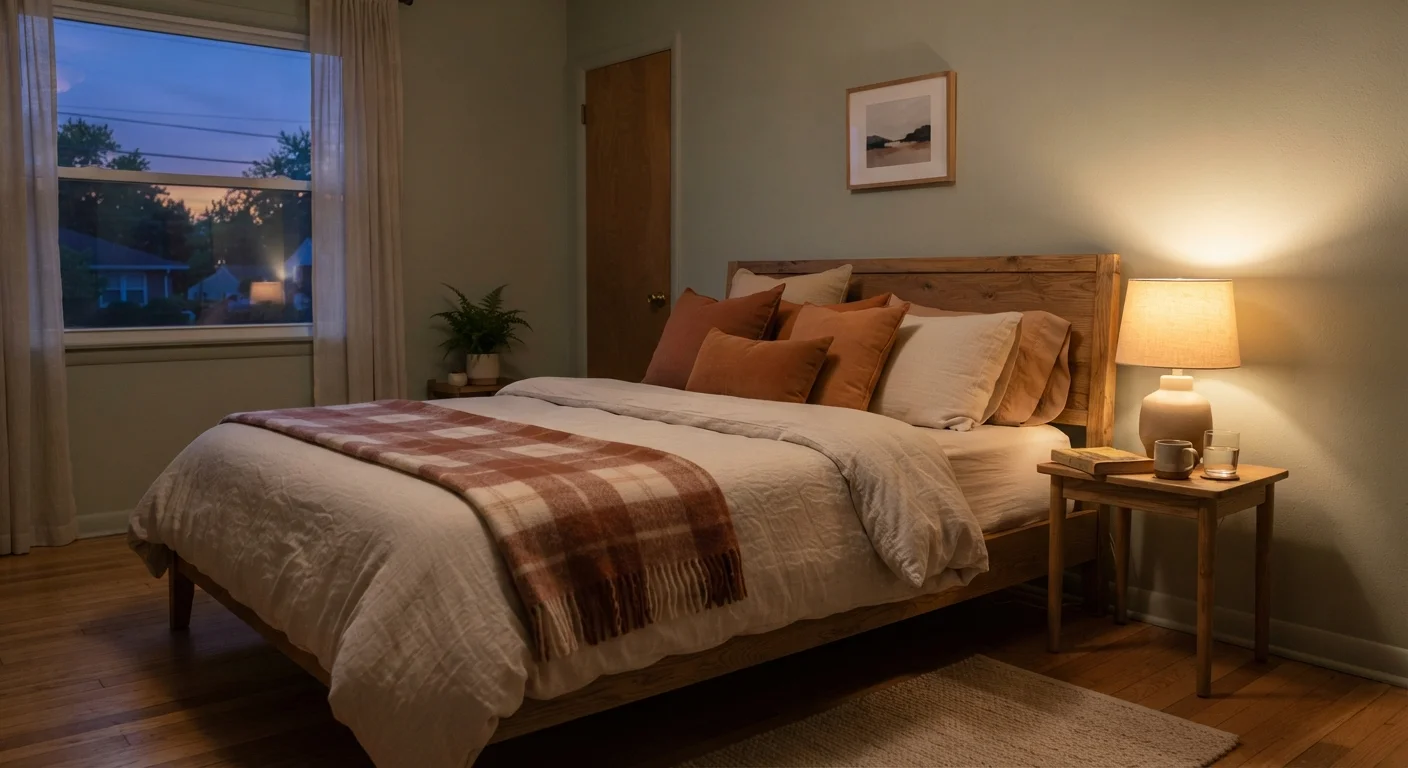
- Keep your bedroom cool and dark. A slightly cooler room temperature supports the natural drop in core body temperature that accompanies sleep onset.
- Avoid large meals and caffeine in the late afternoon. Caffeine's effects can linger for six or more hours, and heavy meals close to bedtime can interfere with comfort and digestion.
Be aware that some habits feel relaxing but can quietly erode sleep quality. Evening habits that work against restful sleep is worth reading once you've got the basics in place.
When to Talk to a Professional
General sleep hygiene goes a long way, but it isn't the right tool for every situation. If you've been struggling with sleep for several weeks despite trying consistent habits — or if you experience symptoms like loud snoring, waking gasping, or an irresistible urge to move your legs at night — a healthcare provider can help determine whether an underlying sleep disorder is at play.
Conditions like insomnia disorder, sleep apnea, and restless leg syndrome are common, treatable, and often underdiagnosed. A professional evaluation may include a discussion of your sleep patterns or, in some cases, a formal sleep study. Understanding how sleep studies work can help you feel prepared if that conversation comes up.
Investing in your sleep is one of the most accessible things you can do for your mental and physical health — and it starts with simply deciding it matters.
This article is for general informational purposes only and is not a substitute for professional medical advice, diagnosis, or treatment. If you have concerns about your sleep or health, please consult a qualified healthcare provider.