What Sleep Actually Is
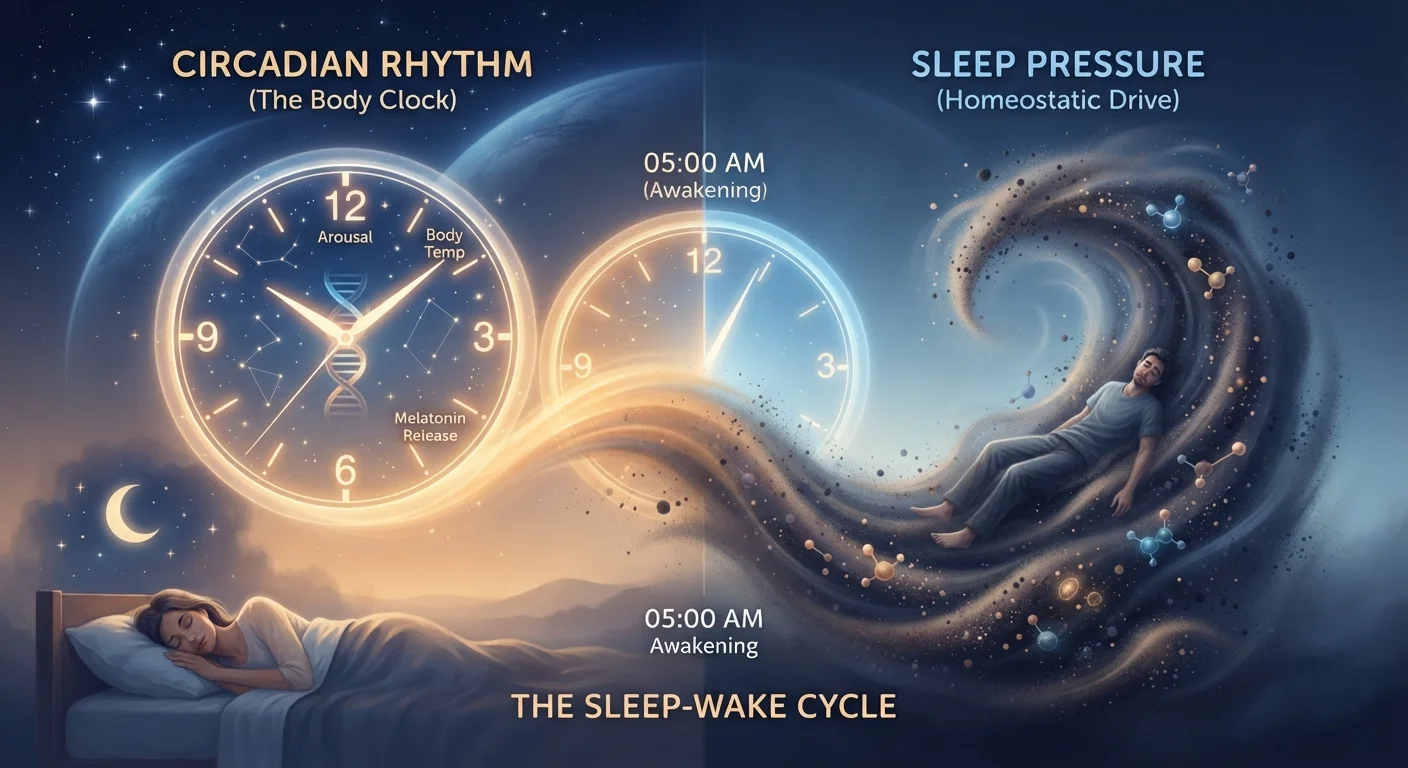
Sleep is not simply the brain powering down. It is an active, highly organized biological state during which the body performs essential maintenance that waking life cannot replicate. Neuroscientists now understand sleep as a dynamic process governed by two interacting systems: the circadian rhythm (your internal 24-hour clock) and sleep pressure (the chemical buildup of a molecule called adenosine that makes you feel progressively sleepier the longer you stay awake).
When these two forces align — your clock says it is nighttime and adenosine has accumulated — the transition to sleep begins. The brain does not shut off; instead it shifts into a series of coordinated stages, each with distinct electrical patterns, physiological changes, and restoration functions. For a thorough grounding in the terminology you will encounter, the Sleep Science Glossary is a useful companion reference.
Circadian Rhythm
Your body's internal 24-hour biological clock that regulates sleep, wakefulness, hormone release, and many other functions based on light and darkness cues.
Adenosine
A chemical that gradually builds up in the brain the longer you are awake, creating increasing pressure to sleep. It is cleared during sleep, which is why you feel refreshed after a full night's rest.
NREM Sleep
Non-rapid eye movement sleep encompasses three stages of progressively deeper sleep, including slow-wave sleep where most physical restoration occurs.
REM Sleep
Rapid eye movement sleep is the stage marked by vivid dreaming and high brain activity. It plays a central role in memory consolidation and emotional regulation.
Sleep Spindles
Brief bursts of synchronized brain activity during Stage 2 NREM sleep, thought to play a role in memory processing and protecting sleep from external disturbances.
Glymphatic System
A brain-specific waste-clearance network that is most active during sleep and flushes out metabolic byproducts, including proteins implicated in neurodegenerative conditions.
Sleep Pressure
The biological drive to sleep that grows stronger the longer you stay awake, primarily driven by adenosine accumulation. It is one of two main forces regulating when you fall asleep.
Slow-Wave Sleep
The deepest stage of NREM sleep, characterized by slow delta brain waves. This is when growth hormone is released and the body performs its most intensive physical repair.
The Four Stages of Sleep
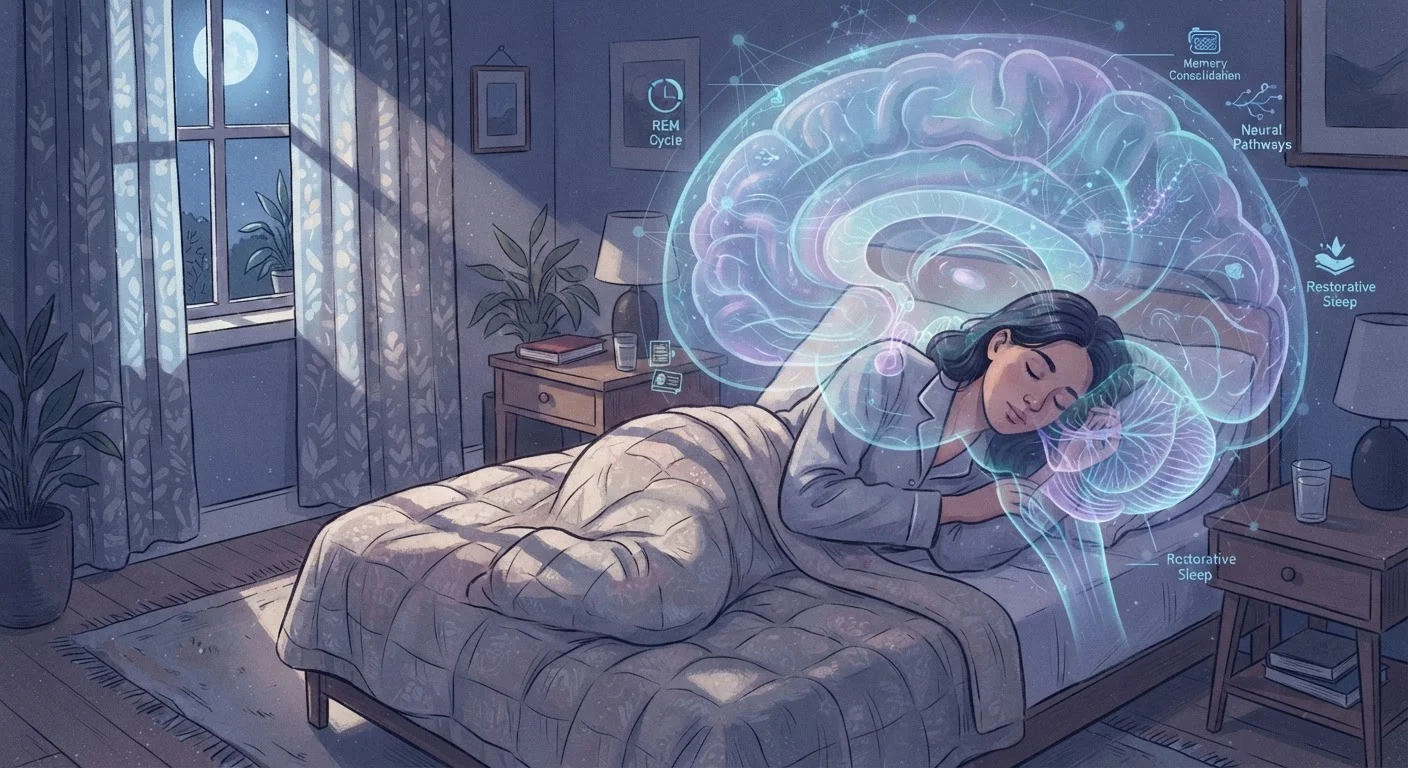
A single night of sleep is organized into repeating sleep cycles, each lasting approximately 90 minutes. Within each cycle, the brain moves through four stages classified by researchers into two broad categories: NREM (non-rapid eye movement) sleep and REM (rapid eye movement) sleep.
- Stage 1 (NREM 1): A light transition stage lasting a few minutes. Muscle activity slows and you can be easily woken. Brain waves shift from waking alpha rhythms to slower theta waves.
- Stage 2 (NREM 2): A deeper light sleep stage where body temperature drops, heart rate slows, and the brain produces bursts of activity called sleep spindles. This stage occupies roughly half of total sleep time in adults.
- Stage 3 (NREM 3 / Slow-Wave Sleep): The deepest, most restorative stage. Brain waves slow dramatically into delta waves. This is when the body concentrates physical repair — tissue regeneration, immune reinforcement, and growth hormone release. It is very hard to wake someone from this stage.
- REM Sleep: The brain becomes highly active, generating vivid dreams. The body is temporarily paralyzed to prevent acting out dreams. REM is critical for memory consolidation and emotional processing. REM periods lengthen across the night, so cutting sleep short disproportionately reduces REM.
Early cycles in the night contain more slow-wave sleep; later cycles contain more REM. Both are necessary, which is why sleep duration as well as quality matters. Explore the broader science at Sleep Science, our hub dedicated to the biology behind restorative sleep.
The Biology Behind Sleep: Hormones and Rhythms
Two hormones play starring roles in regulating when and how you sleep.
Melatonin is produced by the pineal gland in response to darkness. It does not cause sleep directly; rather, it signals to the body that nighttime has arrived, helping synchronize the circadian clock. Light — especially blue-wavelength light from screens — suppresses melatonin production, which is one reason evening screen use can delay the onset of sleep.
Cortisol, often associated with stress, follows its own circadian rhythm: it peaks in the early morning to promote wakefulness and alertness, then gradually declines through the day. Chronically elevated evening cortisol — triggered by late-night stress or erratic schedules — can interfere with sleep initiation and reduce slow-wave sleep duration.
Adenosine, a byproduct of cellular energy use, accumulates in the brain throughout waking hours and creates increasing sleep pressure. Caffeine works by blocking adenosine receptors — not by generating energy, but by temporarily masking the sleep signal. When caffeine clears, adenosine binds rapidly, which can cause the familiar post-caffeine crash.
Time Your Caffeine Strategically
Because caffeine blocks adenosine receptors rather than eliminating adenosine, sleep pressure simply resumes — often all at once — when the caffeine metabolizes. Cutting off caffeine by early-to-mid afternoon gives your adenosine signal time to recover naturally before bedtime, making it easier to fall and stay asleep.
Why Sleep Matters for Recovery
The restoration that occurs during sleep is not metaphorical — it is measurable. During slow-wave sleep, the pituitary gland releases growth hormone, which drives muscle protein synthesis and cellular repair. The immune system releases cytokines that help fight infection and inflammation. The brain's glymphatic system — a waste-clearance network — flushes out metabolic byproducts, including proteins associated with neurodegenerative disease risk.
Chronic sleep insufficiency — generally defined in research as consistently sleeping fewer than seven hours per night — is associated with increased risk of cardiovascular disease, type 2 diabetes, obesity, and impaired immune function. Cognitive performance, reaction time, emotional regulation, and decision-making all degrade measurably with sleep restriction, often without the individual fully perceiving their own impairment.
Understanding these mechanisms helps reframe sleep not as a passive luxury but as an active health behavior. If you are new to thinking about sleep this way, Understanding Sleep for People Who Have Never Prioritized It offers a practical foundation for building that mindset.
This article is for general informational purposes only and does not constitute medical advice. If you are experiencing persistent sleep difficulties or symptoms, please consult a qualified healthcare professional.
Practical Habits to Improve Your Sleep
Sleep science converges on a handful of behavioral strategies with strong research support. None require expensive equipment or radical lifestyle changes.
- Anchor your wake time. Waking at the same time every day — including weekends — stabilizes the circadian clock more effectively than trying to control bedtime alone.
- Manage light exposure. Seek bright, natural light in the morning to reinforce your clock's daytime signal. Dim indoor lighting in the two hours before bed to allow melatonin to rise naturally.
- Keep your bedroom cool. Core body temperature must drop slightly to initiate and maintain sleep. A room temperature in the mid-60s Fahrenheit supports this process for most adults.
- Limit caffeine after early afternoon. Caffeine has a half-life of roughly five to six hours in most adults, meaning a 3 p.m. coffee still has measurable effects at 9 p.m.
- Wind down deliberately. A 20–30 minute buffer of low-stimulation activity before bed helps the nervous system transition out of alertness. Reading, light stretching, or quiet conversation are common approaches.
These strategies form the foundation of what clinicians call sleep hygiene. For a broader look at the science and recovery context behind these habits, visit our Sleep & Recovery hub. And for a more detailed exploration of sleep biology from the ground up, see Sleep Science From the Ground Up.