Why Busy Days Undermine Eating Habits
When schedules fill up, food choices are often the first thing to slip. Decision fatigue, time pressure, and convenience-food accessibility can quietly erode eating patterns that feel manageable on calmer days. The result isn't moral failure — it's a systems problem. Without a few reliable anchors, even well-intentioned people default to whatever is easiest in the moment.
The habits outlined here aren't about restriction or following a strict plan. They're designed to reduce friction so that nourishing choices stay accessible even during your most demanding weeks. For a broader foundation, see our complete overview of balanced eating.
Core Habits That Hold Up Under Pressure
The following practices are grounded in established nutrition guidance and are specifically chosen for their staying power when time is short.
Stock a short list of versatile, nutrient-dense staples and replenish them weekly.
When your kitchen contains reliable building blocks — canned beans, eggs, whole-grain bread, frozen vegetables, nut butters — you can assemble a balanced meal in minutes without planning every detail. Empty pantries push decisions toward delivery or vending machines. Predictable stock removes that pressure.
Eat something with protein and fiber at your first meal of the day, whatever time that is.
Starting the day with protein and fiber — rather than only refined carbohydrates — tends to support steadier energy and reduce intense hunger later, which makes mid-afternoon choices easier. This isn't about timing rules; it's about setting a functional foundation for the hours ahead.
Keep portable, whole-food snacks visible and accessible during busy stretches.
When hunger hits between meals and no real food is nearby, the path of least resistance leads to ultra-processed options. Keeping accessible alternatives — nuts, fruit, hard-boiled eggs, cheese sticks — makes the nutritious choice the easy choice rather than a deliberate effort.
Build "template" meals you can repeat without thinking.
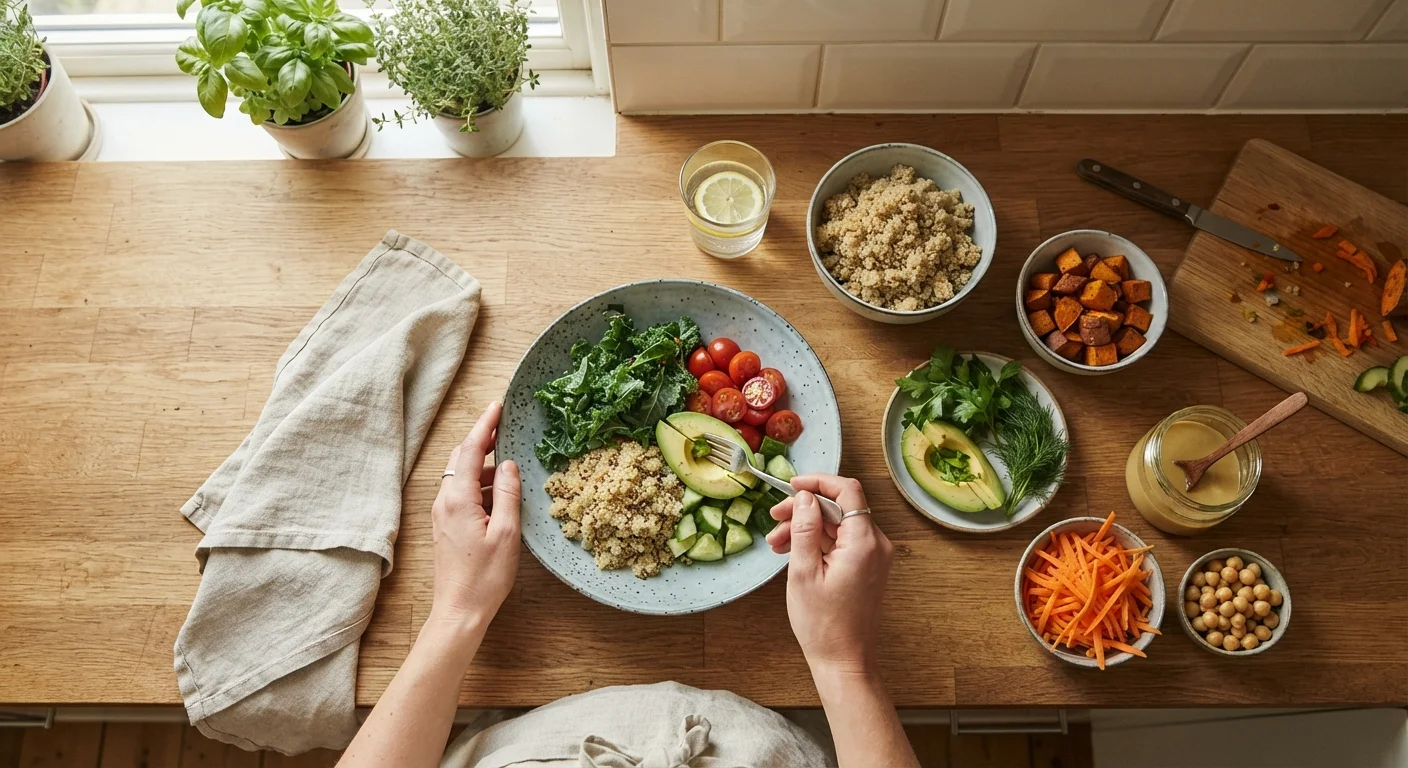
Decision fatigue is real. Rotating three to five familiar meal templates — grain + protein + vegetable, for example — eliminates daily re-invention. These templates flex with whatever you have available while still delivering nutritional variety across the week.
Treat water as a non-negotiable default beverage throughout the day.
Mild dehydration can present as fatigue or hunger, which adds unnecessary food-choice pressure during busy periods. Keeping water accessible and treating it as the automatic default — before reaching for something sweetened — supports both focus and appropriate hunger signaling.
Apply a flexible, mostly-nutritious approach rather than all-or-nothing thinking.
Rigid food rules tend to collapse under real-life pressure, and a single "off" meal can trigger a pattern of abandonment. Framing your eating as generally balanced — rather than perfectly clean — preserves momentum. A flexible food philosophy acknowledges that occasional convenience meals don't undermine overall patterns.
Pairing these habits with even minimal planning makes a noticeable difference. Light, flexible meal planning doesn't have to feel like a second job — even a ten-minute weekly review of what you have on hand can reduce the 6 p.m. scramble significantly.
Quick Wins You Can Act on Today
You don't need a perfect week to start eating better on busy days. The following actions each take less than fifteen minutes and can shift your default choices meaningfully. A weekly eating self-check can help you notice which habits are holding and where there's room to adjust.
This article is for general informational purposes only and is not a substitute for personalized advice from a qualified healthcare professional or registered dietitian.