Why Protein Needs Aren't One-Size-Fits-All
Protein is one of three core macronutrients — alongside carbohydrates and fats — and its roles in the body are wide-ranging. From building muscle and supporting immune defenses to producing hormones and enzymes, protein is involved in nearly every physiological process. But how much protein a person actually needs changes considerably over a lifetime.
The standard adult Recommended Dietary Allowance (RDA) of 0.8 grams per kilogram of body weight per day is often cited, but it's a baseline — a minimum for most sedentary healthy adults, not a universal prescription. Age, reproductive status, physical activity, and overall health all push that number up or down. Recognizing these shifts can help you make more informed choices at the dinner table.
0.8 g/kg
Baseline adult protein RDA per day
According to the National Academies of Sciences, Engineering, and Medicine Dietary Reference Intakes.
+25 g
Additional protein recommended during pregnancy
The National Academies recommend this increase above baseline adult needs throughout pregnancy.
1.0–1.2 g/kg
Protein range often suggested for older adults
Multiple nutrition researchers and clinical bodies suggest this range to help counter age-related muscle loss.
~1.5 g/kg
Estimated infant protein need in early months
Infants have the highest protein needs relative to body weight of any life stage, reflecting rapid tissue development.
Protein Needs During Childhood and Adolescence
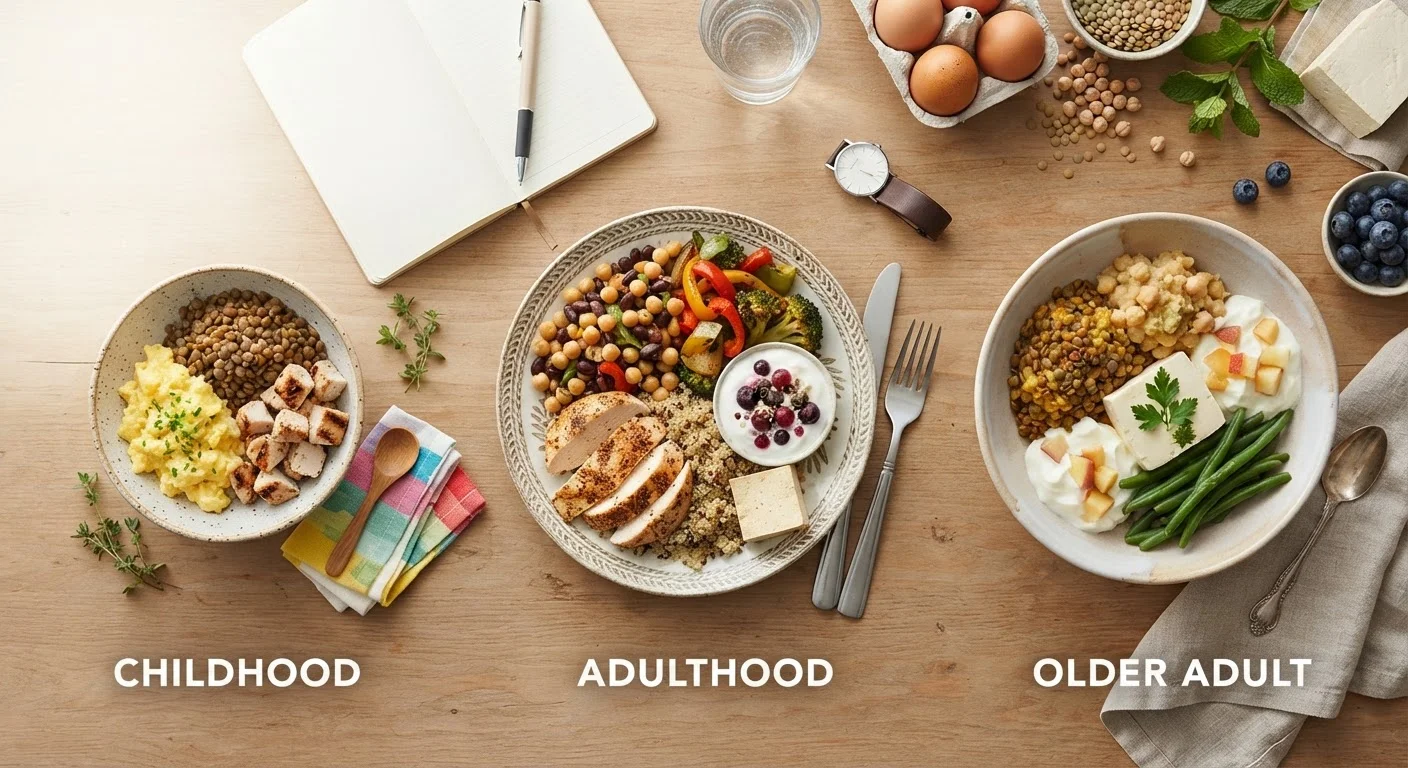
Growth is the defining feature of early life, and protein fuels it. Infants have among the highest protein needs relative to body weight of any life stage — roughly 1.5 g/kg/day during the first six months — because every tissue, organ, and system is forming rapidly. Breast milk and infant formula are specifically designed to deliver protein in appropriate proportions for this phase.
As children move through toddlerhood and school age, their protein requirements per kilogram decrease slightly but remain elevated compared to adults. Adolescents experience another surge in demand as puberty drives rapid increases in muscle mass, bone density, and organ development. Active teenagers — especially those participating in sports — may have protein needs that exceed the general RDA for their age group.
The good news is that most children and teens in the U.S. who eat varied diets tend to meet these needs without deliberate tracking. Practical sources include eggs, dairy, poultry, beans, and nut butters incorporated naturally into meals.
Protein Requirements in Healthy Adults
For most healthy, non-pregnant adults, the 0.8 g/kg/day RDA represents a reasonable starting point. A person weighing 150 pounds (about 68 kg) would target roughly 55 grams of protein per day under this guideline. For context, a 3-oz serving of chicken breast contains approximately 26 grams; a cup of cooked lentils provides about 18 grams.
However, physically active adults — particularly those engaged in resistance training or endurance sports — often benefit from higher intake. Research generally supports a range of 1.2–1.7 g/kg/day for individuals focused on building or maintaining muscle. Even outside of athletic pursuits, distributing protein across meals (rather than concentrating it in one sitting) appears to support better muscle protein synthesis throughout the day.
Understanding protein quality is also worth noting here: not all dietary protein delivers the same amino acid profile. Complete vs. incomplete proteins is a concept that matters especially for those relying heavily on plant-based sources.
Elevated Needs During Pregnancy and Lactation
Pregnancy represents one of the most significant nutritional transitions in adult life. The body must now support fetal tissue construction, placental development, and expanded maternal blood volume — all of which demand additional protein. The National Academies recommend an additional 25 grams of protein per day during pregnancy on top of baseline adult needs, bringing many pregnant individuals to a daily target of roughly 70–80 grams.
Lactation continues to place elevated demands on the body. Producing breast milk requires protein, and dietary guidelines generally recommend continued higher intake throughout the breastfeeding period. Individual needs vary, and those with specific dietary restrictions or health conditions during pregnancy should work closely with a healthcare provider or registered dietitian to ensure adequate intake.
Note: Nutritional guidance during pregnancy and lactation is a specialized area. Always consult a qualified healthcare professional for personalized recommendations during these life stages.
How Aging Changes the Protein Equation
After roughly age 50, the body's ability to synthesize muscle protein from dietary amino acids gradually becomes less efficient — a phenomenon sometimes called anabolic resistance. This, combined with reduced appetite, lower overall calorie intake, and decreased physical activity in some older adults, creates conditions that accelerate muscle loss (sarcopenia) over time.
Many nutrition researchers and clinical organizations now suggest that older adults aim for protein intake above the standard 0.8 g/kg/day RDA — with ranges of 1.0–1.2 g/kg/day or higher often cited in the literature, particularly for those who are physically active or managing chronic illness. Spreading protein across all meals of the day, rather than eating most of it at dinner, is a practical strategy supported by research on muscle protein synthesis patterns in older adults.
For a deeper look at what this means for muscle function specifically, see how protein supports muscle preservation with age. Body composition changes that accompany aging — including shifts in the ratio of muscle to fat — are also explored in body composition across the lifespan.
This article is for general informational purposes only and does not constitute medical or dietary advice. Speak with a qualified healthcare provider or registered dietitian for guidance tailored to your individual needs.