
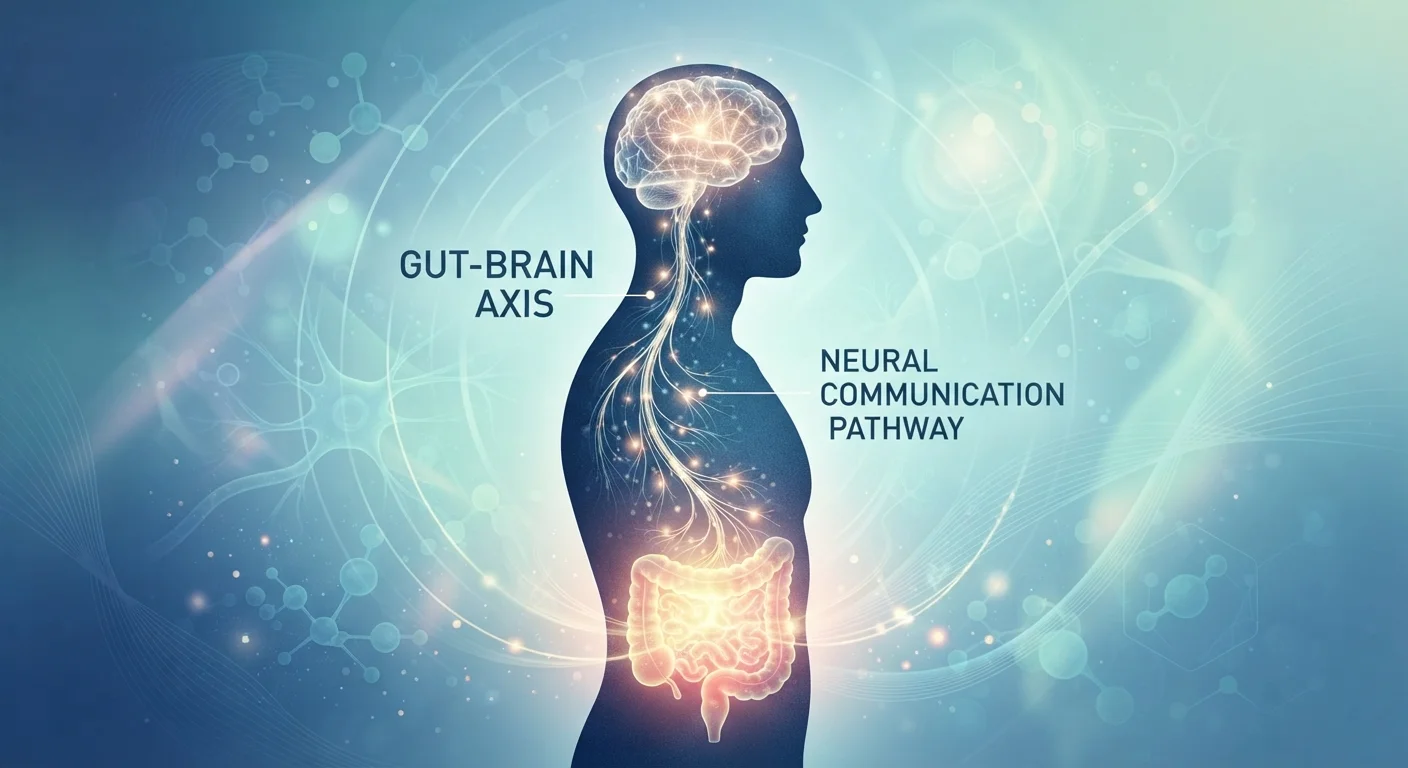
How Stress Signals Reach the Gut
When you encounter a stressor — whether a work deadline, an argument, or a financial worry — your brain activates the hypothalamic-pituitary-adrenal (HPA) axis, triggering the release of cortisol and adrenaline. These hormones prepare the body for immediate action: heart rate rises, muscles tense, and digestion slows. This is a well-preserved survival mechanism, and in short bursts it is entirely normal.
The problem arises with chronic stress, where this system stays activated over weeks or months. Sustained cortisol elevation sends ongoing disruption signals to the gut via the vagus nerve and through circulating hormones. The result is not a single dramatic event, but a gradual shift in how the gut functions — and who lives in it.
For a broader look at how prolonged stress affects physical systems beyond digestion, see how chronic stress influences inflammation and immunity.
The Gut-Brain Connection Runs Both Ways
While this article focuses on how stress affects the gut, the relationship is reciprocal. Signals from gut bacteria and the enteric nervous system travel back to the brain via the vagus nerve and hormonal pathways, influencing mood, stress perception, and even anxiety. This is why researchers studying the microbiome are increasingly interested in its role in mental health — though this field is still maturing and causal conclusions remain limited.
What Chronic Cortisol Does to Your Gut Lining
One of cortisol's key effects under chronic conditions is on the gut's mucosal barrier — the cellular lining that separates the contents of your digestive tract from your bloodstream. This barrier is selectively permeable by design, allowing nutrients through while blocking pathogens and toxins.
Research indicates that sustained cortisol exposure can weaken tight junctions — the protein structures that hold gut lining cells together — potentially allowing unwanted substances to cross into systemic circulation. This phenomenon, sometimes called increased intestinal permeability (informally, 'leaky gut'), is an active area of research. While it is recognized in clinical contexts, its role in driving broader disease remains a subject of ongoing investigation rather than settled consensus.
Cortisol also suppresses secretory IgA, an antibody that coats the gut lining and acts as a first line of immune defense. This is one reason why the gut and immune system are so deeply intertwined — disrupting gut integrity under stress does not stay local.
~90%
Of body's serotonin produced in the gut
Serotonin, a key neurotransmitter affecting mood and gut motility, is predominantly synthesized in the gastrointestinal tract, underscoring the gut-brain connection.
500M+
Neurons in the enteric nervous system
The enteric nervous system lining the GI tract contains more neurons than the spinal cord, supporting its designation as the body's 'second brain.'
10–15%
U.S. adults affected by IBS
Irritable bowel syndrome, a stress-sensitive functional gut disorder, affects an estimated 10–15% of the U.S. adult population according to gastroenterology estimates.
Stress and the Gut Microbiome
Your gut microbiome — the ecosystem of trillions of bacteria, fungi, and other microorganisms in your digestive tract — is sensitive to stress in measurable ways. Animal studies have demonstrated that psychological stress can reduce microbial diversity and shift the balance toward less beneficial bacterial species. Human research is more limited but points in consistent directions.
Cortisol and stress-related immune molecules appear to alter the gut environment in ways that favor certain bacteria over others. Reduced diversity in the microbiome is generally associated with less resilient gut function and has been linked in observational research to higher rates of inflammatory conditions, though causality is complex and not fully established.
Diet plays a major role in microbiome composition alongside stress. Practices like consuming fermented foods may help support microbial diversity — read what the science says about fermented foods and gut health for an honest look at the evidence.
Recognizing Stress-Related Digestive Signals
Stress-related gut disruption can present as a range of digestive symptoms: nausea, bloating, changes in bowel frequency, cramping, or a general sense of digestive unease. These symptoms overlap with many other conditions, which is why professional evaluation matters when they are persistent.
Conditions like irritable bowel syndrome (IBS) — a functional digestive disorder affecting an estimated 10–15% of U.S. adults — are recognized to have strong stress and anxiety components. Psychological stress does not cause IBS in isolation, but it is well-documented as a trigger for symptom flares in people who have the condition.
Learning to read your own digestive signals — distinguishing occasional stress responses from patterns that warrant attention — is a valuable skill. A practical guide to reading your digestive signals can help you interpret what your gut may be communicating.
This article is for informational purposes only and is not a substitute for professional medical advice, diagnosis, or treatment. Always consult a qualified healthcare provider regarding any digestive symptoms or health concerns.