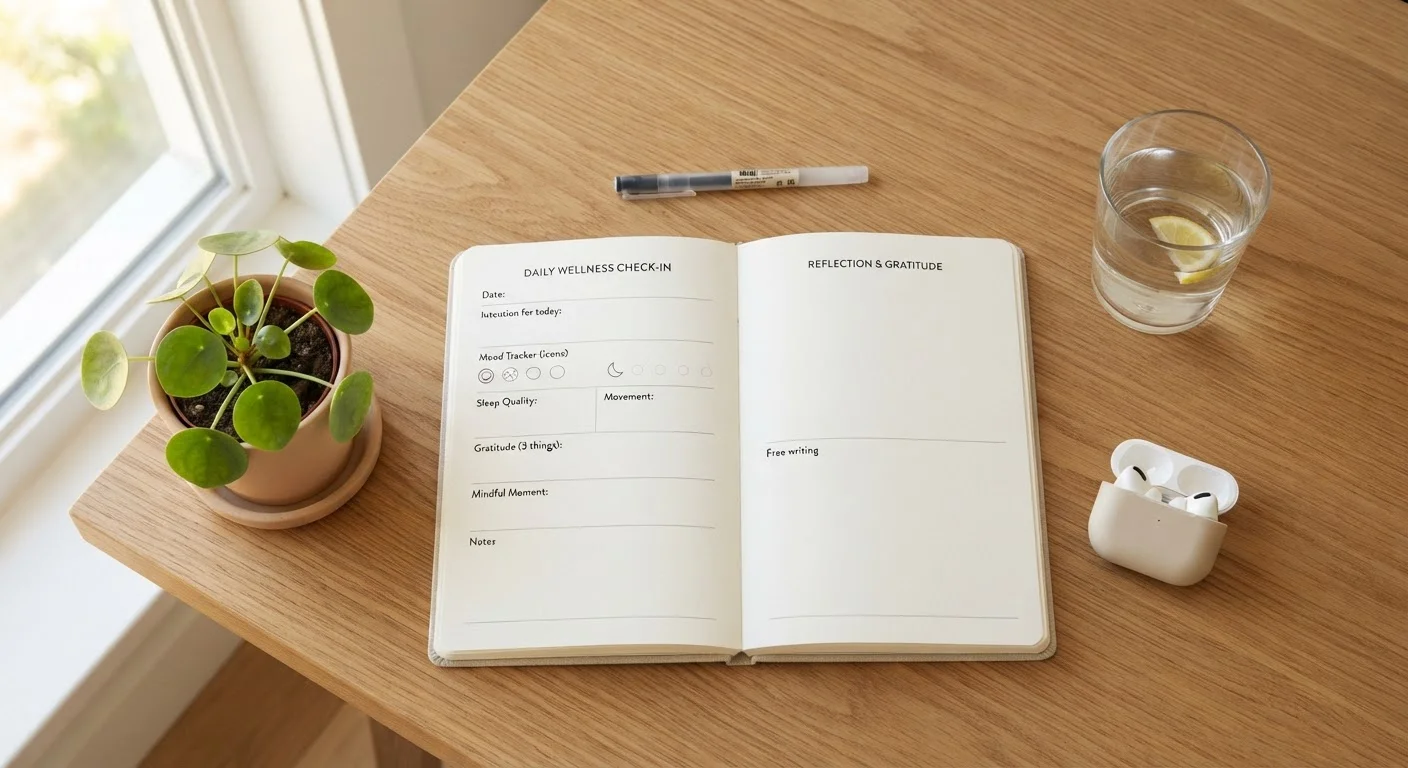
Use this structured checklist to take an honest look at your sleep, movement, nutrition, and stress habits — no equipment required.
Key Takeaways
A wellness baseline audit covers four pillars: sleep, movement, nutrition, and stress management.
You don't need equipment or lab results — honest self-observation is the starting point.
Most adults have at least one habit gap they aren't aware of until they deliberately look.
This audit is a snapshot, not a verdict — patterns over time matter more than any single day.
Consult a healthcare provider before making significant changes to your health routines.
Why Auditing Your Daily Habits Matters
Most chronic health risks don't arrive suddenly — they accumulate quietly through daily patterns that feel unremarkable in isolation. Research published across preventive medicine literature consistently links sleep duration, physical activity, dietary quality, and perceived stress to long-term health outcomes ranging from cardiovascular disease risk to immune function and cognitive resilience.
An audit doesn't diagnose or prescribe anything. It's a structured way to create an honest picture of where you are right now, so you can make deliberate choices rather than operating on autopilot. Think of it as a routine check-in — similar in spirit to the preparation work covered in your annual checkup preparation checklist, but something you can do at home, any day of the year.
Work through each group below at a time when you won't be interrupted. Answer based on your typical week — not your best or worst day.
Sleep Quality
Aim for 7–9 hours of sleep on most nights, consistent with CDC and sleep medicine consensus for adults.Must
Maintain a consistent bedtime and wake time, even on weekends, to support your circadian rhythm.Must
Avoid screens for at least 30 minutes before bed, as blue light exposure can suppress melatonin production.Should
Keep your bedroom cool, dark, and quiet — environmental factors that research associates with improved sleep continuity.Should
Notice whether you wake feeling rested most mornings; persistent fatigue despite adequate hours warrants a conversation with a provider.Must
Daily Movement
Accumulate at least 150 minutes of moderate-intensity aerobic activity per week, as recommended by the U.S. Department of Health and Human Services Physical Activity Guidelines.Must
Include muscle-strengthening activities on two or more days per week, targeting all major muscle groups.Must
Break up prolonged sitting with brief movement every 60–90 minutes during the workday.Should
Honestly assess how much incidental movement — walking, stairs, household activity — your typical day actually contains.Should
Track trends in your energy levels after movement, not just session completion, to understand your body's signals.Nice to have
Nutrition Patterns
Eat a variety of vegetables and fruits across most days, prioritizing whole foods over heavily processed options.Must
Drink adequate water throughout the day; notice signs of under-hydration such as dark urine or mid-afternoon fatigue.Must
Assess whether your meals are skipped or rushed more often than not, as irregular eating patterns can affect blood sugar regulation and hunger cues.Should
Limit ultra-processed food and high-sodium packaged items to occasional rather than everyday consumption.Should
Reflect on your alcohol consumption patterns honestly; the CDC notes that less is better for health outcomes.Must
Stress and Mental Wellness
Identify at least one reliable stress-reduction practice you use regularly — such as deep breathing, walking, or talking with a trusted person.Must
Notice whether stress is affecting your sleep, appetite, or concentration on a frequent basis.Must
Set deliberate boundaries around news and social media consumption if you notice these sources increasing your anxiety.Should
Maintain at least one social connection — friendship, family, or community — that you engage with regularly.Should
Schedule brief periods of unstructured time each week to allow mental recovery.Nice to have
Preventive Health Behaviors
Confirm you are up to date on recommended screenings and vaccinations for your age and risk profile by reviewing CDC or USPSTF guidelines.Must
Schedule an annual checkup with a primary care provider if you haven't had one in the past year.Must
Avoid tobacco in all forms; if you currently use tobacco, discuss cessation options with a healthcare professional.Must
Review any medications or supplements you take and confirm they're discussed with your provider — including over-the-counter products.Should
What to Do With Your Results
Once you've moved through the checklist, look for patterns rather than isolated gaps. A single unchecked item rarely signals a problem; several unchecked items within the same category — say, multiple sleep-quality markers — suggests a domain worth closer attention.
Use your results as a starting point for further reflection. If movement gaps surfaced, the Active Daily Life hub offers practical strategies for building more activity into ordinary routines without requiring a gym. If nutrition patterns felt inconsistent, your weekly balanced eating self-check provides a no-pressure framework for honest review.
For stress-related gaps specifically — which frequently interact with sleep, appetite, and energy — the daily stress audit offers targeted weekly prompts to help identify triggers and evaluate whether your current coping habits are actually working.
Audit Results Are Not a Diagnosis
This checklist is a self-reflection tool, not a clinical assessment. If your responses reveal persistent symptoms — such as chronic fatigue, significant mood changes, or unexplained physical changes — please speak with a qualified healthcare professional rather than attempting to self-diagnose or self-treat. Some habit gaps are better addressed with professional guidance than with lifestyle adjustments alone.
This article is for general informational and educational purposes only and does not constitute medical advice. Always consult a qualified healthcare professional before making significant changes to your health habits, especially if you have an existing medical condition.
Preventive Health Editorial Team is the collective byline for our editorial team and contributor network. Articles published under this byline or an editorial pen name are researched, written, and reviewed according to our editorial standards for clarity, consistency, and independence before publication.
The content on this site is for informational purposes only and is not a substitute for professional advice. Always consult a qualified professional for guidance specific to your situation.