How Each Method Works
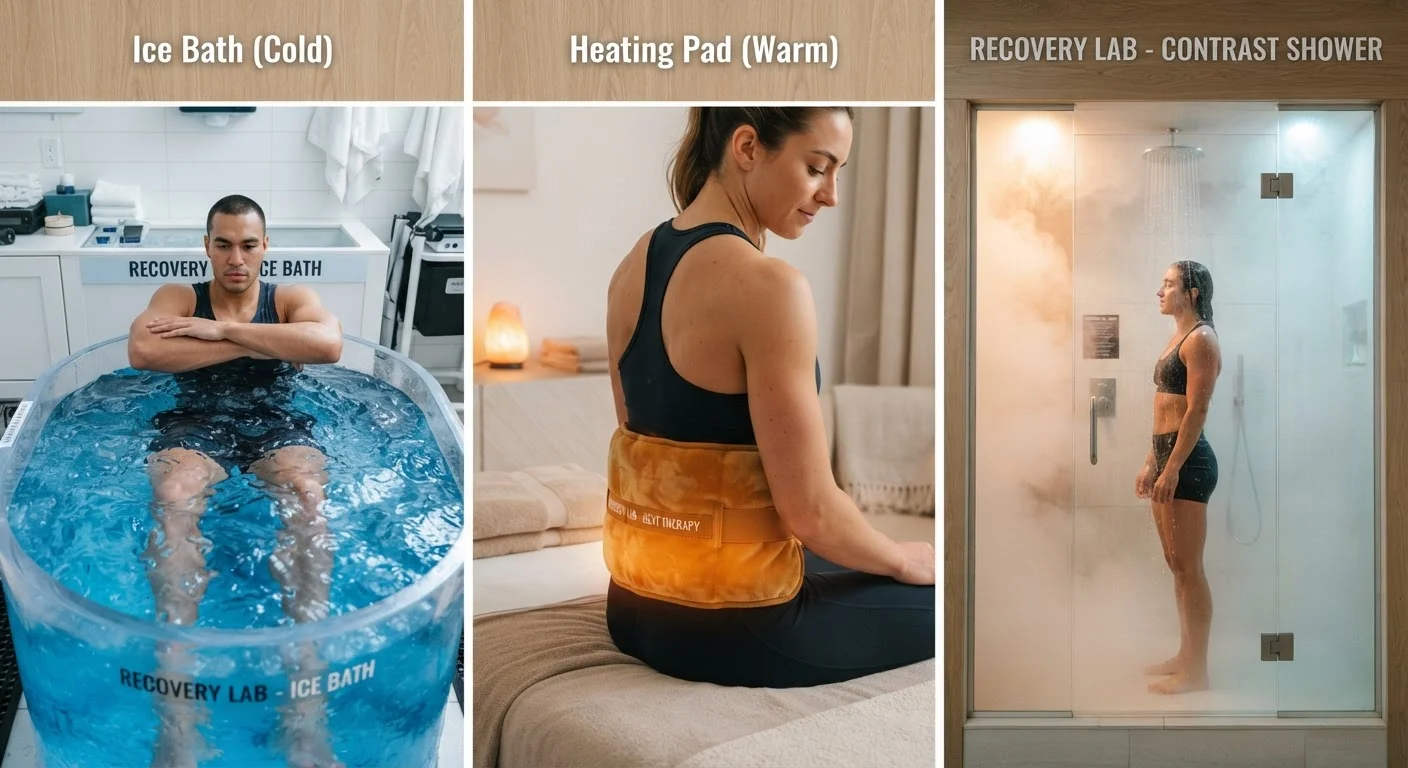
Cold therapy — delivered via ice baths, cold showers, or cold-water immersion — works by causing vasoconstriction, the narrowing of blood vessels in the exposed tissue. This reduces local blood flow, slows metabolic activity, and limits the accumulation of inflammatory mediators like prostaglandins and cytokines. The result is a measurable reduction in perceived soreness, though the underlying tissue damage remains; cold therapy manages symptoms rather than accelerating cellular repair.
Heat therapy operates through the opposite mechanism. Applying warmth causes vasodilation — widening of blood vessels — which increases oxygen and nutrient delivery to fatigued tissue and accelerates the removal of metabolic waste. Heat also increases tissue extensibility, meaning muscles and connective tissue become more pliable, which is why warm-up protocols reliably improve range of motion before physical activity.
Contrast bathing cycles between cold and heat exposure, typically alternating immersion for one to four minutes each over a total session of fifteen to twenty minutes. The proposed mechanism is a repeated vascular pump: cold-induced vasoconstriction followed by heat-induced vasodilation creates a flushing effect that may clear metabolic byproducts more efficiently than either modality alone. The evidence supporting this mechanism is plausible but still accumulating. See how these modalities fit within broader frameworks in our article on recovery strategies across different types of physical activity.
What the Research Says
Cold water immersion has one of the stronger evidence bases among passive recovery tools. A 2012 meta-analysis published in the Cochrane Database of Systematic Reviews found cold water immersion significantly reduced delayed-onset muscle soreness (DOMS) compared to passive rest. However, research published in the Journal of Physiology has raised an important caution: cold applied immediately after resistance training may attenuate anabolic signaling pathways — including satellite cell activity involved in muscle growth — suggesting it may be counterproductive for athletes prioritizing hypertrophy.
Heat therapy has robust support for reducing chronic musculoskeletal pain and stiffness. Continuous low-level heat has been shown in controlled trials to outperform standard analgesics for acute lower back pain over short durations. Its role in post-exercise recovery specifically is less well characterized, partly because heat applied immediately after intense exercise can worsen swelling in acutely inflamed tissue.
Contrast bathing studies show mixed results. Some trials in athletic populations report reduced perceptions of fatigue and soreness compared to passive rest, but most studies are small, lack standardized protocols, and rely on subjective measures. The honest summary: contrast bathing is likely beneficial for subjective recovery and carries low risk, but its physiological advantage over cold alone has not been firmly established.
| Cold Therapy | Heat Therapy | Contrast Bathing | |
|---|---|---|---|
| Primary mechanism | Vasoconstriction, reduces inflammation | Vasodilation, improves blood flow | Alternating vascular pump effect |
| Best timing | 0–48 hours post-exercise | 48+ hours post-exercise or pre-activity | 24–72 hours post-exercise |
| Strength of evidence | Moderate to strong for DOMS | Strong for chronic stiffness and pain | Emerging, mixed trial results |
| Key risk or caveat | May blunt hypertrophy adaptations | Worsens acute swelling if applied too soon | No standardized protocol; variable outcomes |
| Practical accessibility | Cold shower or ice bath required | Heating pad or warm bath; widely available | Shower or dual-temperature bath needed |
| Psychological benefit | High — perceived toughness, alertness | High — relaxation, comfort | Moderate to high — ritualistic effect |
Timing and Practical Application
Timing is arguably as important as method selection. Cold therapy is most defensible in the first 24 to 48 hours after high-intensity or high-volume training, when inflammation is peaking and soreness is the primary concern. For athletes focused on long-term strength development, consider reserving cold immersion for competition recovery periods rather than routine post-training use.
Heat therapy is generally more appropriate 48 hours or more after exercise, once acute inflammation has subsided, or as a preparatory tool before activity. Applying heat to acutely swollen or inflamed tissue can increase fluid accumulation and worsen discomfort.
Contrast bathing fits well in the 24-to-72-hour recovery window between training sessions and may be especially practical for those who train frequently and need accessible, low-cost recovery options. A standard approach alternates roughly one minute of cold with two to three minutes of warm water, repeated four to five times, ending on cold — though protocols vary and individual tolerance should guide adjustments. This approach complements the principles outlined in our guide to active recovery on rest days.
Start with Your Training Goal in Mind
If maximizing muscle growth is your primary objective, consider limiting cold immersion immediately after resistance sessions — some research suggests it may interfere with hypertrophic signaling. Reserve cold therapy for competition recovery or periods of particularly intense training volume. When in doubt about which approach suits your specific health context, consult a sports medicine professional or certified athletic trainer.
This article is for general informational purposes only and is not a substitute for professional medical advice. If you have a medical condition, injury, or concern about your recovery practices, consult a qualified healthcare provider before beginning any new therapy.