Melatonin's Actual Job: Darkness Messenger, Not Sleep Switch
Most people reach for melatonin supplements expecting them to act like a sleeping pill. That misunderstanding begins with what melatonin actually does in the body. Rather than generating sleep directly, melatonin functions as a chemical signal of darkness — a hormonal announcement that night has arrived and that biological processes associated with rest should begin.
The pineal gland starts releasing melatonin when the brain's master clock, the SCN, detects the absence of light through specialized retinal cells. This process usually starts one to two hours before your typical sleep time. Melatonin then communicates with receptors throughout the body — influencing core body temperature, blood pressure, and the timing of various cellular processes — all of which collectively support the transition into sleep.
Understanding this distinction matters for everyday decisions. Melatonin shifts and cues sleep timing; it does not sedate. That means flooding the body with high supplemental doses does not necessarily translate into deeper or faster sleep the way a sedative might.
“Melatonin is not a sleeping pill. It is a darkness hormone. Its job is to tell the body that it is nighttime — and to do so reliably, every night, so that biological processes can be orchestrated around that signal.”
— Russell Foster, Professor of Circadian Neuroscience, University of Oxford
Where Melatonin Fits in the Two-System Model of Sleep
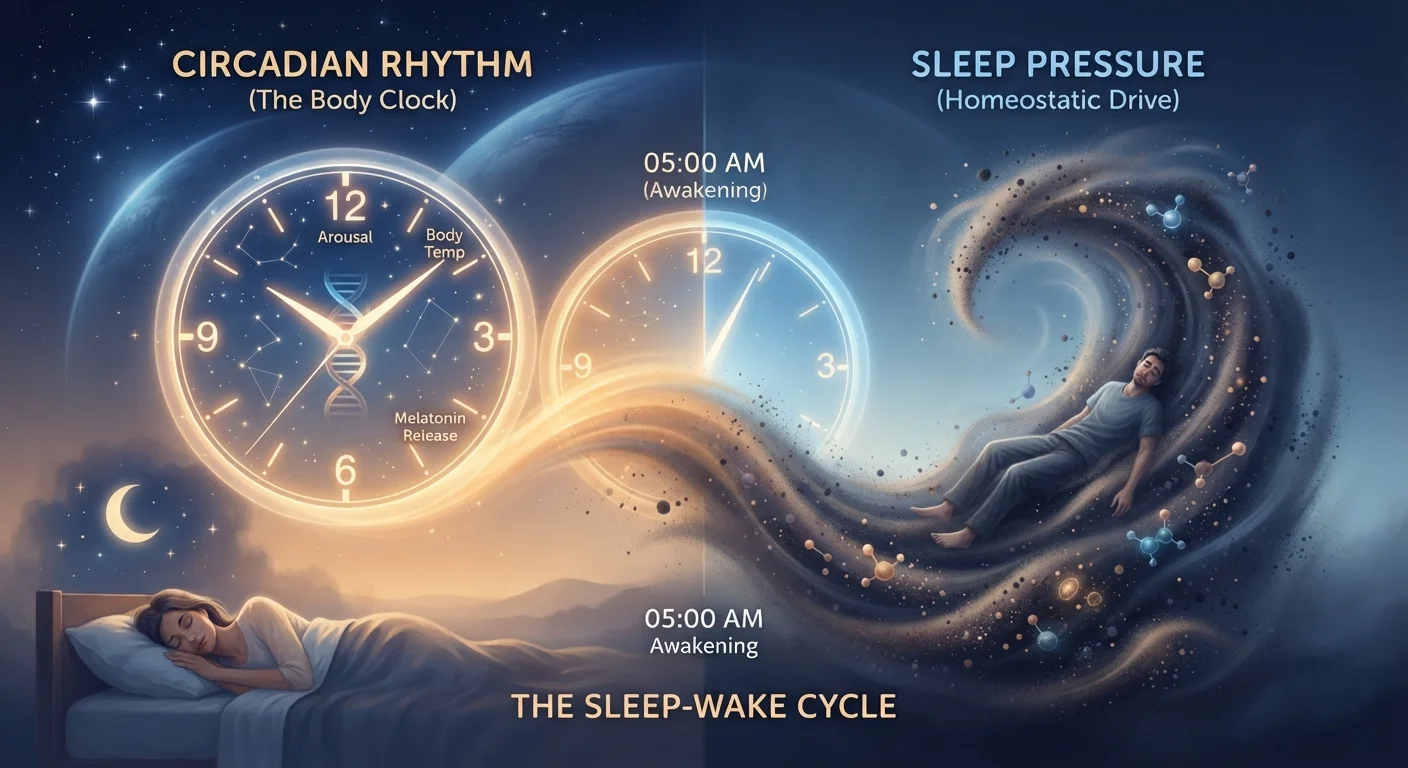
Sleep is regulated by two largely independent biological systems working in parallel. The first is the circadian clock — an approximately 24-hour internal rhythm controlled by the SCN that governs when you feel alert or sleepy based on time of day. The second is homeostatic sleep pressure, driven by the gradual accumulation of adenosine, a byproduct of neuronal activity that builds throughout waking hours and is cleared during sleep.
Melatonin is part of the circadian system. It does not build like adenosine and is not tied to how long you have been awake. Instead, its rise each evening is a predictable, clock-driven event. To understand how these two systems interact and sometimes conflict — for instance, when a night-shift worker tries to sleep during the day — see our article on how circadian rhythm and sleep pressure govern when you fall asleep.
Melatonin can be thought of as a gating signal: it opens the biological window during which sleep is most likely to occur, while adenosine provides the mounting pressure that eventually pushes you through that gate.
~1–2 hrs
Before sleep: melatonin onset window
Research consistently shows melatonin secretion typically begins one to two hours before habitual sleep onset in healthy adults.
~10×
Nighttime vs. daytime melatonin levels
Nighttime melatonin concentrations are roughly ten times higher than daytime levels in healthy adults, according to established endocrinology literature.
~50%
Melatonin reduction from bright evening light
Studies published in peer-reviewed journals indicate that room-level bright light exposure in the evening can suppress melatonin secretion by approximately 50% or more compared to dim-light conditions.
Light Exposure, Chronotype, and Melatonin Timing
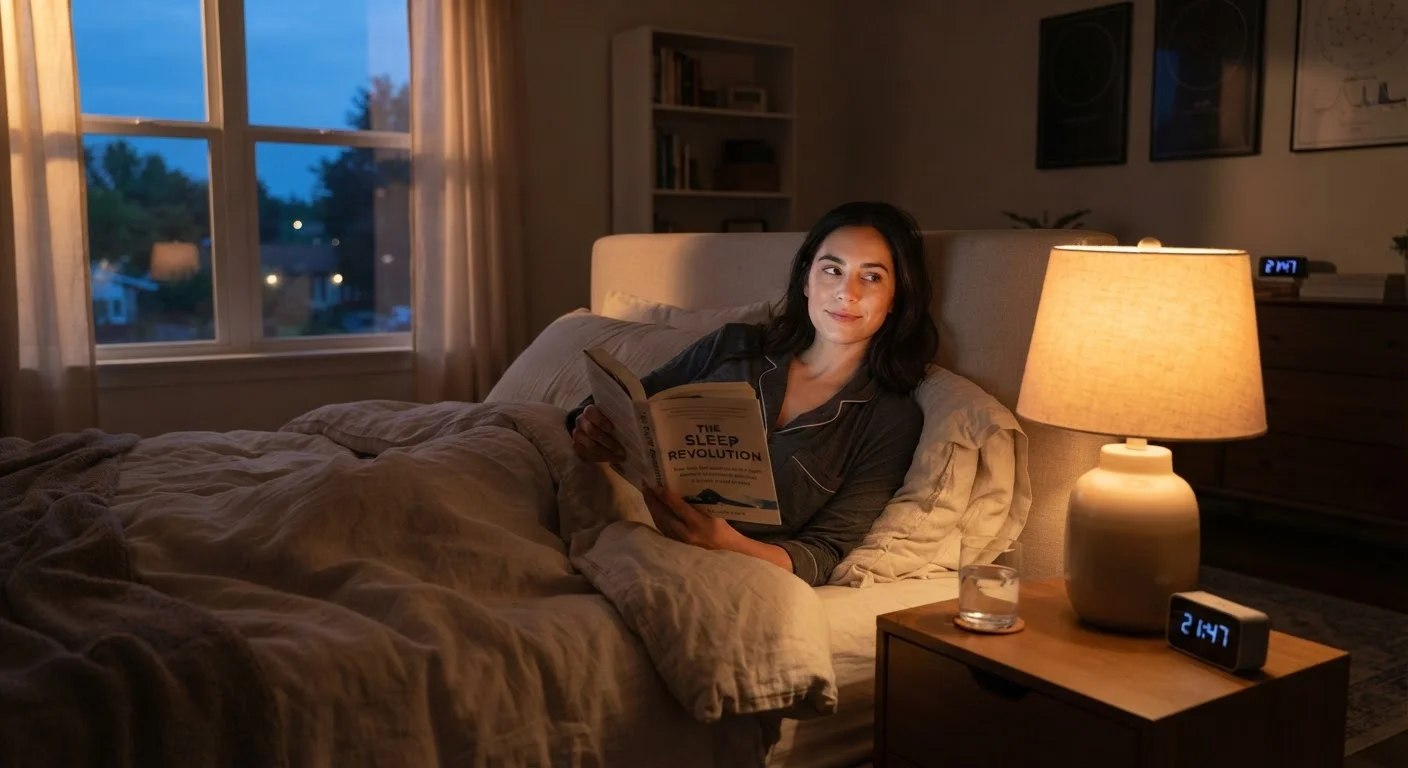
Because melatonin production is so tightly linked to light detection, your daily light environment profoundly shapes when that hormonal cue arrives. Evening exposure to bright or blue-enriched light — from overhead lighting, tablets, or smartphones — suppresses melatonin secretion and effectively delays its onset. This can push back your sleep window, making it harder to fall asleep at your intended time.
Individual chronotype — your biological tendency to be a morning type, evening type, or somewhere in between — also influences the timing and amplitude of melatonin secretion. Evening-oriented individuals (often called "night owls") tend to experience a later melatonin onset compared to morning types. This is not a matter of discipline or habit alone; it reflects genuine variation in circadian biology. As explained in our piece on why your body clock matters more than your bedtime, consistent sleep timing aligned with your chronotype often matters more than total hours logged.
Practical steps supported by the research include dimming indoor lighting in the evening, using warmer-toned light sources after sunset, and seeking bright natural light in the morning to anchor your circadian clock — all of which support well-timed melatonin release without supplementation.
This article is for general informational and educational purposes only and does not constitute medical advice. Consult a qualified healthcare professional before making changes to your sleep routine, supplement use, or if you have concerns about a sleep disorder.