The Myth of the Resting Brain
Ask most people what the brain does during sleep and you'll hear a common assumption: it powers down. It rests. It goes quiet until morning. This intuition is understandable — sleep feels passive — but neurologically, it is almost entirely wrong.
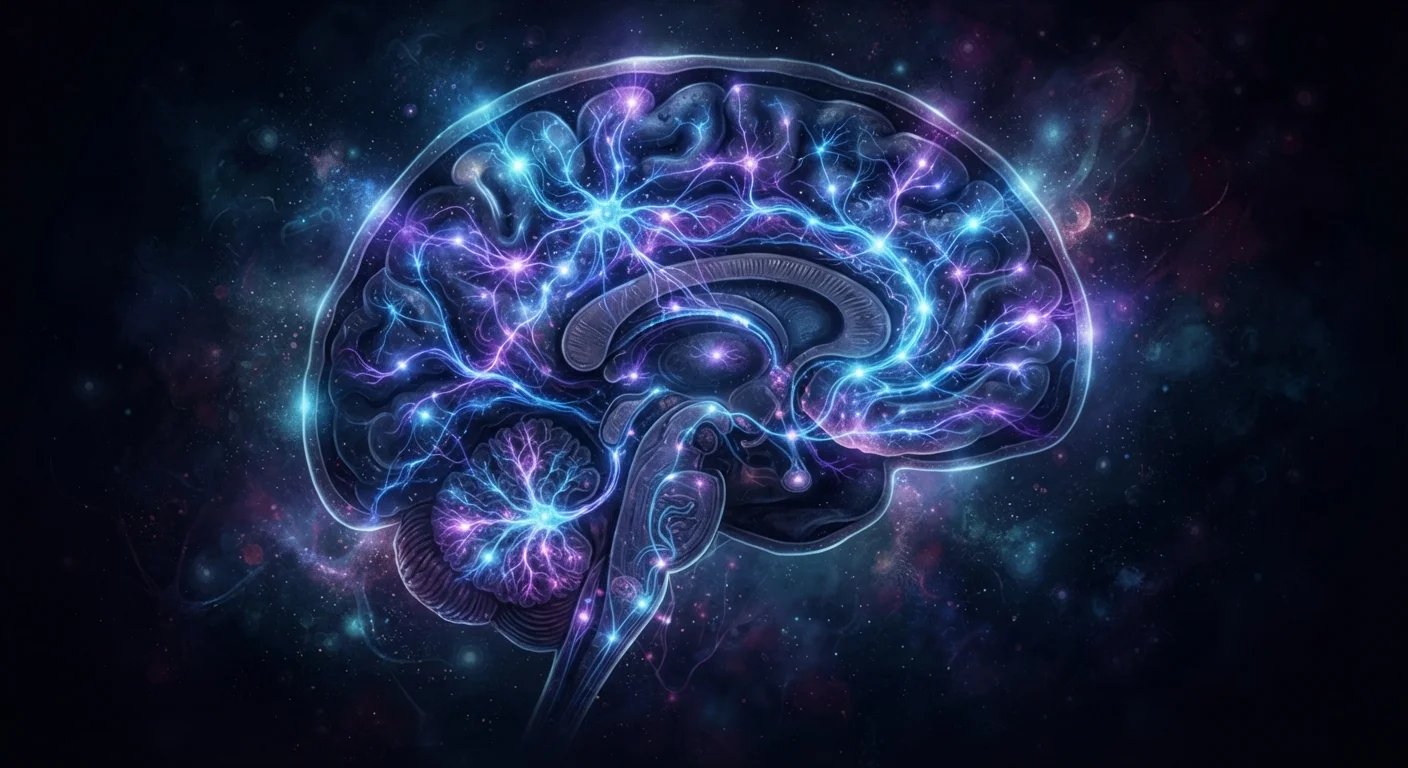
Decades of brain-imaging and EEG research have established that the sleeping brain is not dormant. It is busy in ways that are impossible to replicate while you're awake. The biological work that unfolds during those hours underpins memory, emotional stability, immune function, and cognitive clarity the following day. Understanding what the brain is actually doing at night reframes sleep from a passive absence of wakefulness into an active, non-negotiable biological state.
For a detailed map of how these stages unfold across a night, see our guide to sleep cycles and stages.
Memory Consolidation: Learning While You Sleep
One of the brain's most well-documented nighttime tasks is memory consolidation — the process by which experiences and newly acquired information are stabilized and transferred from temporary storage in the hippocampus to more durable long-term networks across the cortex.
This process is stage-dependent. Slow-wave sleep (also called deep or N3 sleep) is associated with declarative memory — facts, events, and learned procedures. REM sleep appears particularly important for emotional memories and creative integration of information. Research consistently shows that people who sleep after learning outperform those who remain awake on later recall tests, a finding replicated across age groups and memory types.
40%
Memory recall advantage after sleep
Studies have found that sleeping after learning can improve later recall by roughly 20–40% compared to equivalent periods of wakefulness, according to research published in journals including Nature Neuroscience.
~90 min
Average length of one full sleep cycle
Each sleep cycle, containing both non-REM and REM stages, lasts approximately 90 minutes; most adults complete 4–6 cycles per night when sleeping 7–9 hours.
~60%
Estimated brain interstitial space expansion during sleep
Animal studies cited in a 2013 Science paper suggest the brain's fluid-exchange spaces expand substantially during sleep, facilitating glymphatic waste clearance.
What's happening mechanistically: during slow-wave sleep, the hippocampus replays neural patterns activated during the day, effectively rehearsing and transferring them. This is not metaphor — recording electrodes placed in sleeping rodents detect sequential reactivation of the same neurons that fired during earlier waking tasks.
The Glymphatic System: Overnight Brain Cleanup
In 2013, researchers at the University of Rochester published findings describing a brain-specific waste-clearance network they named the glymphatic system. Using channels that run alongside blood vessels and are lined by glial cells (hence the name), this system circulates cerebrospinal fluid through brain tissue, flushing out metabolic byproducts that accumulate during the day.
Among the waste products cleared is amyloid-beta, a protein fragment whose abnormal accumulation is associated with Alzheimer's disease. Critically, glymphatic activity appears to be dramatically higher during sleep — particularly slow-wave sleep — than during waking hours. Some estimates from animal studies suggest the brain's interstitial space expands by roughly 60% during sleep, allowing more efficient fluid exchange.
It is important to note that much of the foundational glymphatic research has been conducted in rodent models. While the system has been confirmed to exist in humans, its precise workings and the full clinical implications of sleep-related glymphatic activity are still under active investigation. For a broader look at what overnight physiology means for health, see our piece on sleep and immune function.
REM Sleep and Emotional Regulation
REM sleep — the stage associated with vivid dreaming — is characterized by near-waking levels of brain activity alongside muscle paralysis (atonia) and suppressed norepinephrine, a stress-related neurotransmitter. Neuroscientist Matthew Walker and others have proposed that this low-norepinephrine environment allows the brain to reprocess emotionally significant memories without the physiological stress response that would accompany them while awake.
Emerging evidence supports a "sleep to forget, sleep to remember" model: the emotional charge of experiences may be reduced through REM processing even as the factual content is retained. People and populations with disrupted REM sleep show greater emotional reactivity, reduced frustration tolerance, and impaired ability to read social cues accurately.
Protect Your REM Sleep
Alcohol consumed close to bedtime suppresses REM sleep even when overall sleep duration appears normal. Consistent sleep and wake times, and limiting alcohol in the hours before bed, are among the most evidence-supported ways to preserve REM architecture. If medication or health conditions are affecting your sleep stages, speak with a healthcare provider.
This has real-world implications for mental health. Chronic REM disruption — whether from sleep deprivation, alcohol, or certain medications — is associated with heightened anxiety and impaired emotional processing. For more on how these mechanisms connect to long-term cognitive health, explore our article on what happens to your brain while you sleep.
This article is for general informational purposes only and does not constitute medical advice. If you have concerns about your sleep or brain health, consult a qualified healthcare professional.