
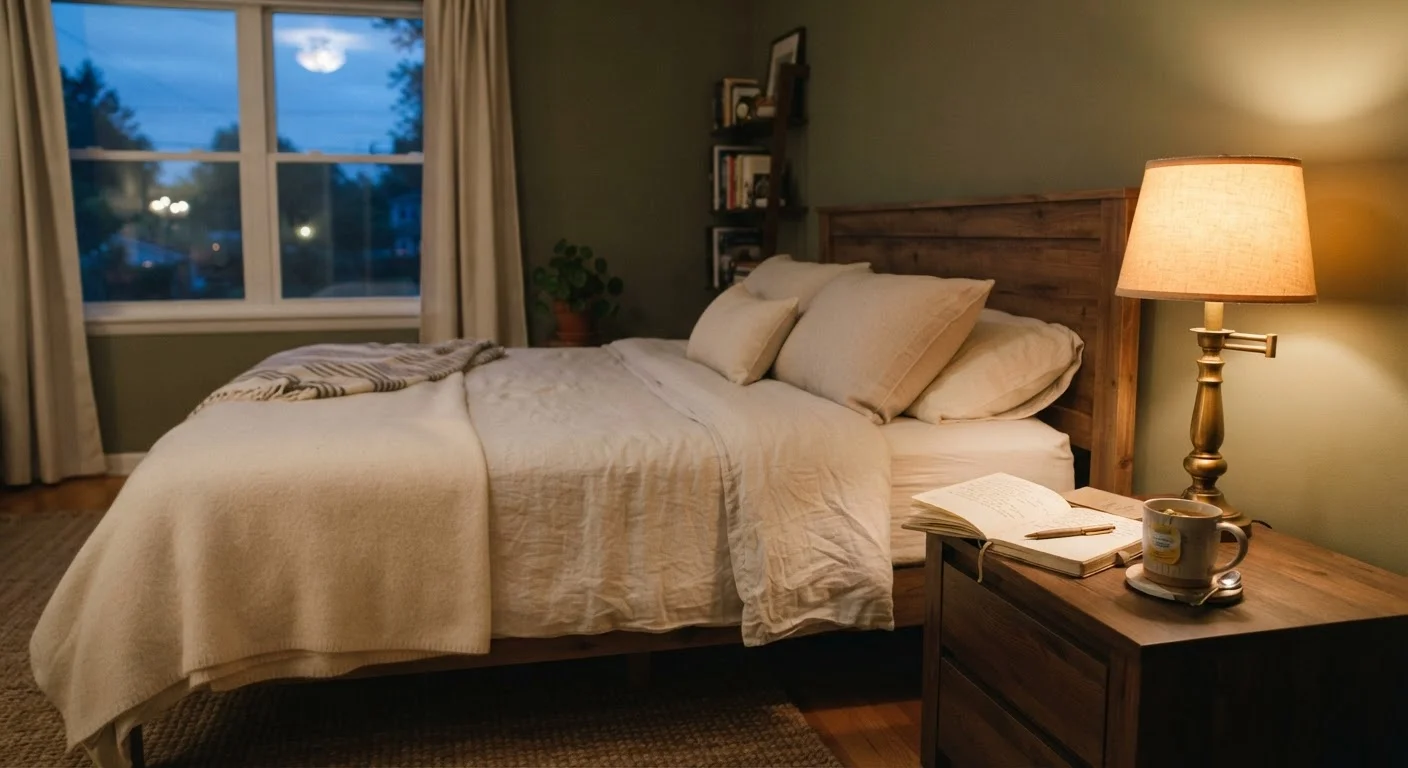
Why Your Wind-Down Routine Deserves a Closer Look
Most of us think about sleep as something that just happens — or doesn't. But the 60 to 90 minutes before you close your eyes are some of the most influential minutes of your entire day. What you do, see, eat, and feel in that window actively shapes whether your brain and body can shift into the relaxed, low-arousal state that sleep requires.
Research in sleep science consistently points to pre-sleep behaviors as a significant factor in both how quickly people fall asleep and how restorative their sleep feels. Yet evening habits are easy to overlook — they blend into routine, and their effects are delayed until morning, making the connection less obvious.
This audit is designed to help you see your wind-down honestly. Work through each item and mark what currently applies to you. There's no score to aim for — just clearer awareness of what's supporting your sleep and what might be worth adjusting. For a broader look at how daily habits affect your wellbeing, see our daily habits audit.
This article is for general informational purposes only and is not a substitute for medical advice. If you're experiencing persistent sleep difficulties, please consult a qualified healthcare provider.
Light and Screen Exposure
Body and Physical State
Mental and Emotional Decompression
Consistency and Environment
How to Use This Checklist
Read through each item and ask yourself honestly: Is this something I do consistently, sometimes, or rarely? You don't need to overhaul everything at once. Research supports the idea that small, sustainable changes layered in gradually are more likely to stick than a complete routine reset attempted overnight.
Pay particular attention to the must-priority items — these reflect habits with the strongest evidence base for supporting healthy sleep. The should and nice-to-have items are meaningful enhancements, especially if the foundational pieces are already in place.
Persistent Sleep Problems Warrant Professional Guidance
If you consistently struggle to fall asleep, stay asleep, or feel rested despite a solid wind-down routine, please speak with a healthcare provider. Chronic sleep difficulties can sometimes reflect underlying conditions — such as sleep apnea, anxiety disorders, or mood-related issues — that benefit from professional evaluation and treatment. This checklist is not a diagnostic tool.
Once you've worked through this audit, you might find it helpful to pair your findings with our practical nightly routine guide, which offers step-by-step strategies for building habits that actually stick. If your bedroom environment itself needs attention, the bedroom environment checklist covers lighting, temperature, noise, and clutter in depth.
And if you're curious about daytime behaviors that ripple into your nights — late caffeine, irregular meals, evening workouts — our companion piece on habits quietly disrupting your sleep offers the full picture. Sleep is also explored through a scientific lens in our sleep science hub, if you'd like to understand the biology behind what this checklist targets.
Sleep Journal or Notebook
Use each evening to offload worries, write tomorrow's tasks, and track patterns in your sleep quality over time.
Warm-Toned Bulbs or Lamp
Replace harsh overhead white light with amber or warm-spectrum lighting during your wind-down window.
White Noise App or Machine
Mask unpredictable environmental sounds that could delay sleep onset or cause mid-night waking.
Blue-Light Filter Settings
Most smartphones and laptops have a built-in night mode or warm-display setting to reduce blue-light exposure in the evening.
Blackout Curtains or Sleep Mask
Block external light sources that can suppress melatonin and disrupt sleep continuity.