
Why Food Myths Are So Persistent
Nutrition information travels fast — and not always accurately. A memorable headline, a viral post, or a well-meaning friend can cement a belief about food that nutrition science simply doesn't support. The result is that many people approach eating with unnecessary anxiety, cutting out entire food groups or chasing "cleanses" that promise more than they can deliver.
This article addresses some of the most widespread food misconceptions and replaces them with what the evidence actually shows. Understanding these corrections isn't about following stricter rules — it's about giving yourself more flexibility and confidence at the table. For a grounded look at what balanced eating genuinely involves, see what a balanced diet actually means.
Myth
Carbs are bad for you and should be avoided or drastically limited to be healthy.
Fact
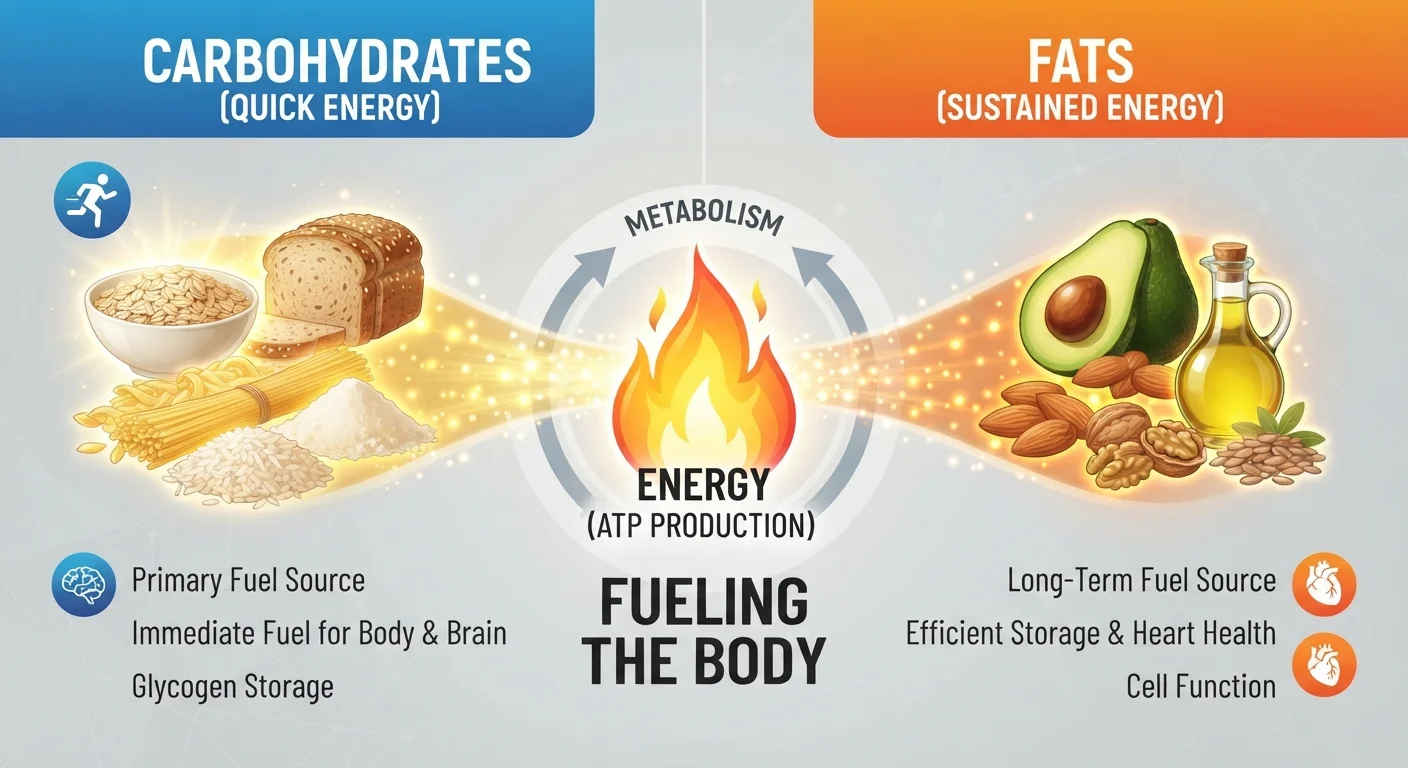
Carbohydrates are the body's primary energy source and an essential part of a well-balanced diet.
The broad category of carbohydrates includes everything from refined white bread to lentils, oats, and blueberries. Lumping these together and declaring them harmful ignores meaningful nutritional differences. Dietary guidelines from the USDA consistently place whole grains, fruits, and legumes — all carbohydrate sources — at the center of a healthy eating pattern. The concern with refined and added sugars is legitimate, but that's a far narrower issue than "carbs are bad." Eliminating an entire macronutrient rarely produces the outcomes people expect.
Myth
Eating fat makes you fat — dietary fat is something to minimize as much as possible.
Fact
Dietary fat is essential for hormone production, brain function, and absorption of fat-soluble vitamins — and it does not directly cause body fat gain.
Body fat accumulation is primarily a function of overall energy balance and metabolic factors, not dietary fat consumption alone. Unsaturated fats found in nuts, avocado, olive oil, and fatty fish are consistently associated with positive health markers in nutritional research. The low-fat diet era of the 1980s and 90s — which replaced fat with refined carbohydrates and added sugars — is now recognized as a poorly supported approach. Fat intake should be considered within the context of total diet quality, not treated as something to minimize at all costs.
Myth
You need to regularly detox or cleanse your body with special drinks or protocols.
Fact
The human body has dedicated detoxification systems — primarily the liver and kidneys — that operate continuously without external interventions.
The term "detox" is used loosely in popular health media, but when applied to commercial cleanses and juice protocols, it lacks a clear physiological basis. No peer-reviewed evidence supports the idea that these products remove toxins in ways the body cannot manage on its own. Supporting your liver and kidneys through adequate hydration, adequate fiber intake, and limiting alcohol is well-supported — but that's standard balanced eating, not a detox program. If there is genuine concern about toxin exposure or organ function, that's a conversation to have with a healthcare provider.
Myth
Skipping meals is an effective way to reduce calorie intake and improve your diet.
Fact
Meal skipping often intensifies hunger later in the day and can make consistent, balanced eating harder to maintain.
Research on meal timing and eating frequency doesn't point to a single universal schedule that works for everyone. However, habitually skipping meals — particularly breakfast — is associated in some studies with increased hunger, poorer food choices later in the day, and difficulty meeting nutrient needs. Intermittent fasting protocols are a different, more structured approach and are studied separately; they're not the same as casually skipping meals. The goal of any eating pattern should be one that supports consistent energy and nutrient intake, not one that creates cycles of deprivation and overcorrection.
Myth
Certain 'superfoods' are so powerful that eating them regularly can compensate for an otherwise poor diet.
Fact
No single food provides enough nutritional coverage to offset an unbalanced overall diet — overall patterns matter far more than individual ingredients.
Kale, blueberries, turmeric, and other foods frequently labeled "superfoods" do contain beneficial nutrients and bioactive compounds. But their benefits exist within the context of an overall diet — not as stand-alone correctives. The concept of a superfood is largely a marketing framing rather than a nutritional classification. Nutrition science consistently finds that dietary patterns — the habitual combination of foods over time — predict health outcomes more reliably than any single food's nutrient profile. For more on protein-specific myths that follow a similar pattern, see widely repeated myths about dietary protein.
How These Myths Shape Real Eating Behavior
Each of the myths above carries a practical cost. When people believe carbs must be eliminated, they often restrict fruits, legumes, and whole grains — foods with strong evidence behind them. When fat is feared, low-fat products with added sugars fill the gap. When detoxing seems necessary, expensive products replace the trust people could place in their own body's systems.
Cutting out an entire macronutrient tends to create imbalances rather than improvements — physiologically and psychologically. Similarly, metabolism misconceptions often drive people toward extreme approaches that aren't sustainable.
The practical takeaway is straightforward: a diet built around variety, adequate portions of all three macronutrients, and mostly minimally processed foods is consistent with established dietary guidance. No single food makes or breaks that pattern. Whole foods and processed foods can both have a place depending on context, accessibility, and preference.
This article is for general informational and educational purposes only and is not a substitute for advice from a qualified healthcare professional or registered dietitian.