What 'Processed' Actually Means
The word processed covers an enormous range of foods — from washed and bagged spinach to a shelf-stable snack cake engineered for maximum palatability. That breadth is exactly why blanket statements about processed foods tend to mislead.
Food scientists commonly use the NOVA classification, a framework developed by researchers at the University of São Paulo, to categorize foods by the extent and purpose of their processing. Under this system, a bag of frozen peas (minimally processed) sits in an entirely different category from a packaged breakfast pastry loaded with emulsifiers, artificial flavors, and refined sugars (ultra-processed). Treating these as equivalent distorts any practical nutrition conversation.
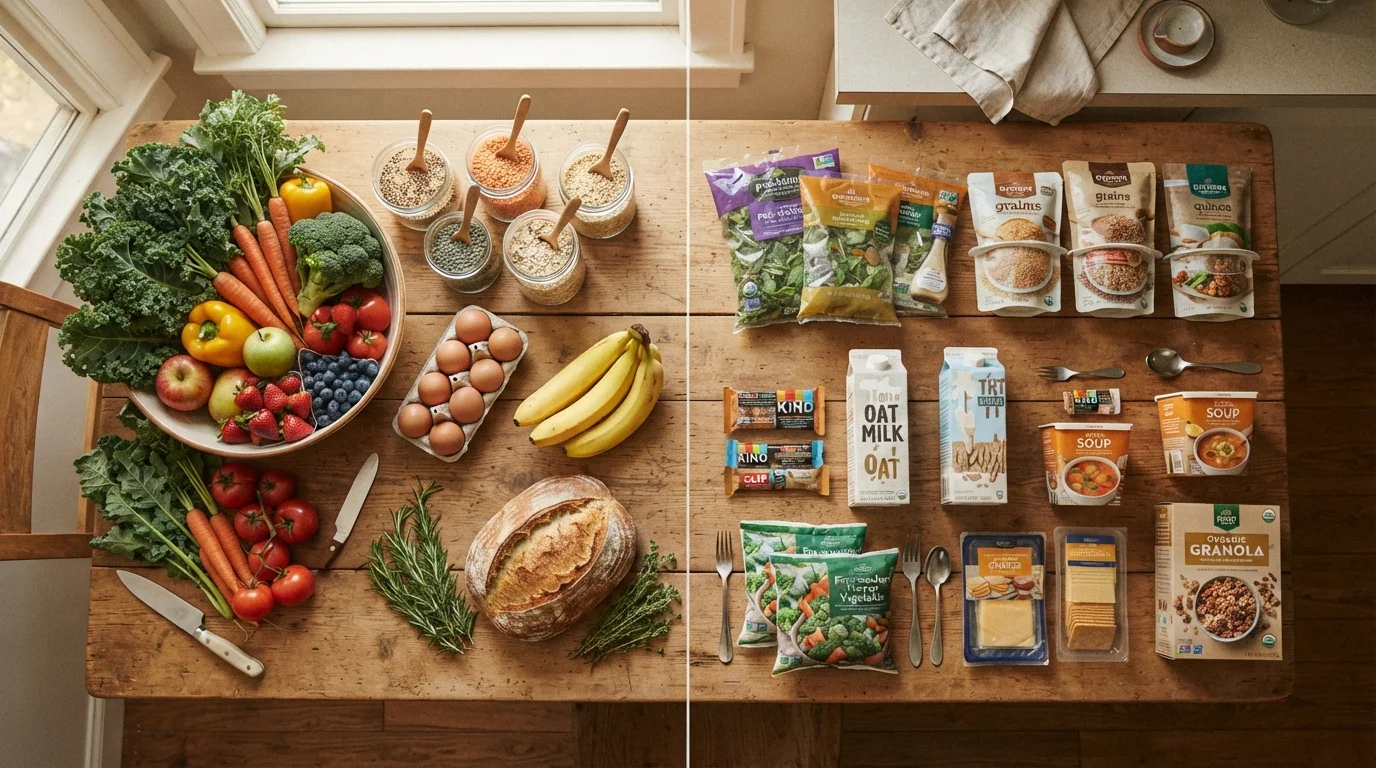
Whole foods — fruits, vegetables, legumes, whole grains, nuts, seeds, and unprocessed meats — are defined by what they haven't had done to them: no significant addition of sugar, salt, fat, or synthetic additives beyond what occurs naturally. That distinction shapes their nutritional profile in meaningful ways.
| Criterion | Whole Foods | Processed Foods |
|---|---|---|
| Definition | Unaltered or minimally altered natural foods | Modified by industrial methods; wide spectrum |
| Fiber content | Generally high | Often reduced or absent in ultra-processed forms |
| Micronutrient density | High — vitamins, minerals, phytonutrients intact | Variable; some fortified, others nutrient-poor |
| Added sugar & sodium | Naturally low | Often elevated, especially in ultra-processed products |
| Convenience | Requires more preparation time | Ready-to-eat or quick to prepare |
| Cost | Variable; fresh produce can be expensive | Often lower cost, especially shelf-stable staples |
| Shelf life | Generally shorter | Often extended through preservatives or packaging |
| Best examples | Oats, apples, lentils, broccoli, eggs | Canned beans, frozen vegetables, packaged pastries |
Where the Nutritional Differences Actually Land
Whole foods consistently deliver more fiber, a wider array of micronutrients, and beneficial plant compounds called phytonutrients. The fiber in a whole apple, for instance, behaves differently in the body than the same calories consumed as apple juice — it slows digestion, supports gut bacteria, and contributes to satiety. Research published in journals such as The Lancet and Nutrients has associated higher whole-food dietary patterns with lower risks of cardiovascular disease, type 2 diabetes, and certain digestive conditions, though individual context always matters.
Ultra-processed foods, on the other hand, often supply calories with relatively low nutritional return. They tend to be high in added sugar, refined starch, sodium, and unhealthy fats — ingredients linked to chronic disease risk when consumed in large amounts over time. Importantly, they are also engineered to be highly palatable, which can make portion awareness more challenging.
Lightly processed foods — plain yogurt, canned tomatoes, frozen edamame, whole-grain bread — occupy important middle ground. They retain much of their nutritional value while offering real convenience. Distinguishing these from ultra-processed products is one of the most practical nutrition skills a consumer can develop.
Finding an Honest Middle Ground
Most Americans eat some combination of whole and processed foods every day, and that is a realistic starting point — not a failure. The goal is not to eliminate all processing from your diet but to understand where your food falls on the spectrum and make adjustments that are genuinely sustainable.
A useful rule of thumb: the shorter and more recognizable an ingredient list, the closer a product sits to the lightly processed end of the spectrum. A can of black beans containing beans, water, and salt is fundamentally different from a snack product with twenty ingredients, several of which require a chemistry background to identify.
For practical guidance on building overall dietary patterns — rather than fixating on individual foods — see the Mediterranean, DASH, and whole-food approaches compared. These frameworks share a common emphasis on whole and minimally processed foods without demanding perfection.
It also helps to examine the beliefs driving food choices. Many rigid rules around "clean" eating are not supported by nutrition science and can make balanced eating feel harder than necessary — a topic explored in depth in our piece on common food myths that nutrition science contradicts.
If you want a structured but forgiving approach, the 80/20 food philosophy offers a way to anchor most meals in nutrient-dense whole foods while leaving genuine room for convenience and enjoyment — without guilt. And once you have a framework in place, our weekly balanced eating self-check can help you reflect honestly on your patterns without striving for perfection.
This article is for general informational and educational purposes only and is not a substitute for personalized medical or nutritional advice. Consult a qualified healthcare professional or registered dietitian for guidance specific to your health needs.