
What the Five Food Groups Are and Why They Matter
The five food groups — vegetables, fruits, grains, protein foods, and dairy (or fortified alternatives) — form the foundation of U.S. dietary guidance as outlined by the USDA's MyPlate framework. Each group earns its place not by tradition but by the specific nutrients it reliably delivers. Together, they create a complementary nutritional profile that supports everyday health across the lifespan.
Understanding what each group offers helps you make purposeful choices rather than just following rules. To build on this foundation, see our overview of what carbs, protein, and fat actually do in your body, which explains the biochemical roles behind these food categories.
This article is for general informational and educational purposes only and is not a substitute for professional medical or dietary advice. Consult a qualified healthcare provider for personal nutrition guidance.
A Closer Look at Each Group
Vegetables
Vegetables are among the most nutrient-dense foods available — delivering fiber, potassium, folate, vitamins A, C, and K, and a wide range of plant compounds called phytonutrients, all with relatively few calories. Variety across subgroups (dark-green, red and orange, starchy, beans and peas, and other vegetables) broadens the range of nutrients you receive. To learn how the micronutrients in vegetables support your body at the cellular level, explore our guide on what micronutrients actually do inside your body.
Fruits
Fruits supply natural sugars alongside vitamin C, potassium, folate, and dietary fiber. Whole fruits — rather than juice — preserve the fiber that slows sugar absorption and supports digestive health. Berries, citrus, melons, and stone fruits each bring different antioxidant profiles, so eating a range of colors provides broad coverage.
Grains
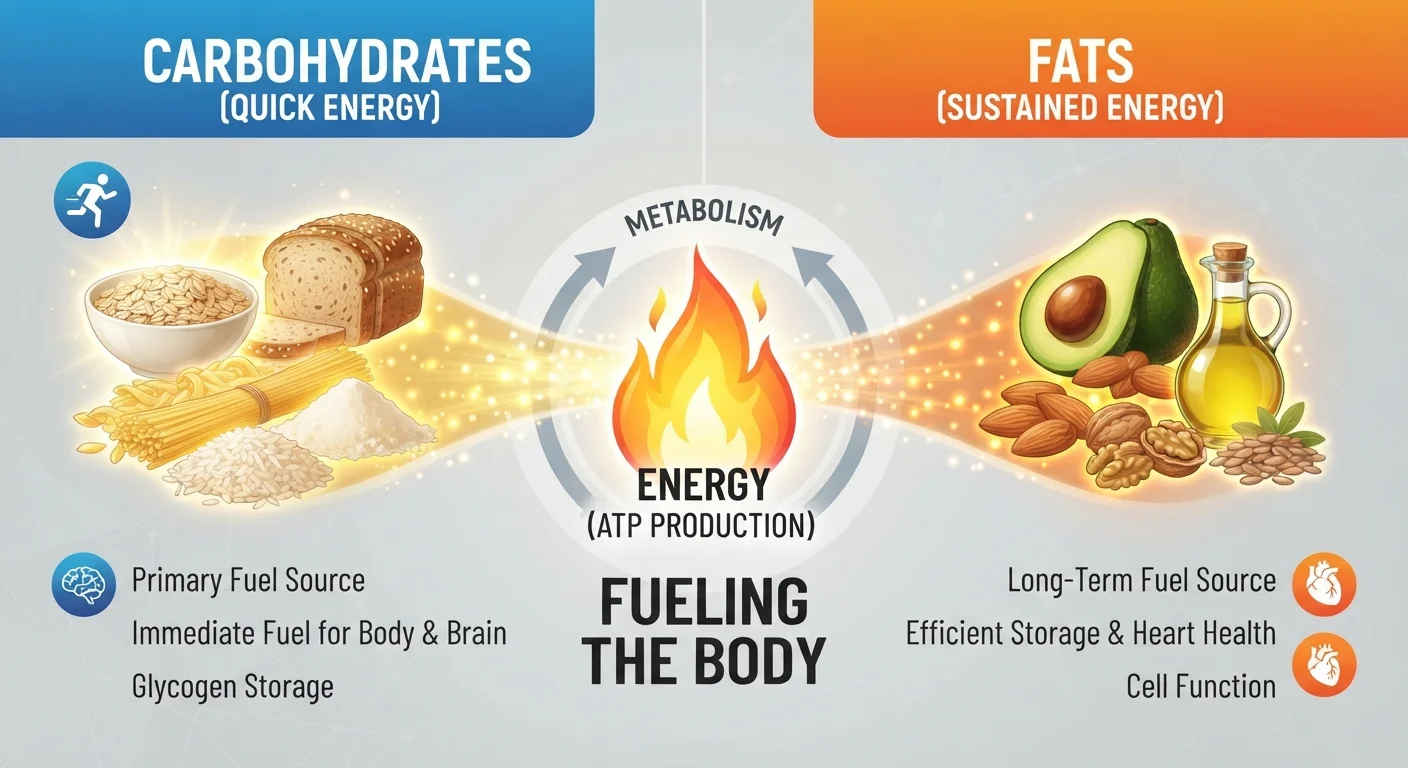
Grains are the body's primary source of dietary carbohydrates, the preferred fuel for the brain and muscles. Whole grains — such as oats, brown rice, whole wheat, and quinoa — retain the bran and germ, providing B vitamins, iron, magnesium, and fiber that are stripped away in refined processing. Grains contribute meaningfully to sustained energy and digestive regularity.
Protein Foods
This group includes meat, poultry, seafood, eggs, beans, peas, lentils, nuts, seeds, and soy products. Protein foods deliver amino acids essential for muscle maintenance, immune function, and enzyme production. Seafood adds omega-3 fatty acids, while plant-based proteins like legumes simultaneously contribute fiber — an advantage that makes them particularly versatile. See how protein fits within the broader macronutrient picture for a fuller context.
Dairy and Fortified Alternatives
Dairy products — milk, yogurt, and cheese — are concentrated sources of calcium, vitamin D, potassium, and high-quality protein. Fortified plant-based milks (such as soy or oat milk with added calcium and vitamin D) can provide comparable nutrients for those who avoid animal dairy, though it's worth checking the label to confirm fortification levels. Calcium and vitamin D together play a central role in bone density maintenance throughout life.
How the Groups Work Together
No single food group covers all nutritional needs — that's precisely why the framework includes five distinct categories. Grains provide carbohydrate energy; protein foods supply amino acids and essential fats; dairy delivers calcium and vitamin D; vegetables and fruits layer in fiber, antioxidants, and micronutrients that the other groups provide in smaller amounts. The overlap is intentional: beans and lentils, for example, appear in the protein group but also contribute fiber typically associated with vegetables and grains.
Well-researched eating patterns such as the Mediterranean and DASH diets are built on exactly this kind of group synergy. Our comparison of Mediterranean, DASH, and whole-food approaches shows how different dietary frameworks distribute foods across these five groups.
For a broader view of how these principles translate into daily habits, the article Balanced Eating for Life offers practical strategies for bringing the food groups together in a sustainable way. And if you want to see how specific eating patterns divide calories among carbs, protein, and fat, our piece on macronutrient ratios on a plate connects food groups to real-world meal composition.