
What Macronutrient Ratios Actually Mean
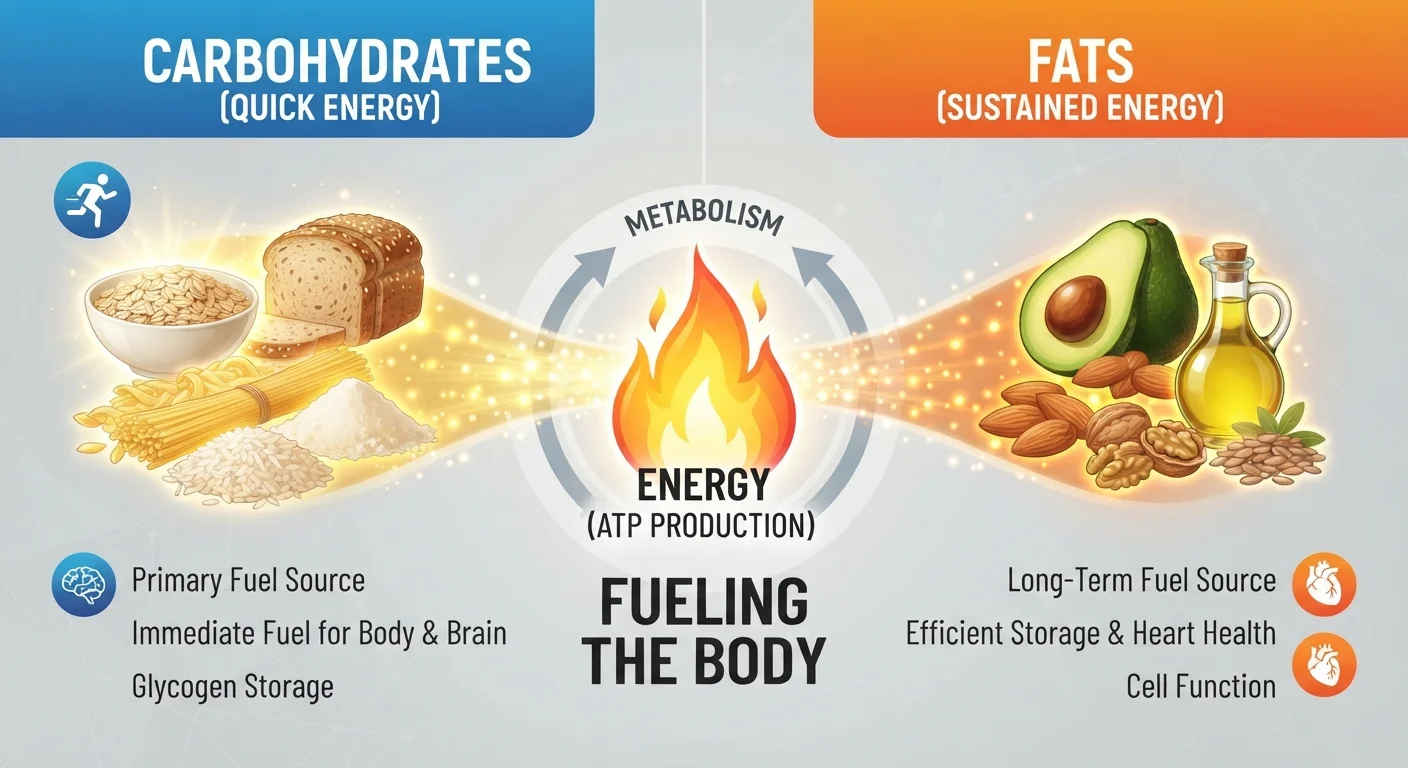
A macronutrient ratio describes how a day's total calories are divided among the three core nutrients: carbohydrates, protein, and fat. Each macro provides energy — carbs and protein deliver about 4 calories per gram, while fat provides 9 — so the ratio determines not just what you eat but how energy is distributed throughout your meals.
Before comparing eating patterns, it helps to know the baseline. The USDA Dietary Guidelines for Americans establish Acceptable Macronutrient Distribution Ranges (AMDRs) for adults: 45–65% of calories from carbohydrates, 10–35% from protein, and 20–35% from fat. These ranges are intentionally wide, acknowledging that many different eating styles can support good health. For a deeper look at what each macro does in the body, see what carbs, protein, and fat actually do.
What shifts across eating patterns is where within — or sometimes outside — those ranges the calories land, and which foods supply them.
Four Common Eating Patterns, Side by Side
The four patterns below represent broad dietary approaches rather than rigid prescriptions. Actual ratios vary depending on food choices and individual practice.
| Balanced (USDA) | Mediterranean | Plant-Based | Low-Carb | |
|---|---|---|---|---|
| Carbohydrate % of calories | 45–65% | 40–55% | 50–65% | 10–30% |
| Protein % of calories | 10–35% | 15–20% | 10–20% | 25–35% |
| Fat % of calories | 20–35% | 30–40% | 15–30% | 40–60% |
| Primary carb sources | Whole grains, vegetables, fruit | Whole grains, legumes, fruit | Grains, legumes, starchy veg | Non-starchy vegetables only |
| Primary protein sources | Mixed animal and plant | Fish, legumes, poultry | Legumes, tofu, tempeh | Meat, fish, eggs, dairy |
| Primary fat sources | Varied oils, nuts, dairy | Olive oil, nuts, fish | Nuts, seeds, plant oils | Animal fat, olive oil, nuts |
| Evidence base strength | Well-established | Very strong (long-term studies) | Strong, growing | Moderate; context-dependent |
It's worth noting that food quality within each category matters as much as the ratio itself. A low-carb diet built around vegetables, nuts, and quality proteins looks nutritionally very different from one centered on processed meats and refined fats — even if the macro percentages are identical. Similarly, a plant-based pattern rich in legumes and whole grains delivers a different nutrient profile than one relying heavily on refined carbohydrates.
For a broader look at how these frameworks compare beyond macros, Mediterranean, DASH, and whole-food approaches compared offers useful context.
What These Ratios Look Like on an Actual Plate
Abstract percentages become more meaningful when translated into meal structure. Here's how each pattern tends to shape a typical dinner plate:
- Balanced (USDA-aligned): Roughly half the plate filled with vegetables and a moderate portion of whole grains or starchy vegetables, one-quarter lean protein, and a small portion of healthy fat — olive oil, avocado, or nuts.
- Mediterranean: Similar vegetable and grain proportions, with fish or legumes as the primary protein, a more generous olive oil presence, and perhaps a small amount of cheese or yogurt. Refined grains are minimized.
- Plant-based: Vegetables and whole grains dominate; legumes (beans, lentils, tofu) provide protein. Fat comes mainly from nuts, seeds, and plant oils. Animal products are absent or minimal.
- Low-carb: Non-starchy vegetables fill a large portion of the plate; protein (meat, fish, eggs) and fat (cheese, olive oil, avocado) take up most of the remaining space. Grains, legumes, and starchy vegetables are sharply limited.
Visual portioning methods can help you translate these general patterns into real meals without tracking every gram.
This article provides general nutrition education and is not a substitute for personalized medical or dietary advice. Consult a qualified healthcare professional or registered dietitian before making significant changes to your eating pattern.
Choosing a Pattern That Fits Your Life
No single macronutrient ratio is universally optimal. Research consistently shows that adherence and food quality predict long-term outcomes more reliably than hitting a specific percentage target. An eating pattern you can sustain, enjoy, and meet your nutrient needs within will generally serve you better than a theoretically ideal ratio that's difficult to maintain.
Some practical considerations:
- Activity level: More physically active individuals — particularly those doing endurance or resistance training — often benefit from more carbohydrates and protein.
- Health conditions: Certain conditions (e.g., type 2 diabetes, kidney disease) may warrant specific macro adjustments under professional guidance. This is not general advice that applies to everyone.
- Food preferences and culture: Sustainable eating is deeply personal. A pattern that conflicts with your food traditions or preferences is harder to maintain regardless of its macro profile.
It's also worth understanding the risks of pushing too far in any direction. Eliminating an entire macronutrient can have physiological consequences that aren't always obvious upfront. And macros are only part of the nutritional picture — vitamins, minerals, and fiber matter too, as explored in the full nutritional picture.