
The Under-40 Blind Spot in Preventive Care
Most adults under 40 feel healthy — and that feeling is precisely the problem. Many of the conditions that become serious, costly, or life-threatening in midlife begin accumulating damage silently during a person's 20s and 30s. The U.S. Preventive Services Task Force (USPSTF) and major clinical organizations have updated several screening guidelines downward in age specifically because earlier detection improves outcomes, not because younger adults are sicker on average.
Yet survey data consistently shows that younger adults are the least likely to have a primary care provider, the most likely to skip annual visits, and the least likely to view themselves as candidates for screening. This gap between perception and clinical guidance carries measurable risk. The screenings below are among the most commonly deferred by adults under 40 — and the ones where timing genuinely matters. For a broader map of what to expect at each life stage, see how screening needs shift by decade.
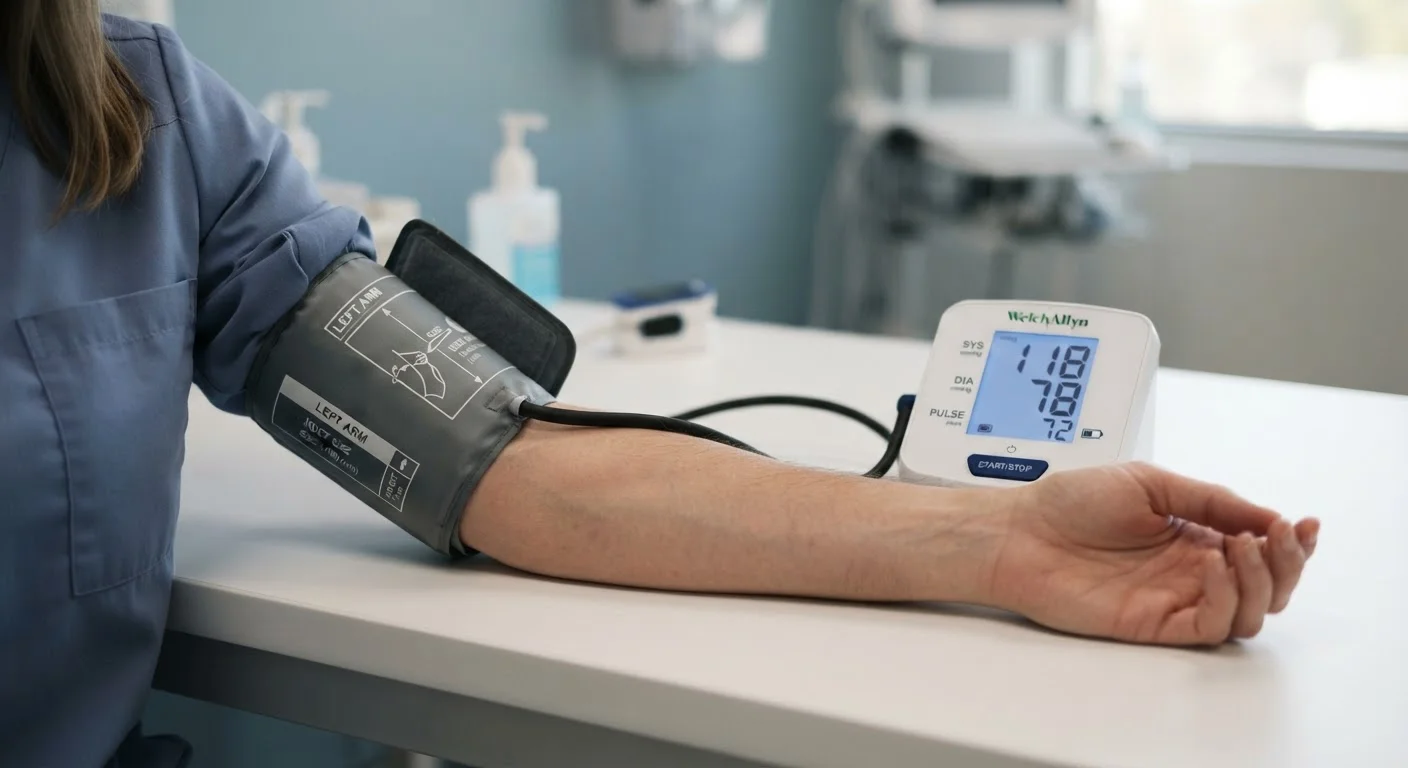
Blood Pressure
Hypertension — defined as a sustained reading at or above 130/80 mmHg under current American College of Cardiology criteria — affects an estimated 1 in 4 adults aged 20–44 in the United States, according to CDC data. It produces no reliable symptoms, which is why it's often called the "silent killer." Left undetected, chronically elevated pressure damages arterial walls, the heart, kidneys, and brain over years.
The USPSTF recommends blood pressure screening for all adults 18 and older. For adults with consistently normal readings and no risk factors, checking every two years is generally sufficient. But for those with borderline numbers or risk factors such as obesity, a family history of early cardiovascular disease, or high sodium intake, more frequent monitoring may be warranted. A single clinic visit reading isn't always definitive — white coat hypertension (elevated readings only in a clinical setting) is common, and your provider may recommend home monitoring or repeat measurements to confirm. Learn more about what the numbers actually mean in our piece on blood pressure readings and why they matter.
Hypertension affects roughly 1 in 4 adults aged 20–44, yet it produces no symptoms.
Blood Sugar and Prediabetes
The USPSTF recommends screening for prediabetes and type 2 diabetes in adults aged 35–70 who are overweight or have obesity. However, the American Diabetes Association recommends starting at 35 regardless of weight — and beginning even earlier for individuals with additional risk factors such as a first-degree relative with type 2 diabetes, a history of gestational diabetes, or certain ethnic backgrounds associated with higher risk.
Prediabetes — where blood glucose is elevated but not yet at diabetic levels — affects an estimated 98 million American adults, and the majority don't know it. The condition is largely reversible through lifestyle changes when caught early. Screening typically involves a fasting plasma glucose test, an oral glucose tolerance test, or a hemoglobin A1C blood test, each of which measures blood sugar control differently. For a detailed breakdown of what these tests involve and how to interpret results in the borderline range, see our article on diabetes screening and what results mean.
Roughly 98 million American adults have prediabetes — and most are unaware of it.
Cholesterol (Lipid Panel)
High LDL cholesterol contributes to plaque buildup in arteries over decades, long before a heart attack or stroke becomes possible. Most major guidelines, including those from the American Heart Association, recommend that all adults have their cholesterol checked at least once by age 35 for men and age 45 for women — but earlier screening is appropriate for anyone with a family history of early cardiovascular disease, diabetes, obesity, or other risk factors.
Some clinicians recommend a baseline lipid panel as early as age 20, particularly if risk factors are present. The test itself is a simple blood draw — often a fasting blood draw — that measures total cholesterol, LDL, HDL, and triglycerides. Abnormal results don't automatically lead to medication; lifestyle changes are typically the first line of management for younger adults with mildly elevated readings, and a provider can help determine when pharmacologic treatment becomes appropriate.
Cholesterol-related arterial damage accumulates silently over decades — a baseline lipid panel can start your risk profile early.
Colorectal Cancer
In 2021, the USPSTF lowered its recommended colorectal cancer screening start age from 50 to 45 for average-risk adults, partly in response to a documented rise in early-onset colorectal cancer in younger Americans. This change brought USPSTF guidance in line with recommendations already made by the American Cancer Society.
Screening options vary by test: stool-based tests (such as the fecal immunochemical test or the multi-target stool DNA test) can be done at home without bowel prep, while colonoscopy offers both detection and same-session removal of precancerous polyps. Adults with a first-degree relative diagnosed with colorectal cancer or advanced polyps — particularly before age 60 — are typically advised to start screening earlier, often at 40 or at an age 10 years younger than the relative's diagnosis age. A family history discussion with a provider is the appropriate starting point for personalized guidance.
Colorectal cancer screening now starts at 45 for average-risk adults — and earlier if family history warrants it.
Sexually Transmitted Infections (STIs)
Chlamydia, gonorrhea, syphilis, HIV, and hepatitis C are all conditions that frequently cause no symptoms in early infection — and all carry serious long-term consequences if left untreated. The USPSTF recommends annual chlamydia and gonorrhea screening for all sexually active women under 25, and for older women at increased risk. HIV screening is recommended at least once for all adults aged 15–65, with more frequent testing for those at ongoing higher risk.
Hepatitis C screening is recommended by the USPSTF for all adults aged 18–79 at least once. Many younger adults have limited access to STI testing outside of dedicated sexual health clinics, but these screenings can be requested at a primary care visit or through community health centers. Stigma remains a documented barrier to STI care — a clinical visit is a confidential, non-judgmental setting to request these tests, and many are covered without cost-sharing under the ACA.
HIV, chlamydia, and hepatitis C rarely cause early symptoms — routine screening is the only reliable detection method.
Cervical Cancer (Pap and HPV Testing)
Cervical cancer screening via Pap smear (or co-testing with human papillomavirus testing) is one of the most established and effective cancer prevention tools in medicine. Current USPSTF guidelines recommend Pap smears every three years for women aged 21–65, or co-testing with HPV every five years for those 30–65.
Adults under 40 are well within the window where consistent adherence to this schedule makes a measurable difference in outcomes. HPV — which causes nearly all cervical cancers — is common and often asymptomatic. Vaccination against HPV, currently recommended through age 26 for all individuals (and available by shared clinical decision up to age 45), substantially reduces risk but does not eliminate the need for ongoing cervical screening in those who have already been sexually active. Providers can review your vaccination and screening history together to determine the right next step. For related guidance on another commonly deferred screening, breast cancer screening myths addresses some of the most persistent misconceptions around mammography timing.
Cervical cancer is highly preventable when Pap and HPV screening follows the recommended schedule from age 21 onward.
Skin Cancer Checks
The USPSTF has noted insufficient evidence to recommend routine skin cancer screening by clinicians for the general asymptomatic population — but that finding reflects a lack of definitive trial data, not a finding that skin exams are harmful or useless. Dermatologists and the American Academy of Dermatology recommend annual full-body skin exams, particularly for individuals with a personal or family history of melanoma, a history of significant UV exposure or tanning bed use, many moles, or fair skin.
Adults in their 20s and 30s who have accumulated significant sun exposure — including childhood sunburns — may benefit from establishing a baseline skin exam. Melanoma is among the more common cancers in adults under 40, and when caught at an early stage, it is highly treatable. Monthly self-skin exams using the ABCDE criteria (Asymmetry, Border, Color, Diameter, Evolving) are a practical complement to periodic professional evaluation.
Melanoma is among the more common cancers in adults under 40, making sun-exposed skin worth monitoring early.
Making Screenings Work for You
Knowing which screenings you need is only half the equation. The other half is access. Under the Affordable Care Act, most USPSTF Grade A and B recommended preventive services — including many of the screenings listed here — must be covered by non-grandfathered health insurance plans without cost-sharing when delivered in-network. If you're unsure what your plan covers, your insurer's member services line or your state's insurance marketplace can clarify.
Ask About Your Personal Risk Profile
Standard screening guidelines are designed for average-risk populations. Your family history, lifestyle, and prior health conditions can shift recommended start ages significantly earlier. Before your next provider visit, gather information about first-degree relatives' diagnoses — particularly cancer, cardiovascular disease, and diabetes — and bring that list. This single step can meaningfully change which screenings your provider prioritizes for you.
If you don't yet have a primary care provider, establishing that relationship is the most efficient first step. A single comprehensive visit can establish baselines, identify which screenings apply to your risk profile, and create a referral pathway for anything requiring specialist follow-up. Annual physicals do more than check boxes — they build a longitudinal health record that makes future findings more meaningful. For a consolidated reference, the complete adult screening guide covers recommended tests from early adulthood onward.
This article is for general health information and educational purposes only. It is not a substitute for professional medical advice, diagnosis, or treatment. Always consult a qualified healthcare provider about which screenings are appropriate for your individual health history and risk factors.