
How Napping Fits Into Sleep Biology
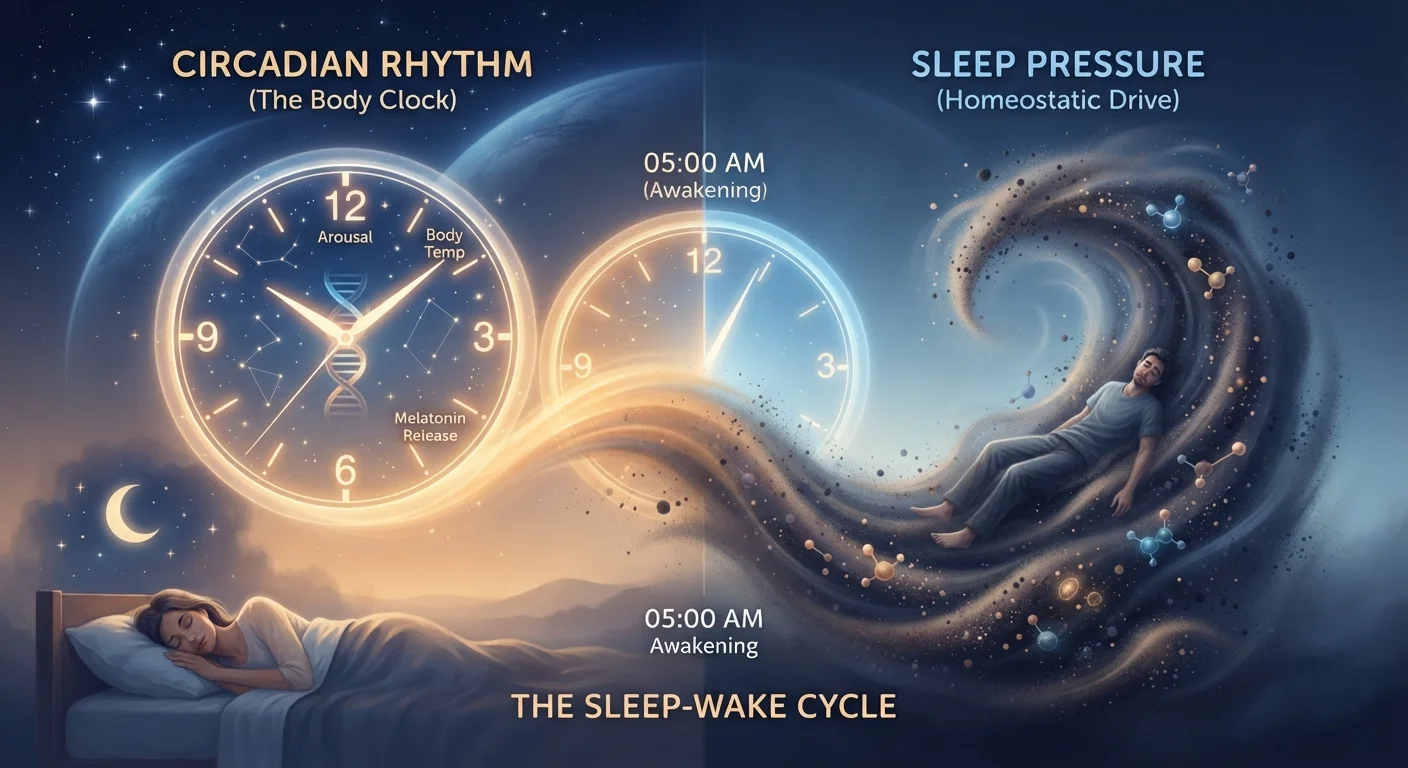
Daytime sleepiness isn't a character flaw — it's physiology. Most people experience a natural dip in alertness in the early-to-mid afternoon, driven by the body's circadian rhythm (the internal 24-hour clock that regulates sleep and wakefulness). This post-lunch lull occurs independently of meal size and reflects a genuine biological window when a short rest is well-tolerated.
Whether a nap helps or hurts depends on two core mechanisms: sleep pressure (the buildup of adenosine, a sleep-promoting molecule, throughout the day) and circadian timing. Napping reduces sleep pressure temporarily. That's useful when you need a performance boost mid-afternoon, but it can backfire if it reduces the drive you need to fall and stay asleep at night. Understanding these dynamics — explored more fully in our breakdown of sleep stage functions — helps explain why the same nap habit works brilliantly for one person and wrecks another's nights.
The Case for Napping: Real Benefits Backed by Research
When structured correctly, napping delivers measurable cognitive and physiological benefits.
Restores alertness and reduces mental fatigue
Short naps of 10–20 minutes have been shown in multiple controlled studies to improve reaction time, attention, and working memory, offering a performance reset during the afternoon energy dip.
Supports physical recovery in active individuals
Sleep, including lighter daytime sleep, is when the body releases growth hormone and conducts muscle repair. Athletes who nap may benefit from additional restorative time, particularly during high training loads.
Mood improvement with minimal time investment
Research indicates that even brief naps can reduce irritability and improve subjective wellbeing, likely through reduced adenosine accumulation and temporary nervous system restoration.
A legitimate fatigue countermeasure for shift workers
Occupational health guidelines recognize strategic napping as an evidence-based tool for shift workers and those managing sleep debt, helping reduce error rates and improve safety.
Research published in peer-reviewed sleep journals consistently shows that even brief naps improve reaction time, working memory, and mood. For physically active people, napping may support muscle repair by extending time spent in restorative sleep stages. Shift workers and those with irregular schedules represent another population where strategic napping is considered a clinically recognized countermeasure to fatigue-related performance decline.
The key is duration. A 10–20 minute nap — sometimes called a "power nap" — stays within lighter sleep stages, so waking feels refreshing rather than disorienting. Extending past 30 minutes risks entering deeper slow-wave sleep, which increases the likelihood of sleep inertia: the grogginess and impaired cognition that follows abrupt awakening from deep sleep.
10–20 min
Optimal nap duration for alertness
Sleep research consistently identifies this window as sufficient to restore cognitive performance while avoiding sleep inertia upon waking.
~2 p.m.
Peak circadian nap window
Most adults experience a natural alertness dip in the early afternoon driven by circadian rhythm, independent of meal timing — making this the most biologically favorable nap window.
When Napping Works Against You
The benefits of napping come with real trade-offs, particularly for people whose nighttime sleep is already fragile.
Can reduce nighttime sleep drive if poorly timed
Napping depletes adenosine — the pressure that makes nighttime sleep feel easy and restorative. A late or long nap can push bedtime later and fragment overnight sleep.
Risk of sleep inertia with longer durations
Naps extending beyond 30 minutes often dip into slow-wave sleep. Waking from this stage causes grogginess and impaired cognition that can last 20–30 minutes, undermining the intended benefit.
Contraindicated for people with insomnia
Clinical guidelines for insomnia treatment — including CBT-I — typically advise against daytime napping because it reduces the sleep pressure needed to consolidate and deepen nighttime sleep.
Can mask chronic sleep insufficiency
Using daily naps to compensate for consistently inadequate nighttime sleep may relieve symptoms temporarily while allowing the underlying cause to go unaddressed and worsen over time.
Timing is the most common mistake. A nap taken after 3 p.m. encroaches on the evening buildup of sleep pressure, making it harder to fall asleep at your target bedtime. Over time, this can shift sleep schedules later or fragment nighttime sleep — a pattern that compounds rather than corrects fatigue. These dynamics overlap with the common sleep habit mistakes that gradually erode sleep quality without obvious warning signs.
People with insomnia disorder are generally counseled to avoid daytime napping altogether as part of cognitive behavioral therapy for insomnia (CBT-I), because preserving sleep pressure is central to consolidating nighttime sleep. If you're unsure whether napping is appropriate for your situation, a healthcare provider or sleep specialist is the right resource.
Practical Guidelines: Making a Nap Work for You
If napping fits your schedule and sleep health, a few evidence-informed principles can maximize its value:
- Keep it short: Aim for 10–20 minutes. Set an alarm before lying down.
- Time it strategically: The early-to-mid afternoon window (roughly 1–3 p.m. for a conventional schedule) aligns best with natural circadian rhythms.
- Create a low-stimulation environment: Dim lighting, quiet, and a comfortable temperature help you drop off quickly within the brief window.
- Don't compensate chronically: Regularly relying on naps to offset poor nighttime sleep is a signal to address root causes rather than patch the gap. Consider reviewing your evening habits that may be undermining your rest.
If you're choosing between a nap and sleeping in after a rough night, the tradeoffs differ in important ways — our comparison of napping vs. sleeping in walks through both options.
Special Populations: Check With a Professional
Children, older adults, pregnant individuals, and those managing chronic conditions such as sleep apnea, depression, or cardiovascular disease may have different napping needs and risks. General guidance does not apply uniformly. If you fall into any of these groups, consult a healthcare provider before building a napping habit or changing your sleep routine.
This article provides general health information for educational purposes only and is not a substitute for professional medical advice. Consult a qualified healthcare provider regarding any personal sleep concerns or conditions.