How the Stages Fit Into the Sleep Cycle
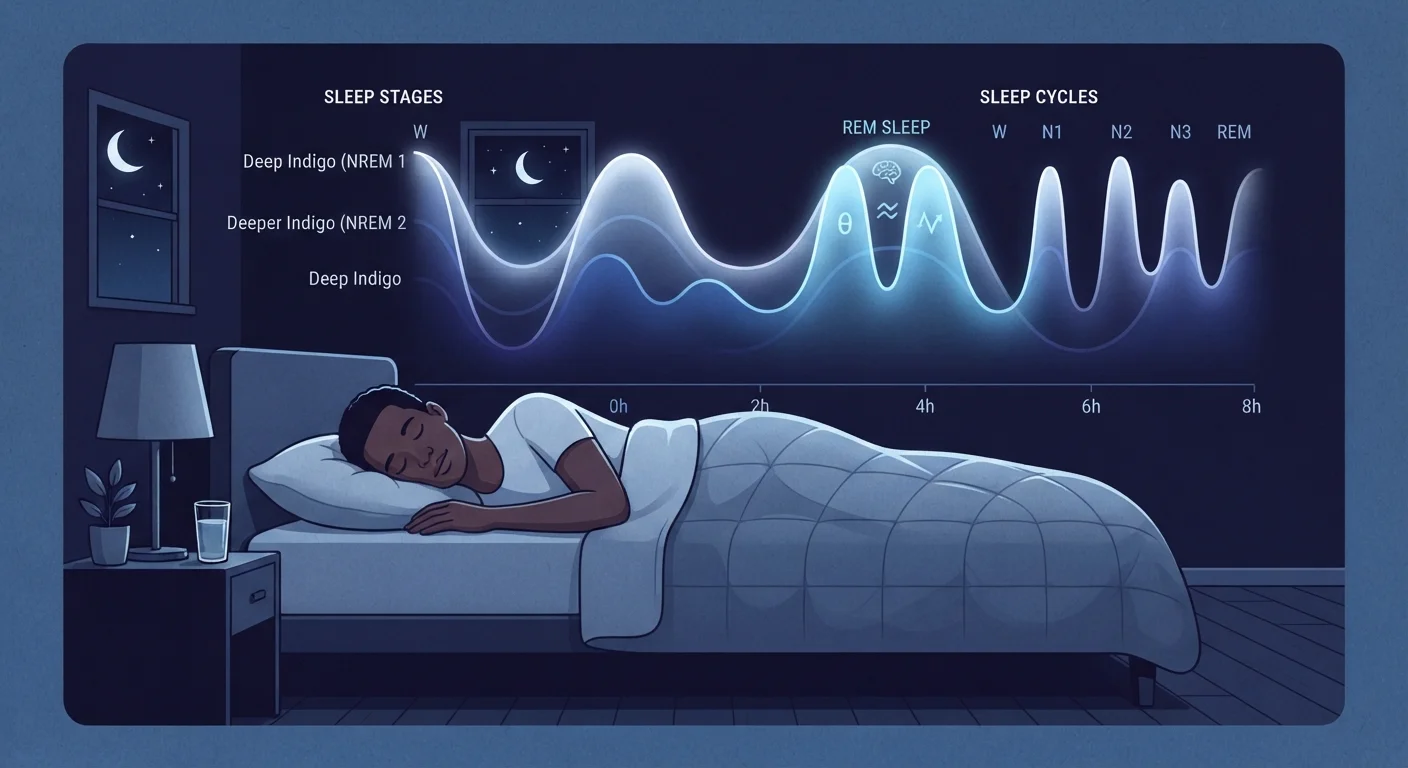
Sleep is not a uniform state. Each night, you cycle through four distinct stages — N1, N2, N3, and REM — repeating roughly every 90 minutes across four to six cycles. This article focuses on the non-REM stages most people label as "light" and "deep" sleep, which together account for around 75–80% of total sleep time. For a full breakdown of all four stages, see The Architecture of a Night's Sleep.
N1 is the brief entry point into sleep — typically lasting one to seven minutes — where muscle activity slows and the brain produces theta waves. N2 follows and constitutes the largest single portion of sleep, characterized by bursts of neural activity called sleep spindles and K-complexes. N3, commonly called deep sleep or slow-wave sleep (SWS), is defined by high-amplitude delta waves and the deepest reduction in physiological arousal.
| Criterion | Light Sleep (N1 & N2) | Deep Sleep (N3) |
|---|---|---|
| % of total sleep time | ~50–60% | ~15–25% |
| Brain wave type | Theta waves, sleep spindles | Delta waves (slow-wave) |
| Primary physical function | Neural housekeeping, transition | Tissue repair, growth hormone release |
| Primary cognitive function | Procedural memory consolidation | Glymphatic waste clearance |
| Concentrated in the night | Throughout all cycles | First third of the night |
| Ease of disruption | Relatively easy to rouse | Hardest stage to wake from |
| Declines with age? | Modest decline | Significant decline from mid-adulthood |
What Light Sleep Actually Does
Light sleep is often dismissed as mere "transitional" sleep, but that framing undersells its functional importance. The sleep spindles generated during N2 — rapid bursts of 12–15 Hz neural oscillations — are strongly associated with procedural memory consolidation. Research published in peer-reviewed journals including Sleep and Nature Neuroscience has linked spindle density to skill retention and information encoding, suggesting the brain is actively organizing knowledge rather than simply idling.
Light sleep also serves as the connective tissue between cycles. Because you must pass through N1 and N2 to reach both N3 and REM, disruptions to light sleep — from noise, an inconsistent schedule, or fragmented sleep architecture — can reduce the time spent in the restorative stages that follow. In this sense, protecting light sleep indirectly protects every other stage. Sleep Stages Decoded explains in further detail how these transitions function within each cycle.
What Deep Sleep Actually Does
N3 sleep is the body's most biologically active recovery window. Several critical processes are concentrated here:
- Growth hormone secretion: The pituitary gland releases the majority of its daily growth hormone output in pulses tied directly to slow-wave sleep. This hormone drives muscle protein synthesis, fat metabolism, and tissue repair — which is why inadequate deep sleep is associated with slower physical recovery after exertion or injury.
- Glymphatic clearance: The glymphatic system — a network of fluid channels in the brain that clears metabolic waste — operates at significantly higher efficiency during deep sleep. This includes clearing beta-amyloid and tau proteins, the accumulation of which is implicated in neurodegenerative disease, according to research led by the University of Rochester Medical Center.
- Immune regulation: Deep sleep is associated with cytokine production and the consolidation of immunological memory, supporting the body's defense responses.
Deep sleep is also the hardest stage from which to be roused, and it is most concentrated in the first third of the night — meaning early bedtimes and consistent schedules offer a meaningful structural advantage. How light exposure shapes your sleep timing is one practical lever for preserving that window.
~20%
Portion of sleep spent in deep sleep (N3)
Healthy young adults typically spend roughly 15–25% of total sleep time in N3, with amounts declining progressively with age, per established sleep architecture research.
60%+
Daily growth hormone released during deep sleep
Studies in clinical endocrinology indicate that the majority of 24-hour growth hormone secretion occurs in pulses tightly coupled to slow-wave sleep episodes.
~90 min
Average length of one full sleep cycle
Each NREM-REM cycle lasts roughly 90 minutes; deep sleep dominates the earlier cycles while REM expands in the later cycles of a typical night.
Why You Cannot Choose One Over the Other
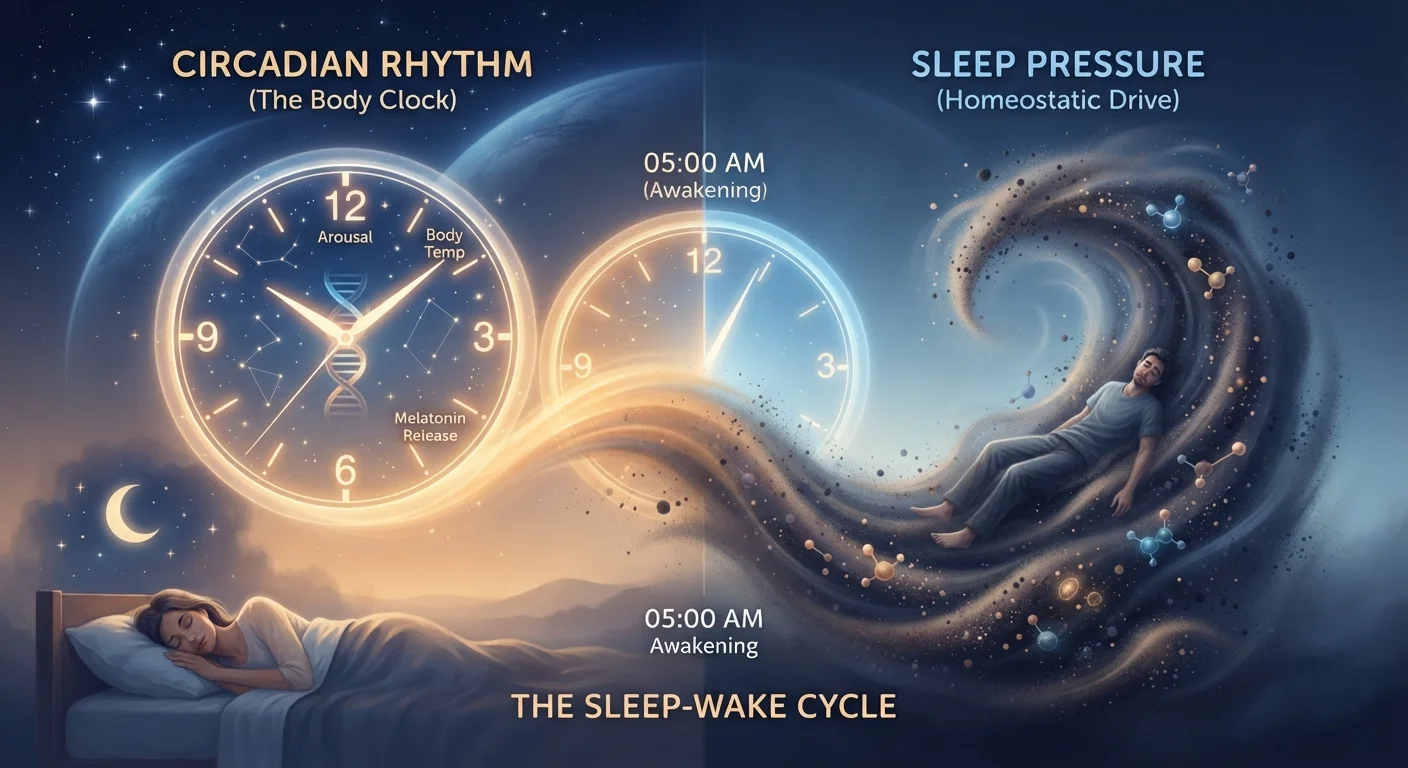
A common misunderstanding is that more deep sleep is always better, and that light sleep is wasted time. In reality, the brain actively regulates the proportion of each stage based on homeostatic sleep pressure — the accumulated drive to sleep — and circadian signals. Artificially suppressing light sleep (via sedatives, alcohol, or severe sleep restriction) tends to distort the overall architecture rather than redirect time toward deep sleep.
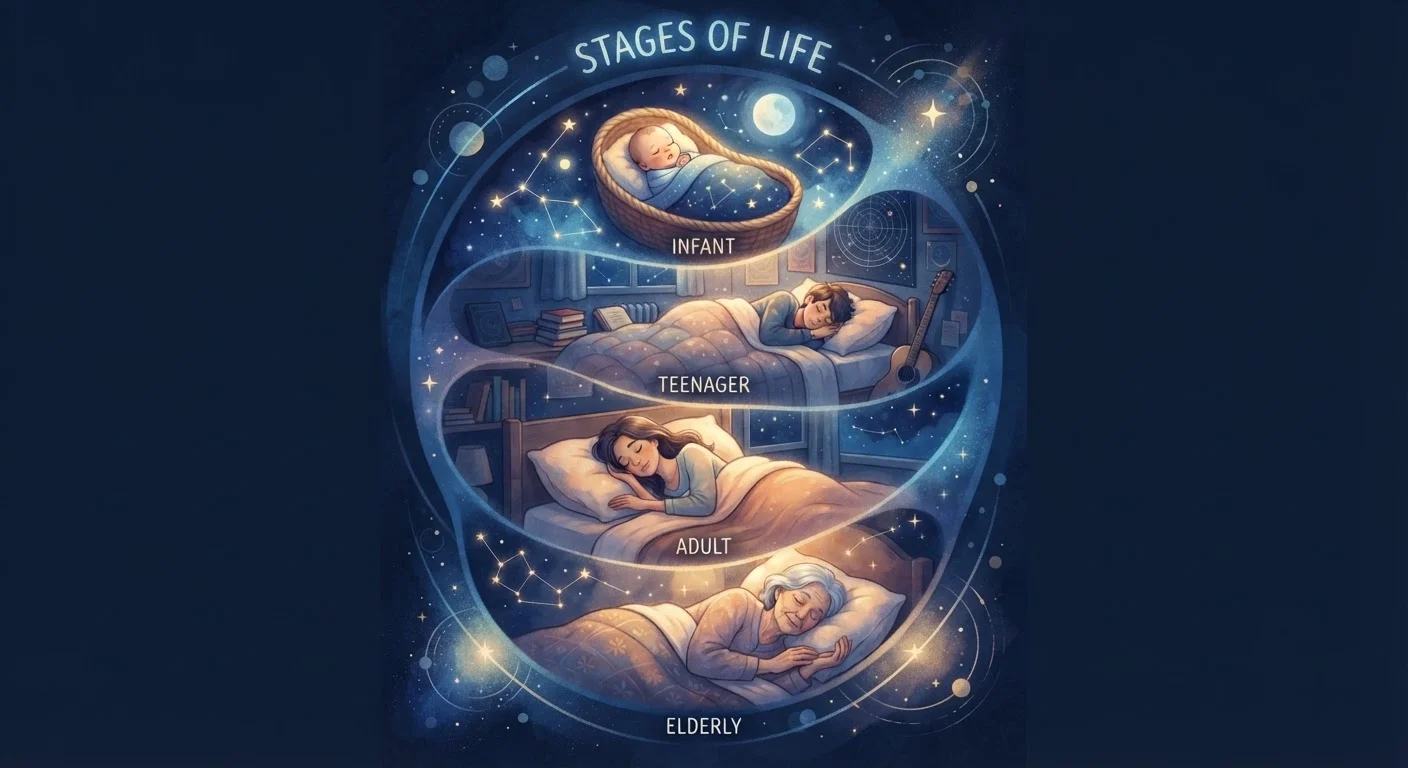
Both stages serve distinct, non-interchangeable functions. The question is not which is more important but whether your habits preserve enough of each. For context on how those needs shift over a lifetime — since the proportion of deep sleep naturally declines with age — see Recovery Across the Lifespan.
Alcohol and Sleep Architecture
Alcohol is widely believed to improve sleep because it accelerates sleep onset. However, research consistently shows it suppresses REM sleep and fragments sleep architecture in the second half of the night. It does not reliably increase deep sleep and often reduces overall sleep quality — an important distinction for anyone using it as a sleep aid.
This article is for general informational purposes only and does not constitute medical advice. If you have concerns about your sleep quality or health, consult a qualified healthcare professional.