Why the Screen-Sleep Conversation Is More Complicated Than Headlines Suggest
Few health topics generate more confident advice than screens before bed. "Put the phone down an hour before sleep" has become near-universal guidance — delivered by wellness influencers, pediatricians, and sleep apps alike. But when you look closely at the underlying research, the picture is considerably more nuanced than a blanket screen ban implies.
The dominant narrative blames blue light: the short-wavelength, high-energy light emitted by LED screens suppresses melatonin, the hormone that signals nighttime to your brain. This mechanism is real and documented. What's less often discussed is that blue light is one of several factors at play — and mounting evidence suggests it may not be the most important one for most people in real-world conditions.
For a broader look at which sleep advice stands on firm scientific ground and which rests on softer evidence, see Sleep Hygiene vs. Sleep Science.
Myth
Blue light from phones is the primary reason screens disrupt sleep.
Fact
Blue light contributes to melatonin suppression, but mental stimulation from content is at least as significant a driver of sleep disruption.
The blue-light-as-villain story is biochemically grounded: photoreceptors in the eye called ipRGCs are highly sensitive to short-wavelength blue light and feed directly into the brain's master clock. However, smartphone screens in typical bedroom conditions emit far less blue light than outdoor daylight or overhead lighting. Multiple controlled studies have found that screen-driven melatonin suppression at normal brightness is modest. The arousing psychological effect of engaging content — notifications, social comparison, suspenseful media — can independently delay sleep onset even under warm-toned or filtered light conditions.
Myth
Night mode or blue-light blocking glasses will fix screen-related sleep problems.
Fact
These tools reduce blue-light exposure but show limited, inconsistent evidence for meaningfully improving sleep quality in most users.
Several randomized controlled trials have examined blue-light-filtering glasses and software night modes. Results are mixed. Some studies show small improvements in sleep latency (how quickly you fall asleep); others find no significant benefit compared to control conditions. A 2021 meta-analysis published in Chronobiology International concluded that evidence for blue-light-filtering devices improving sleep outcomes remains insufficient to make strong clinical recommendations. Using night mode is unlikely to be harmful and may help at the margins, but treating it as a complete solution misses the larger behavioral factors involved.
Myth
All screen use before bed affects sleep equally.
Fact
Content type and engagement level matter significantly; passive, low-stimulation viewing differs measurably from interactive, high-arousal use.
Research comparing different types of pre-sleep screen activity finds that not all use is equivalent. Watching a familiar, low-stakes television program produces different physiological responses than checking social media, playing competitive video games, or reading distressing news. The key variable is cognitive and emotional arousal: content that triggers anxiety, excitement, or social comparison activates stress-response pathways that work against sleep onset. Passive, familiar, low-engagement content may still delay sleep due to light exposure, but to a lesser degree than high-stimulation alternatives. This nuance is absent from most simplified screen-time advice. See what screens do and don't do to sleep for a fuller breakdown.
Myth
You need to avoid all screens for at least one hour before bed for any benefit.
Fact
A wind-down period helps, but the optimal duration varies by individual, and reducing stimulation matters more than a rigid time cutoff.
The "one hour, no screens" rule is frequently cited but is more a practical rule of thumb than a precisely evidence-derived threshold. What research does support is that a transition period — reducing bright light, lowering cognitive load, and calming emotional arousal — helps the nervous system shift toward sleep readiness. For some individuals, 20–30 minutes of low-stimulation, dimmed-screen use causes minimal measurable disruption. For others, particularly those with anxiety or insomnia, even brief high-engagement screen use can delay sleep significantly. Widely Repeated Sleep Rules That Researchers Actually Dispute examines how other fixed sleep prescriptions hold up under scrutiny.
Myth
If you don't feel more alert after using your phone at night, screens aren't affecting your sleep.
Fact
Screen-related sleep disruption often occurs without noticeable subjective alertness — sleep architecture can be altered even when you feel ready to sleep.
Melatonin suppression and circadian phase shifting can occur below the threshold of perceived wakefulness. Research using polysomnography (detailed sleep recording) has documented reductions in slow-wave sleep and REM sleep duration following evening light exposure even in participants who reported feeling sleepy and falling asleep normally. This means the absence of subjective alertness is not a reliable indicator that screen use is harmless. Sleep architecture — the proportion and timing of different sleep stages — matters for cognitive performance, emotional regulation, and physical recovery, and can be disrupted without a person noticing. For a deeper look at evidence-based habits, evidence-based sleep habits provides a research-grounded overview.
What the Evidence Actually Supports About Screens and Sleep
Studies consistently show that evening screen use is associated with later sleep onset, shorter sleep duration, and reduced sleep quality. A frequently cited mechanism is melatonin suppression via blue light, but laboratory conditions often use light intensities far higher than a typical phone screen in a dimmed bedroom. A 2021 review in Sleep Medicine Reviews found that the melatonin-suppressing effect of typical consumer device screens is measurable but relatively modest in real-world brightness settings.
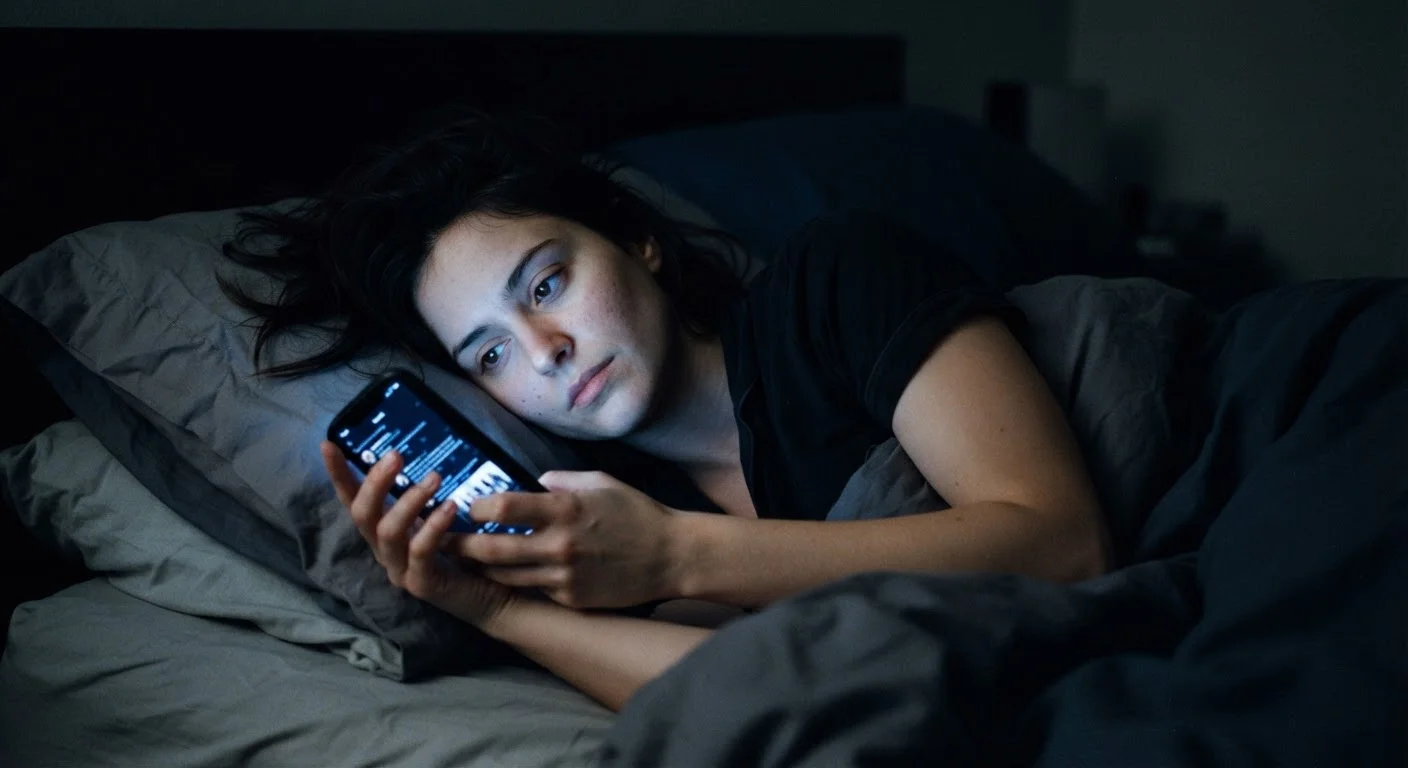
What researchers flag with more concern is psychophysiological arousal — the mental and emotional activation caused by engaging content. Checking work email, scrolling news feeds, or watching suspenseful video can elevate cortisol and heart rate, making it physiologically harder to transition into sleep regardless of light wavelength. This explains why the same 30 minutes before bed spent watching a calm video may differ meaningfully from 30 minutes on social media.
~90%
U.S. adults using screens in the hour before bed
A National Sleep Foundation poll found approximately 90% of Americans use some form of electronic device in the hour before bed at least a few nights per week.
~30 min
Average delay in melatonin onset from evening screen use
Research published in PNAS found that reading on a light-emitting device before bed delayed melatonin onset by roughly 30 minutes compared to reading a printed book.
Modest
Melatonin suppression from typical phone brightness
A 2021 Sleep Medicine Reviews analysis characterized the melatonin-suppressing effect of consumer smartphone screens at real-world brightness as measurable but modest compared to overhead lighting.
Light timing matters as much as light type. Morning bright-light exposure is a powerful circadian anchor. Morning Light vs. Evening Light explains how strategically using both ends of the day can work together to strengthen your sleep-wake rhythm.
The practical upshot: a wind-down buffer before bed — reducing both screen brightness and cognitively stimulating content — is supported by research, though the specific duration is not as fixed as "one hour for everyone" implies. Individual chronotype, baseline anxiety levels, and content type all moderate the effect.
This article is for informational purposes only and is not medical advice. If you have persistent sleep difficulties, consult a qualified healthcare professional.