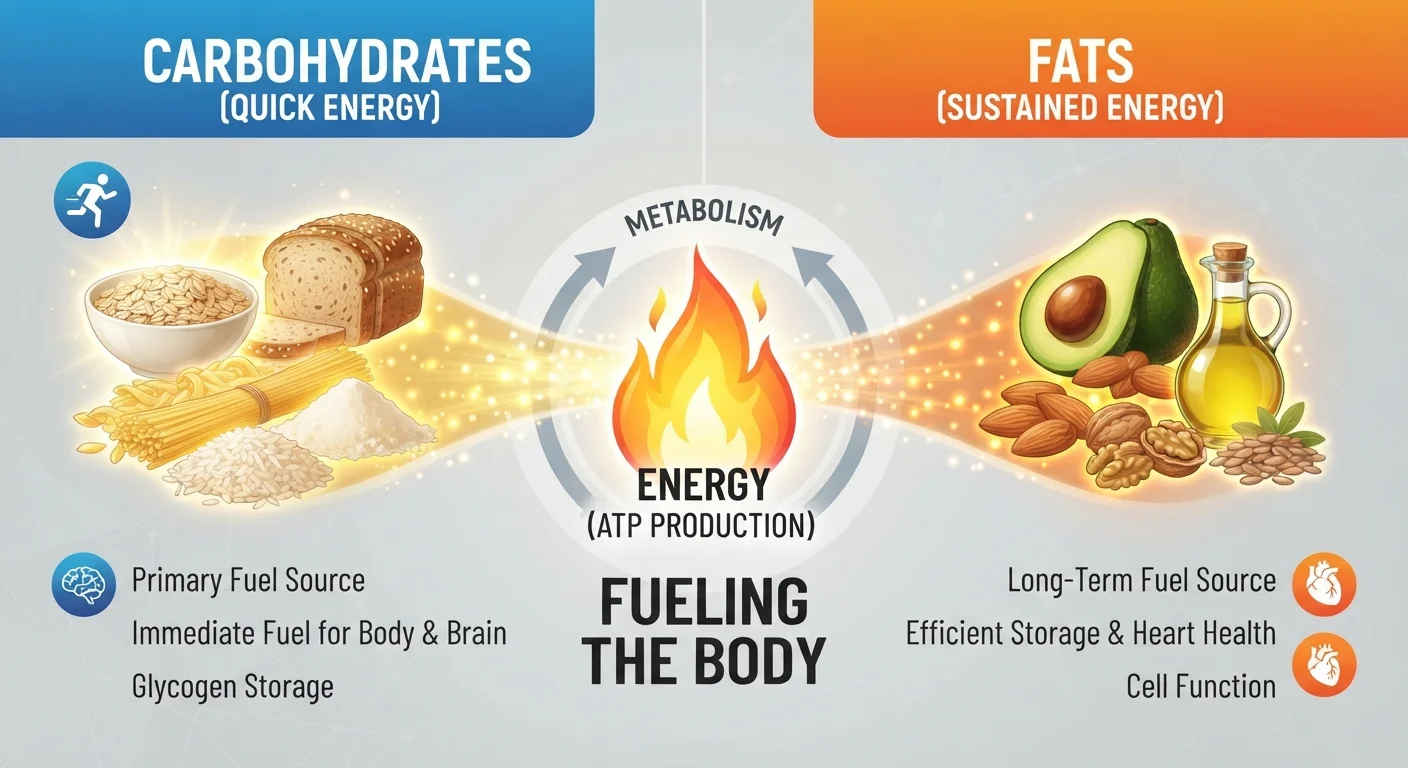

Two Categories, One Nutritional System
When most people think about food, they think about calories. Calories do matter — they represent the energy your body extracts from carbohydrates, protein, and fat, the three macronutrients. But food delivers far more than fuel. Embedded in every meal is a second layer of nutrition: the micronutrients — vitamins and minerals — that govern how your body actually uses that fuel.
Understanding both categories isn't about memorizing a nutrient chart. It's about recognizing that food quality and food quantity are two separate, equally important conversations. For a deeper look at what each macronutrient does on its own, see our plain-language breakdown of carbs, protein, and fat. This article zooms out to show how the full picture fits together.
What Macronutrients Do
Each macronutrient serves a distinct role beyond simply providing calories:
- Carbohydrates are the body's preferred energy source, particularly for brain function and physical activity. Whole food carbohydrate sources also deliver fiber, which supports digestive health and helps regulate blood sugar.
- Protein provides amino acids — the raw materials for building and repairing muscle, producing enzymes, and supporting immune function. The body cannot store protein the way it stores fat, making regular intake important.
- Fat is essential for absorbing fat-soluble vitamins (A, D, E, and K), supporting cell membrane structure, and producing hormones. Fat's lesser-known roles are frequently overlooked in nutrition discussions.
All three macronutrients are needed every day. The proportions vary by individual, but none is optional. Explore the macronutrients hub for more on each one.
~1 in 3
Americans with at least one micronutrient deficiency
National Health and Nutrition Examination Survey (NHANES) data analyzed by researchers has found that a substantial share of U.S. adults have inadequate intakes of vitamins and minerals including vitamin D, calcium, and potassium.
4 kcal/g
Energy per gram from carbohydrates and protein
Both carbohydrates and protein provide 4 kilocalories per gram; fat provides 9 kilocalories per gram — a standard measure used in nutrition labeling established by the USDA and FDA.
13
Essential vitamins recognized in human nutrition
The National Institutes of Health recognizes 13 essential vitamins — 4 fat-soluble (A, D, E, K) and 9 water-soluble (C and the 8 B vitamins) — each serving distinct physiological functions.
What Micronutrients Do
Vitamins and minerals don't provide energy directly, but they're indispensable for the processes that convert food into energy, build tissue, and maintain physiological balance. Consider a few examples:
- Iron carries oxygen in the blood. Without adequate iron, fatigue and impaired concentration can result — even when calorie intake is perfectly fine.
- Vitamin D supports calcium absorption and bone density, and plays roles in immune regulation.
- B vitamins (including folate, B6, and B12) are central to energy metabolism — they help unlock the energy stored in macronutrients.
- Zinc supports wound healing, immune response, and protein synthesis.
Micronutrient deficiencies can develop gradually and quietly, which is why dietary variety — rather than relying on any single food — is the most practical protective strategy. The vitamins and minerals hub covers the major micronutrients in detail.
Why Calories Alone Don't Tell the Full Story
Two meals can contain identical calorie counts while delivering dramatically different nutritional value. A highly processed meal may match a whole-food meal in energy — yet fall far short in fiber, vitamins, and minerals. This gap between caloric adequacy and nutritional adequacy is sometimes described in research as hidden hunger: enough calories, but insufficient micronutrients.
This is one reason nutrition researchers and public health bodies consistently emphasize food quality alongside energy balance. Our article on calorie deficit vs. calorie quality examines how both dimensions shape long-term health outcomes.
This article is for informational purposes only and is not a substitute for professional medical or dietary advice. Consult a qualified healthcare professional for guidance specific to your health needs.
Building Meals That Cover Both Bases
You don't need a nutrition degree or a tracking app to eat in a way that addresses both macronutrients and micronutrients. A few practical principles tend to do most of the work:
- Eat across food groups. No single food contains every essential nutrient. Grains, vegetables, fruits, legumes, protein sources, and dairy or dairy alternatives each contribute different nutrient profiles.
- Prioritize whole and minimally processed foods. These tend to be richer in fiber, vitamins, and minerals compared to heavily processed alternatives with similar calorie counts.
- Include color variety. Different pigments in plant foods often signal different phytonutrients and micronutrients. A varied color palette on your plate tends to reflect nutritional diversity.
- Don't fear any macronutrient. Healthy fat is necessary for absorbing fat-soluble vitamins. Carbohydrates from whole grains bring B vitamins and fiber alongside energy. Protein foods often carry iron, zinc, and other minerals.
For practical guidance on putting macros together at mealtime, see our article on balancing all three macros in a meal. And if you're looking for a quick reference on calorie values and food sources, the macronutrient quick-reference guide is a useful starting point.