Fat as a Structural Material
When most people think about dietary fat, they picture the layer of fat beneath the skin or around organs. But fat's most foundational job happens at a much smaller scale: it builds the walls of every single cell in your body.
Cell membranes are made primarily of phospholipids — molecules that have a fat-based tail and a water-attracting head. This structure allows the membrane to be selectively permeable, controlling what enters and exits each cell. Without adequate dietary fat, particularly essential fatty acids that the body cannot manufacture on its own, cell membranes become rigid and less functional.
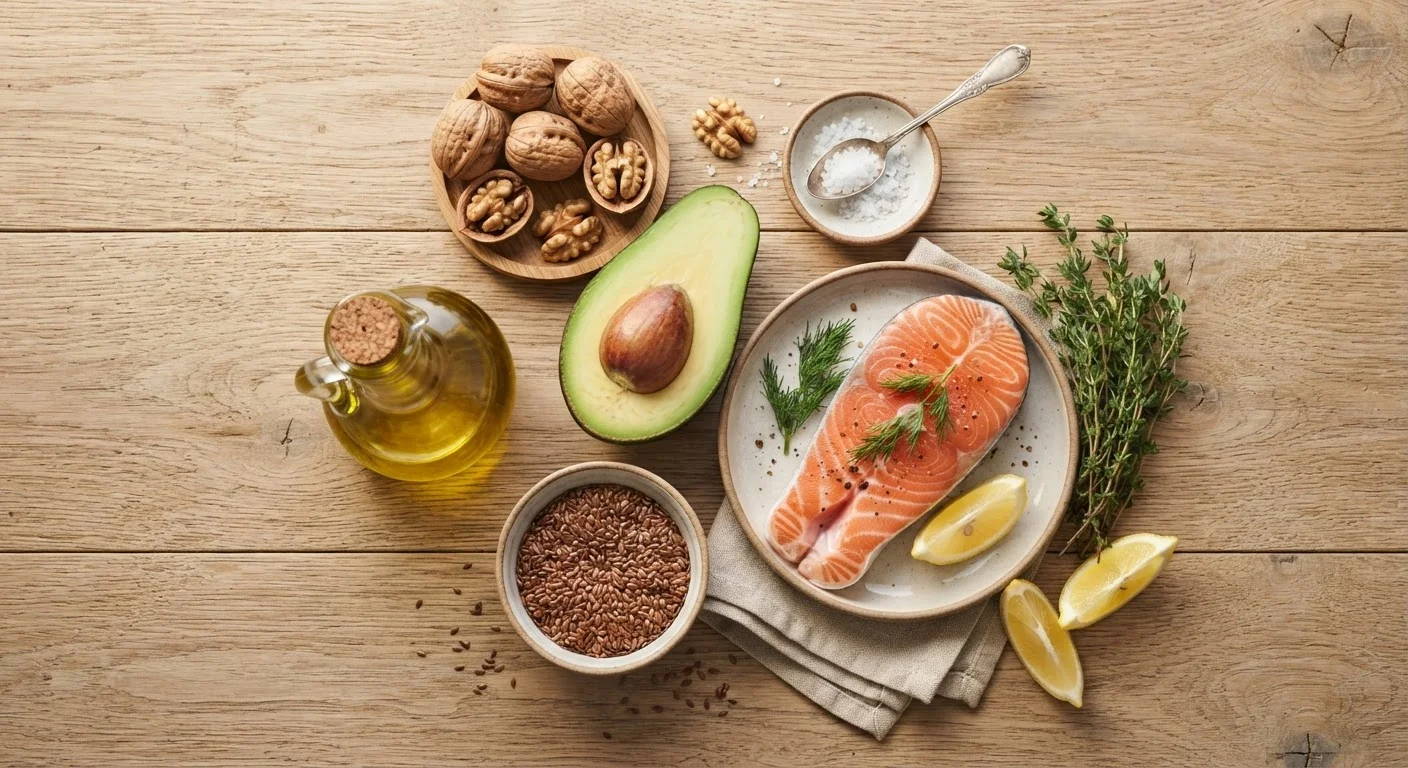
The brain is a particularly fat-dependent organ. By dry weight, the human brain is roughly 60% fat. Docosahexaenoic acid (DHA), an omega-3 fatty acid found in fatty fish, is especially concentrated in brain tissue and is involved in signaling between neurons. This is one reason nutritional guidance consistently emphasizes including omega-3-rich foods in a balanced diet. For a broader view of how fat fits with other essential nutrients, see how macronutrients and micronutrients work together.
Vitamins That Can't Work Without Fat
Four essential vitamins — A, D, E, and K — are classified as fat-soluble. This means they can only be absorbed in the presence of dietary fat. Eating a salad full of vitamin-rich vegetables with a fat-free dressing, for example, may result in significantly less vitamin absorption compared to the same salad dressed with olive oil.
Once absorbed, fat-soluble vitamins are stored in the liver and fatty tissues rather than excreted daily like water-soluble vitamins. This storage capacity is useful but also means excess intake over time can accumulate. Understanding the distinction between fat-soluble and water-soluble vitamins is worth exploring in depth — learn why the difference matters for how you eat.
Fat Needs Vary by Life Stage
Infants and young children have higher fat needs proportionally than adults, which is why full-fat dairy is typically recommended for toddlers rather than reduced-fat versions. Pregnant and breastfeeding individuals also have increased needs for certain fatty acids, particularly DHA. If you are in one of these life stages, consult a healthcare provider or registered dietitian before making significant changes to fat intake.
Vitamin D, in particular, depends on fat for absorption and plays roles far beyond bone health — including immune function and muscle performance. Many Americans have insufficient vitamin D levels, and low dietary fat intake is one factor that can compound the problem.
Fat's Role in Hormone Production
Hormones are chemical messengers that regulate nearly every system in the body — from metabolism and mood to reproduction and stress response. Many of the most critical hormones, including estrogen, testosterone, and cortisol, are built from cholesterol, a type of fat made by the liver and also obtained through food.
Severely restricting dietary fat can disrupt this production. Research has associated very low-fat diets with changes in reproductive hormone levels, which is one reason extremely low-fat eating patterns are not appropriate for most people without medical supervision. Fat also plays a role in the production of eicosanoids — signaling molecules that help regulate inflammation, blood clotting, and immune responses.
This is part of why the type of fat consumed matters, not just the quantity. The differences between saturated, unsaturated, and trans fats have real implications for how these hormone-related pathways function.
60%
Proportion of brain dry weight that is fat
The brain's high fat content, particularly DHA and other structural lipids, underscores dietary fat's role in neurological function and development.
20–35%
Recommended share of daily calories from fat
The Dietary Guidelines for Americans recommend this range for healthy adults, with emphasis on unsaturated fat sources over saturated ones.
9 kcal/g
Energy density of dietary fat
Fat provides more than twice the calories per gram of carbohydrates or protein, making it the body's most concentrated energy source.
Fat as Energy and Insulation
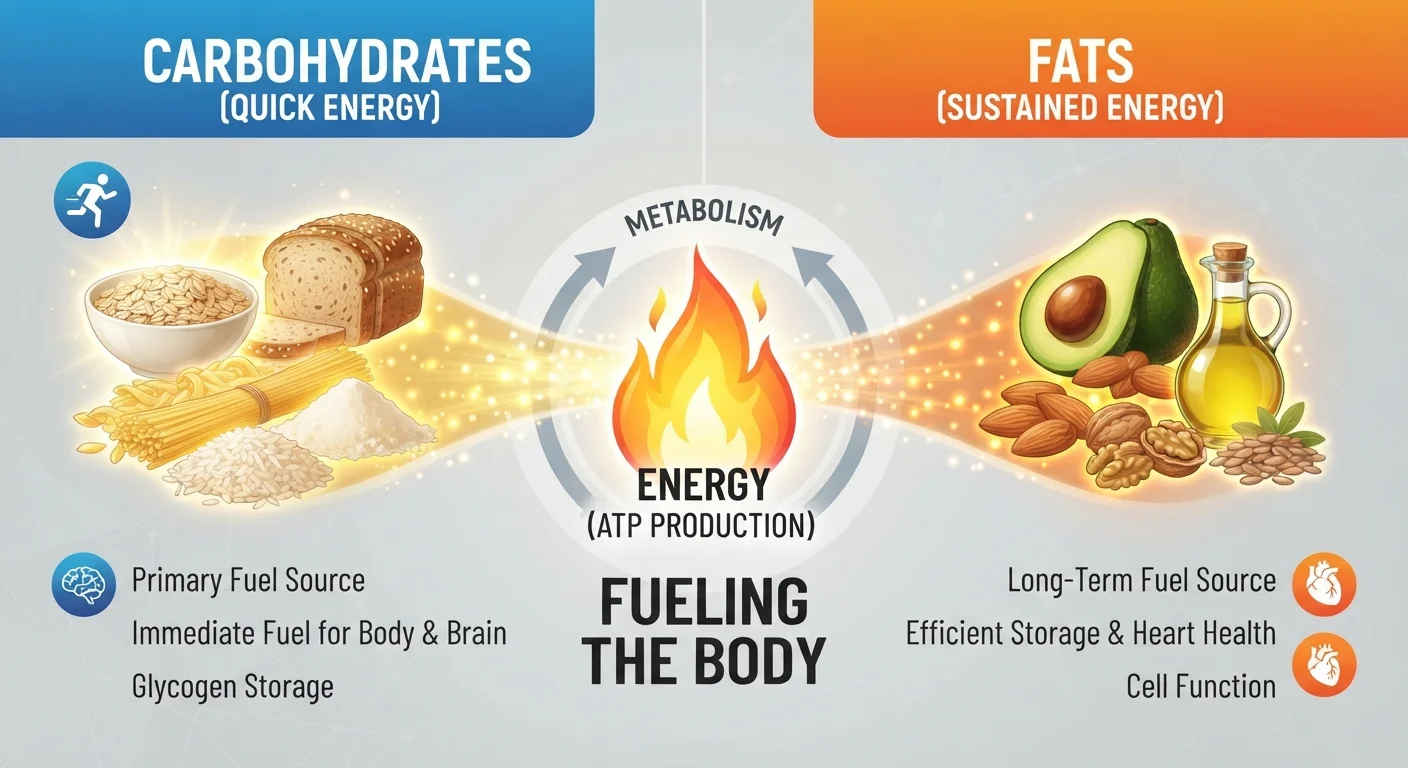
Fat is the most energy-dense macronutrient, providing 9 calories per gram compared to 4 calories per gram for both carbohydrates and protein. This density makes fat an efficient fuel source — particularly during lower-intensity physical activity and during periods between meals when the body draws on stored energy reserves.
Stored body fat also serves as insulation, helping regulate body temperature, and as cushioning around vital organs. These are protective, functional roles — distinct from the health implications of excess fat accumulation, particularly in the abdominal region. For more on how different types of stored fat behave, explore the distinction between visceral and subcutaneous fat.
Understanding fat alongside the other macronutrients gives a clearer picture of how the body balances its energy needs. The full macronutrient overview provides helpful context for how carbohydrates, protein, and fat divide these responsibilities.
This article is for general informational and educational purposes only and is not a substitute for professional medical or dietary advice. Consult a qualified healthcare provider or registered dietitian for guidance specific to your health needs.