The Three Macronutrients at a Glance
Every calorie you consume comes from one of three macronutrients — carbohydrates, protein, or fat. Understanding what each one is, how much energy it provides, and where it shows up in food is foundational to reading labels, planning meals, and making sense of nutrition guidance. For a broader look at how macronutrients fit alongside vitamins and minerals, see Macronutrients and Micronutrients: Understanding the Full Nutritional Picture.
| Carbohydrate calorie density | 4 calories per gram (USDA / Atwater general factors) |
| Protein calorie density | 4 calories per gram (USDA / Atwater general factors) |
| Fat calorie density | 9 calories per gram (USDA / Atwater general factors) |
| Alcohol calorie density | 7 calories per gram (Not a macronutrient but contributes dietary calories) |
| Essential amino acids | 9 (National Institutes of Health (NIH)) |
| Fat-soluble vitamins requiring dietary fat for absorption | A, D, E, K (NIH Office of Dietary Supplements) |
This reference breaks down each macro by its calorie density, primary functions, and common food sources — formatted for quick lookup rather than extended reading.
Carbohydrates: 4 Calories per Gram
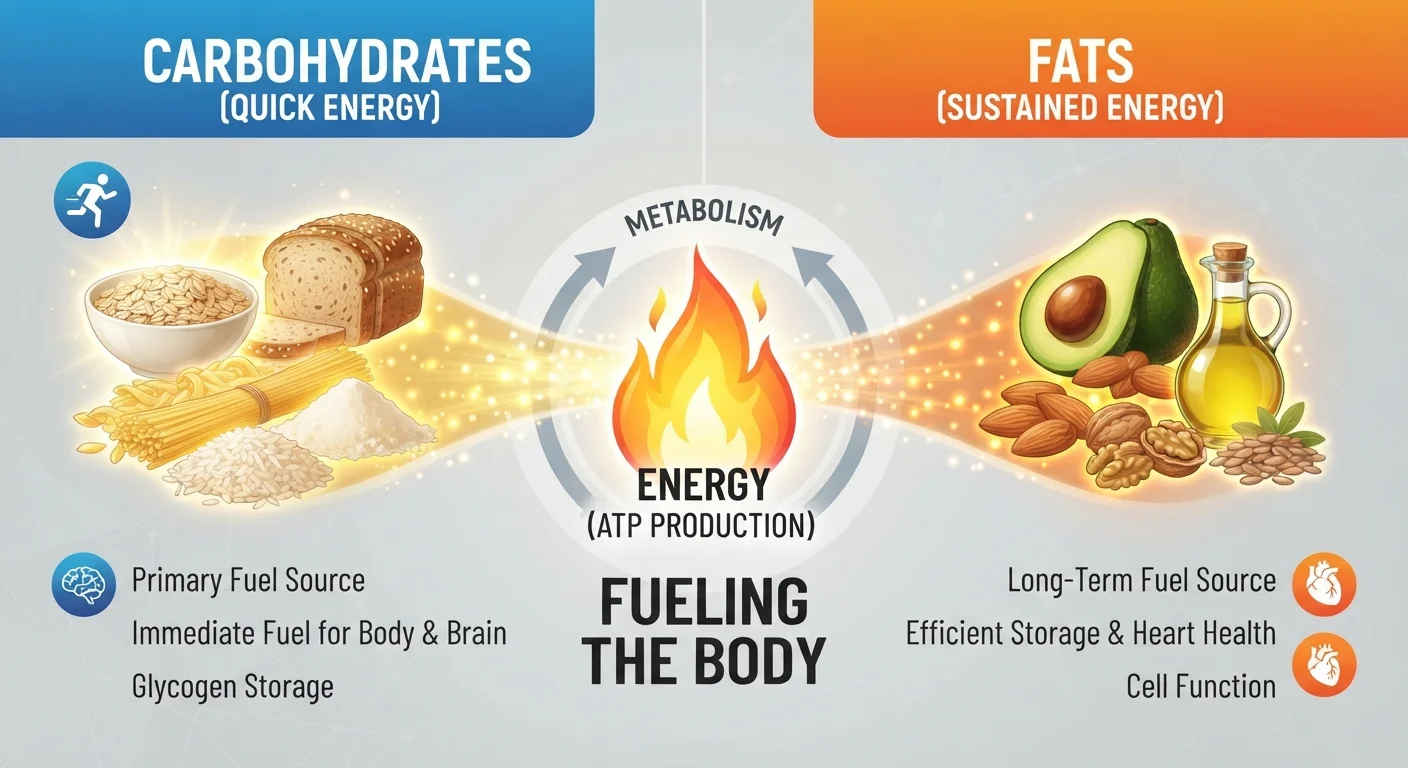
Carbohydrates are the body's preferred and most readily available energy source. They include sugars, starches, and dietary fiber. Once digested, most carbohydrates break down into glucose, which fuels the brain, muscles, and organs.
Two Main Types
- Simple carbohydrates: Short-chain sugars digested quickly. Found in fruit (fructose), dairy (lactose), table sugar, honey, and many packaged sweets.
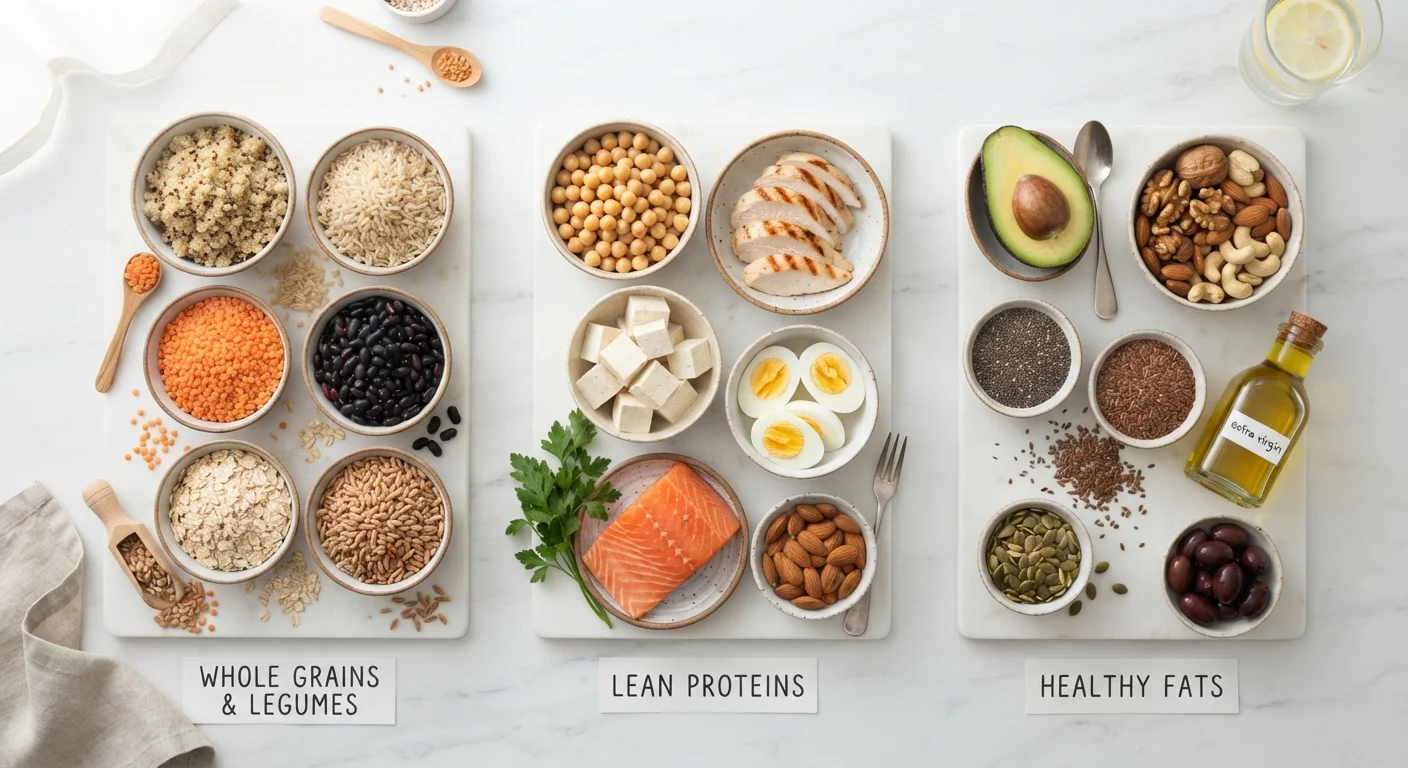
- Complex carbohydrates: Longer chains digested more slowly, providing more sustained energy. Found in whole grains, legumes, starchy vegetables, and oats.
Common Food Sources
| Food | Approximate Carbs per Serving |
|---|---|
| Cooked brown rice (1 cup) | ~45 g |
| Banana (medium) | ~27 g |
| Cooked lentils (½ cup) | ~20 g |
| Whole wheat bread (1 slice) | ~12–15 g |
Dietary fiber — a non-digestible carbohydrate — does not contribute meaningfully to calorie intake but supports digestive health and satiety. It is counted under total carbohydrates on nutrition labels. For help interpreting those numbers, see Food Label Literacy.
Protein: 4 Calories per Gram
Protein shares the same calorie density as carbohydrates but serves a fundamentally different role. It is the body's primary building material, used to construct, repair, and maintain cells, tissues, enzymes, and hormones. Proteins are made up of amino acids — nine of which are considered essential because the body cannot produce them on its own and must obtain them from food.
Complete vs. Incomplete Proteins
- Complete proteins supply all nine essential amino acids. Typical sources: meat, poultry, fish, eggs, dairy, soy, and quinoa.
- Incomplete proteins lack one or more essential amino acids. Typical sources: most legumes, nuts, seeds, and grains. These can complement each other when combined over the course of a day.
Common Food Sources
| Food | Approximate Protein per Serving |
|---|---|
| Chicken breast, cooked (3 oz) | ~26 g |
| Greek yogurt, plain (6 oz) | ~15–17 g |
| Black beans, cooked (½ cup) | ~8 g |
| Large egg (1 whole) | ~6 g |
To understand how protein functions alongside the other macros in the body, see Macronutrients Explained.
Fat: 9 Calories per Gram
Fat is the most calorie-dense macronutrient — more than twice the energy per gram compared to carbs or protein. It plays essential roles in absorbing fat-soluble vitamins (A, D, E, and K), supporting cell membrane integrity, and producing hormones. Not all dietary fats behave the same way in the body.
Fat Types in Brief
- Unsaturated fats (monounsaturated and polyunsaturated): Liquid at room temperature. Found in olive oil, avocados, nuts, and fatty fish. Include omega-3 and omega-6 fatty acids.
- Saturated fats: Solid at room temperature. Found in butter, full-fat dairy, and fatty cuts of meat.
- Trans fats: Primarily artificial, created through partial hydrogenation. Now largely removed from the U.S. food supply following regulatory action, but small amounts may still appear on labels.
For a deeper look at fat categories, see Saturated, Unsaturated, and Trans Fats: A Plain-Language Reference.
Common Food Sources
| Food | Approximate Fat per Serving |
|---|---|
| Almonds (1 oz / ~23 nuts) | ~14 g |
| Avocado (½ medium) | ~11 g |
| Olive oil (1 tbsp) | ~14 g |
| Salmon, cooked (3 oz) | ~7 g |
This article is for informational purposes only and is not a substitute for personalized medical or dietary advice. Consult a qualified healthcare professional or registered dietitian for guidance tailored to your individual health needs.