
Why Fat Type Matters More Than Fat Amount
For decades, dietary fat was treated as a single villain. Nutrition research has since drawn a much clearer picture: the type of fat you eat matters considerably more than the total grams on the label. Understanding the three core categories — saturated, unsaturated, and trans — gives you a practical framework for reading ingredient lists, evaluating food choices, and making sense of nutrition headlines.
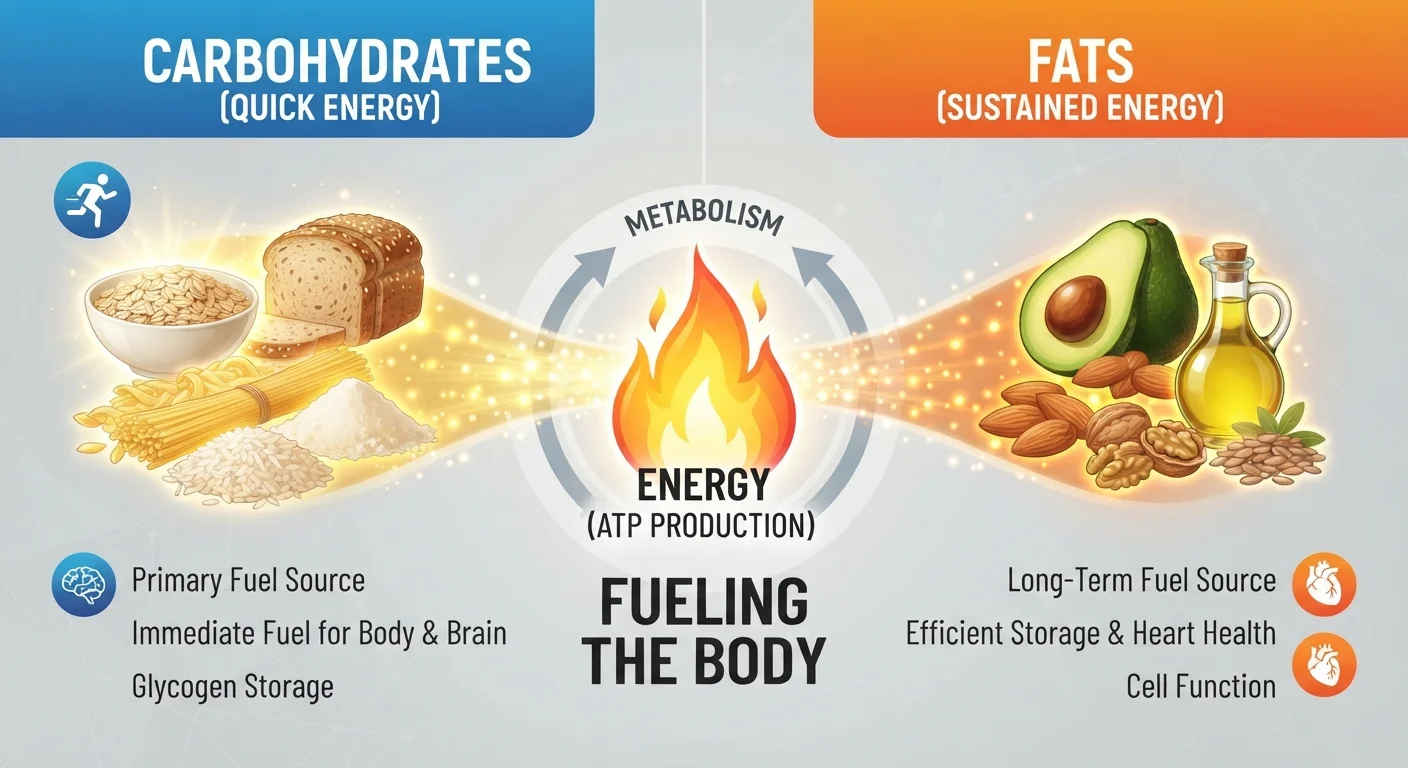
Fat itself is an essential macronutrient. It delivers energy, helps absorb fat-soluble vitamins (A, D, E, and K), supports cell membrane structure, and plays a role in hormone production. For a fuller look at what dietary fat does in the body, see The Many Jobs Dietary Fat Does That Often Go Unnoticed. This reference focuses specifically on distinguishing the three fat types at a glance.
Saturated fat
A type of dietary fat whose carbon chain carries no double bonds, making it fully loaded with hydrogen atoms. Typically solid at room temperature, it is found mainly in animal products and some tropical oils.
Unsaturated fat
A fat with one or more double bonds in its carbon chain, making it liquid at room temperature. Includes both monounsaturated and polyunsaturated varieties, commonly found in plant oils, nuts, seeds, and fatty fish.
Trans fat (industrial)
A fat formed when liquid oils are partially hydrogenated — a manufacturing process that adds hydrogen to create a solid texture and extend shelf life. Largely removed from the U.S. food supply since 2020.
Omega-3 fatty acids
A subtype of polyunsaturated fat that the body cannot synthesize on its own. Found in fatty fish, flaxseed, and walnuts, omega-3s are considered essential nutrients obtained through diet.
LDL cholesterol
Low-density lipoprotein, often called "bad" cholesterol. Elevated LDL levels are associated with a higher risk of cardiovascular disease in large-scale research.
HDL cholesterol
High-density lipoprotein, often called "good" cholesterol. Higher HDL levels are generally associated with a lower cardiovascular risk profile.
Partial hydrogenation
An industrial process that adds hydrogen to unsaturated vegetable oils, converting some double bonds into single bonds and creating trans fats as a byproduct.
Monounsaturated fat (MUFA)
A fat with exactly one double bond in its carbon chain. Olive oil, avocado oil, and most nut oils are rich sources of monounsaturated fats.
The Three Fat Types, Side by Side
The terms saturated, unsaturated, and trans describe the chemical structure of a fat molecule — specifically, how hydrogen atoms are arranged around its carbon chain. Structure directly influences how a fat behaves at room temperature, how the body processes it, and what research suggests about its long-term effects.
| Calories per gram of fat | 9 kcal (USDA Dietary Reference Intakes) |
| Recommended saturated fat limit | Less than 10% of daily calories (Dietary Guidelines for Americans, 2020–2025) |
| Industrial trans fat status in the U.S. | Effectively banned since 2020 (U.S. Food and Drug Administration) |
| Essential fatty acid categories | Omega-3 and Omega-6 (National Institutes of Health Office of Dietary Supplements) |
| Physical state of saturated fat at room temperature | Solid |
| Physical state of unsaturated fat at room temperature | Liquid |
Saturated Fat
Saturated fats have no double bonds between carbon atoms — their carbon chain is fully "saturated" with hydrogen atoms. They are typically solid at room temperature. Common sources include fatty cuts of beef, pork, lamb, full-fat dairy products (butter, cheese, whole milk), coconut oil, and palm oil. The Dietary Guidelines for Americans recommend limiting saturated fat to less than 10% of total daily calories, based on evidence linking high intake to elevated LDL (low-density lipoprotein) cholesterol levels. Research on saturated fat continues to evolve, and different saturated fatty acids appear to have somewhat different effects — but the overall guidance to keep intake moderate remains consistent across major health organizations.
Unsaturated Fat
Unsaturated fats contain one or more double bonds in their carbon chain, making them liquid at room temperature. They are broadly divided into two types:
- Monounsaturated fats (MUFAs) — one double bond. Found in olive oil, avocados, peanuts, and most tree nuts. Associated in research with supporting healthy cholesterol levels when they replace saturated fats.
- Polyunsaturated fats (PUFAs) — two or more double bonds. Found in fatty fish (salmon, sardines), walnuts, flaxseed, sunflower oil, and soybean oil. This category includes essential omega-3 and omega-6 fatty acids — fats the body cannot produce on its own and must obtain from food.
For context on how all three macronutrients fit together, see Macronutrients Explained.
Trans Fat
Trans fats occur in two forms. Industrial trans fats are created by partially hydrogenating liquid vegetable oils — a process that extends shelf life and creates a semi-solid texture. They were once widespread in stick margarines, packaged snacks, and fried fast food. The FDA effectively banned partially hydrogenated oils from the U.S. food supply as of 2020, so industrial trans fats are now largely absent from American foods, though trace amounts may appear in some products. Naturally occurring trans fats (such as conjugated linoleic acid found in dairy and beef) exist in small amounts and appear to behave differently from industrial versions. The major concern in nutrition research has been industrial trans fat, which was consistently linked to increased LDL cholesterol and decreased HDL (high-density lipoprotein) cholesterol — a particularly unfavorable combination.
For a broader look at nutrition terminology, the Macronutrient Quick-Reference covers calorie density and food sources across all macronutrients.
This article is for general informational and educational purposes only and is not a substitute for personalized medical or dietary advice. If you have specific health conditions or concerns about dietary fat intake, consult a qualified healthcare provider or registered dietitian.