
What Are Macronutrients?
The word macronutrient simply means a nutrient your body needs in relatively large amounts to function. Unlike vitamins and minerals — which are required in trace quantities — macronutrients are your body's primary source of energy and structural material. Every meal you eat is made up of some combination of them.
There are three macronutrients: carbohydrates, protein, and fat. You may also hear them called "macros" for short. Learning what each one does, and where to find it in food, is one of the most practical things you can do to build a stronger nutritional foundation. For a broader look at how this fits into daily habits, see our complete guide to balanced eating.
Macronutrient
A nutrient the body needs in large quantities to produce energy and support basic functions. The three macronutrients are carbohydrates, protein, and fat.
Carbohydrate
A macronutrient found in grains, fruits, vegetables, and legumes that the body converts to glucose for energy. Includes sugars, starches, and fiber.
Protein
A macronutrient made up of amino acids that the body uses to build and repair tissues, support immune function, and produce enzymes.
Dietary Fat
A macronutrient that provides concentrated energy, helps absorb fat-soluble vitamins, and supports hormone production. Found in oils, nuts, seeds, and animal products.
Essential Amino Acids
Nine amino acids the body cannot produce on its own and must obtain through food. Complete protein sources like meat, eggs, and soy contain all nine.
Fiber
A type of carbohydrate the body cannot fully digest. It supports digestive health, helps regulate blood sugar, and contributes to feelings of fullness.
The Three Macros Explained
Carbohydrates
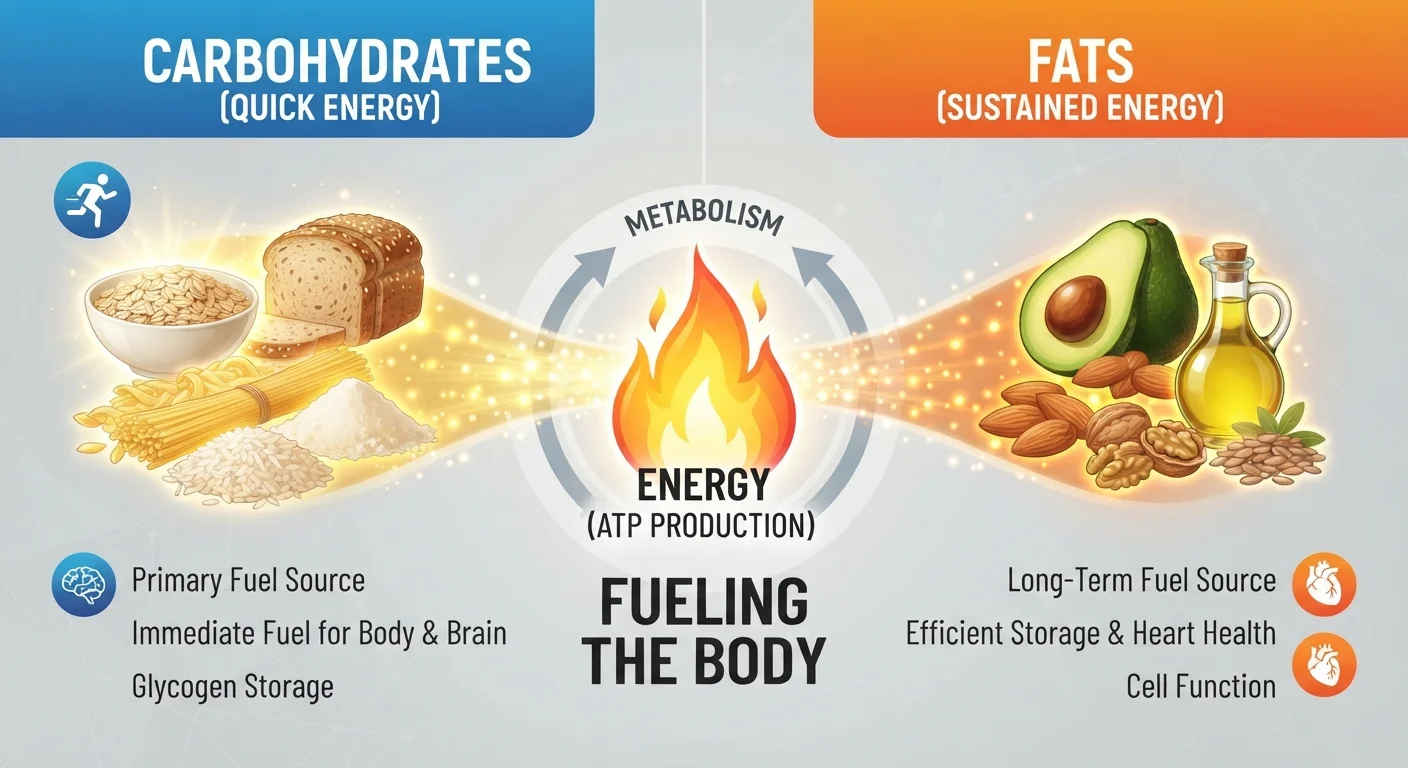
Carbohydrates are your body's preferred fuel — particularly for your brain and muscles during physical activity. When you eat carbs, your body converts them into glucose, which cells use for energy. Common sources include grains (bread, rice, oats), legumes, fruits, vegetables, and dairy. The fiber found in plant-based carbs also plays an important role in digestive health and satiety.
Protein
Protein is the body's primary building material. It supports muscle repair, immune function, enzyme production, and the maintenance of virtually every tissue. Protein is made up of amino acids, nine of which are considered "essential" because the body cannot produce them on its own. Good sources include meat, poultry, fish, eggs, dairy, beans, lentils, tofu, and tempeh.
Fat
Dietary fat is not the enemy it was once portrayed to be. Fat is essential for absorbing fat-soluble vitamins (A, D, E, and K), producing hormones, and protecting organs. It also provides a concentrated source of energy. Healthy fat sources include avocados, nuts, seeds, fatty fish, and olive oil. For a handy lookup of calorie values and food sources across all three macros, see our macronutrient quick-reference guide.
How Macros Work Together in a Real Meal
No single macronutrient works in isolation. Consider a simple lunch: a grain bowl with brown rice, grilled chicken, roasted vegetables, and a drizzle of olive oil. The rice supplies carbohydrates for energy; the chicken delivers protein for muscle and tissue support; the olive oil provides fat to aid nutrient absorption and satisfaction. The vegetables contribute fiber, micronutrients, and a smaller carbohydrate contribution.
This kind of natural combination happens in most whole-food meals without deliberate planning. When meals are heavily processed or composed of a single food type, the macro balance can shift in ways that leave you feeling less satisfied or energized. Understanding macros helps you recognize these patterns, not obsess over them.
Build Balance Without Overthinking It
A simple way to check a meal's macro balance is to scan your plate: do you see a protein source, a carbohydrate-rich food, and a fat source? If one is missing, it is easy to add — a handful of nuts, a scoop of beans, or a slice of whole grain bread. This visual habit builds macro awareness naturally, without counting a single gram.
Do You Need to Track Macros?
Macro tracking — logging the specific gram amounts of carbs, protein, and fat you eat each day — is a legitimate tool used by athletes, people managing specific health conditions, and those with defined body composition goals. However, it is not a requirement for eating well.
Most everyday eaters benefit more from building awareness than from precise measurement. Knowing that a breakfast heavy in refined carbs and low in protein may leave you hungry two hours later is actionable information you can act on without opening an app. If you are exploring how nutrition intersects with body composition, our article on understanding body composition offers a useful companion perspective.
Tracking can become counterproductive if it creates anxiety around food. If you find yourself stressing about numbers rather than enjoying meals, that is a signal to step back and refocus on food quality and variety instead.
A Practical Starting Point for Everyday Eaters
You do not need a nutrition degree or a tracking app to start applying what you know about macros. A few straightforward habits go a long way:
- Include a protein source at each meal. This supports satiety and provides essential amino acids throughout the day.
- Choose whole or minimally processed carbohydrate sources when possible — oats over pastries, whole grain bread over white bread, beans over crackers.
- Do not avoid fat. Include it intentionally through sources like nuts, seeds, avocado, or olive oil rather than treating it as something to minimize.
- Notice how your meals make you feel. Energy levels, hunger timing, and mood after eating are practical feedback mechanisms that no app can replicate.
Common early mistakes — like cutting out entire macronutrient groups or treating all carbs as sugar — are worth avoiding. Our article on what new eaters often get wrong addresses those patterns directly. And if you are thinking about long-term habits around food and weight, sustainable weight habits is a natural next step.
Individual needs vary based on age, activity, and health status. For personalized guidance, a registered dietitian is the best resource.
This article is for general informational and educational purposes only and is not a substitute for professional medical or dietary advice. Always consult a qualified healthcare provider before making significant changes to your diet.