Why Evidence-Based Sleep Habits Matter
Advice about sleep is everywhere — but not all of it is grounded equally in research. Some recommendations have decades of replication behind them; others are reasonable-sounding extrapolations from limited data. This article focuses specifically on the habits that appear most consistently across the sleep science literature, so you can prioritize accordingly.
For a broader look at how sleep hygiene compares with deeper sleep science, the distinction between what research firmly supports and softer habit advice is worth understanding before building your routine.
This Is General Health Information
The habits described here are grounded in population-level sleep research and are not a substitute for personalized medical advice. If you experience persistent insomnia, excessive daytime sleepiness, or other sleep concerns, consult a qualified healthcare provider. Conditions such as sleep apnea require clinical evaluation and treatment.
The Habits With the Strongest Research Support
The six practices below are drawn from peer-reviewed research, clinical guidelines, and systematic reviews. Each connects directly to measurable physiological mechanisms — not just self-reported outcomes. They form the foundation of what sleep researchers and clinicians most consistently recommend.
Keep your sleep and wake times consistent every day, including weekends.
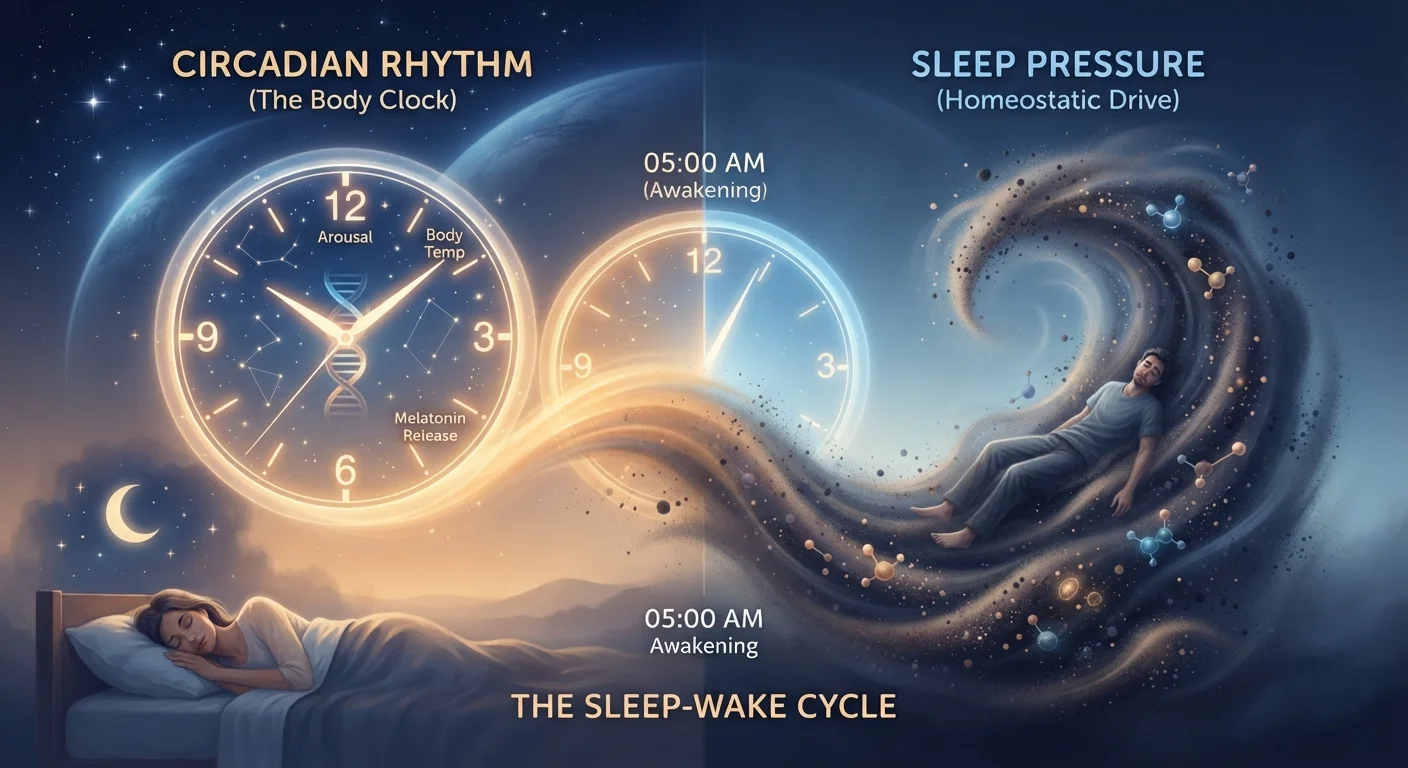
Your circadian rhythm — the internal 24-hour clock regulated largely by the suprachiasmatic nucleus in the brain — functions best with predictable timing signals. Research consistently shows that irregular sleep schedules are associated with poorer sleep quality, longer sleep onset, and reduced daytime alertness. Consistency reinforces the biological timing of melatonin release and core body temperature drop, both of which facilitate sleep.
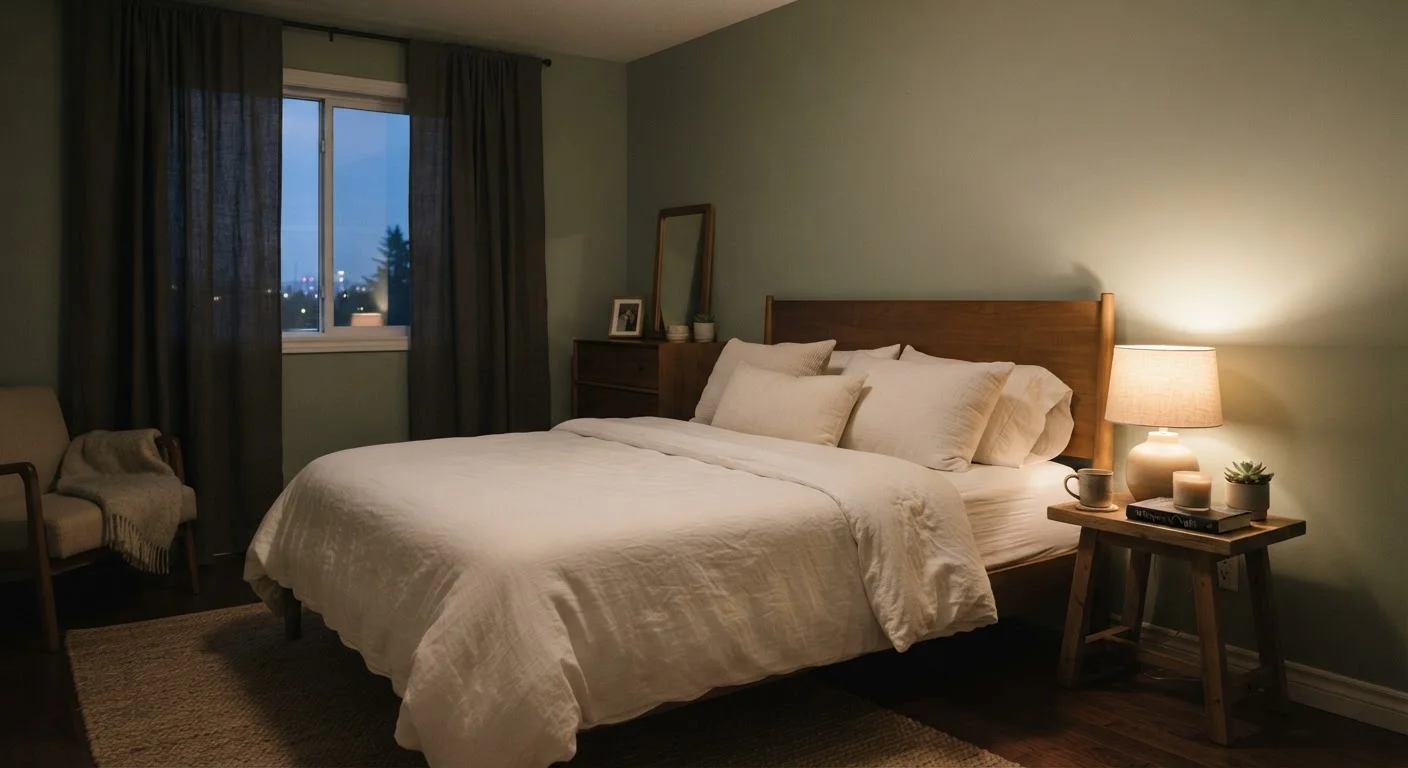
Keep your bedroom cool, dark, and quiet during sleep hours.
Core body temperature naturally decreases as part of the sleep-initiation process. Research suggests a bedroom temperature in the range of 65–68°F (18–20°C) supports this drop. Darkness is equally critical: even dim light during sleep has been shown to suppress melatonin and fragment sleep architecture. Noise disruption — even without full awakening — can reduce time spent in slow-wave and REM sleep.
Avoid caffeine for at least six hours before your intended sleep time.
Caffeine is an adenosine-receptor antagonist — it blocks the accumulating sleep pressure signal that builds throughout the day. Its half-life in adults averages around five to six hours, meaning a 3 p.m. coffee still leaves roughly half its caffeine active at 9 p.m. Studies have documented that afternoon caffeine measurably reduces total sleep time and slow-wave sleep even when subjects report no difficulty falling asleep.
Dim artificial lights and minimize screen use in the hour before bed.
Light is the primary zeitgeber — environmental cue — that resets the circadian clock. Short-wavelength (blue) light is especially potent at suppressing melatonin secretion from the pineal gland. Evening light exposure can shift the circadian phase later, delaying both sleep onset and morning alertness. While the magnitude of screen effects varies, the underlying photobiology is well established. For a nuanced look at the research, see what studies actually show about screens and sleep.
Engage in regular aerobic or resistance exercise, prioritizing earlier in the day.
Multiple meta-analyses confirm that habitual physical activity improves sleep quality, increases slow-wave sleep, and reduces sleep onset latency in both healthy adults and clinical populations. Exercise raises core body temperature and adenosine levels; as both normalize in the hours after activity, they facilitate sleep drive. Vigorous exercise close to bedtime may delay sleep for some individuals, though research on this is more mixed than once believed.
Reserve the bed primarily for sleep and, if applicable, sex.
Stimulus control therapy — one of the core components of Cognitive Behavioral Therapy for Insomnia (CBT-I), the gold-standard treatment — is built on this principle. Working, watching television, or scrolling in bed trains the brain to associate the sleep environment with wakefulness and arousal, weakening the conditioned association between bed and sleep. This is one of the most robustly supported behavioral interventions in sleep medicine.
Start Here: Your Immediate Action Plan
Understanding the evidence is useful, but behavior change happens one night at a time. The quick wins below are low-effort, high-impact starting points you can apply tonight — no equipment or major lifestyle overhaul required. Building on these consistently is exactly what the complete guide to lasting sleep habits covers in depth.
For a more structured approach to embedding these behaviors into a sustainable evening routine, see building a nightly routine that actually sticks. Sleep habits also connect to broader health: the science-backed framework for daily prevention places sleep within the wider context of long-term wellness.
This article is for informational purposes only and does not constitute medical advice. Consult a qualified healthcare professional for personal sleep concerns or symptoms.