How Consumer Sleep Trackers Actually Work
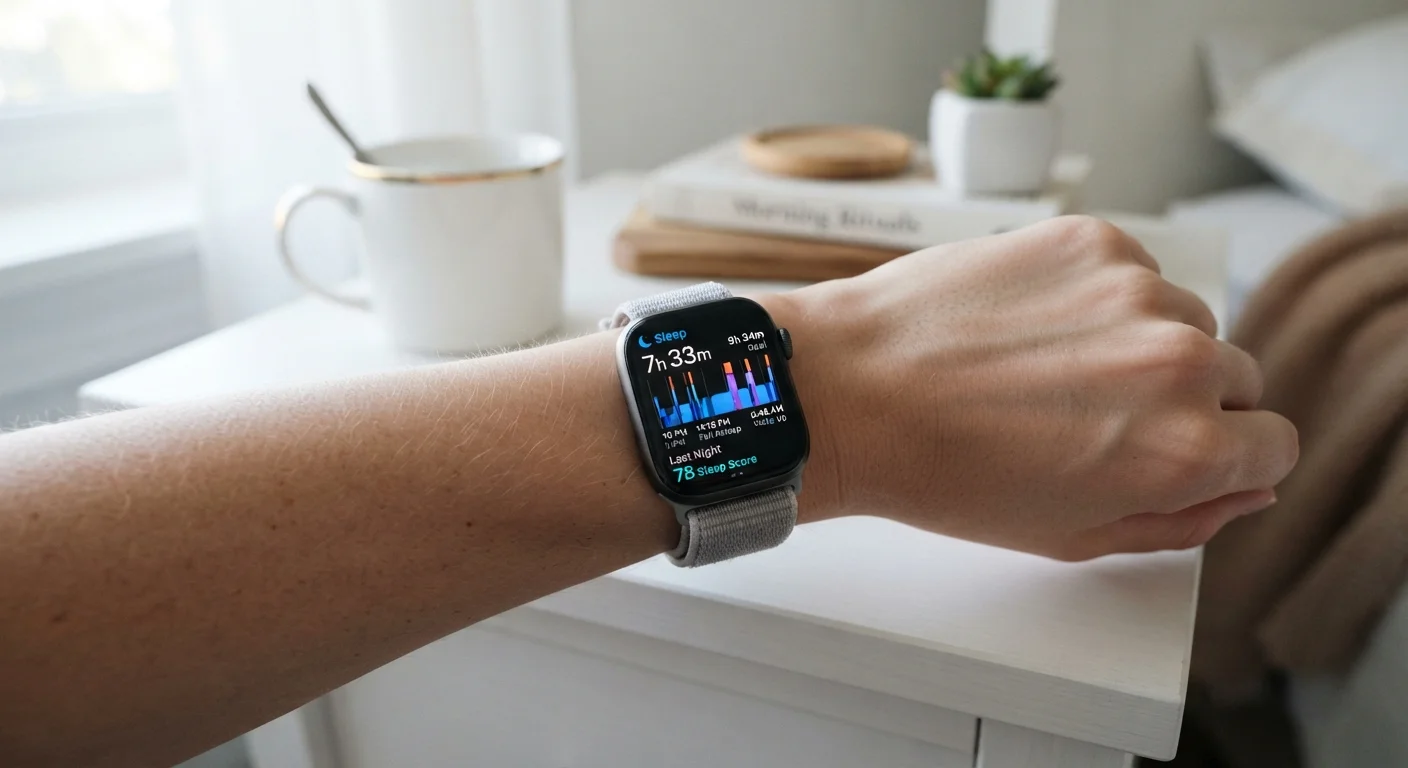
Most wrist-worn sleep trackers rely on two primary inputs: accelerometry (motion sensing) and photoplethysmography (optical heart rate monitoring). By measuring stillness and heart rate variability across the night, algorithms infer when you're asleep, when you're restless, and — in many devices — which sleep stage you're in.
This approach is fundamentally different from clinical measurement. A polysomnogram (PSG) — the gold-standard sleep study — records electroencephalography (EEG) brainwave activity directly, along with eye movements, muscle tone, and oxygen saturation. EEG signals are what allow clinicians to definitively identify REM sleep, slow-wave (deep) sleep, and lighter NREM stages. Consumer devices are inferring these states indirectly, which introduces meaningful error. For a detailed look at how clinical sleep studies are read, see our plain-language guide to polysomnography.
Some newer trackers incorporate skin temperature sensors or respiratory rate estimation, which can improve accuracy modestly — but none have matched PSG reliability in independent peer-reviewed validation studies.
What the Data Can Genuinely Tell You
Tracks total sleep duration trends over time
Wearables reliably distinguish sleep from wakefulness across multiple nights, giving a useful picture of whether you're meeting recommended sleep durations consistently.
Surfaces irregular sleep schedule patterns
Inconsistent bedtimes and wake times are linked to metabolic and cardiovascular risks; trackers make these patterns visible in a way personal memory rarely does.
Enables lifestyle correlation logging
Many platforms integrate behavioral logs — exercise, alcohol, stress — alongside sleep metrics, helping users identify personal factors that affect their rest.
Low barrier to entry for self-monitoring
Wearing a tracker requires no clinical appointment or specialist referral, making sleep awareness accessible to a broad population who might not otherwise monitor their habits.
Can prompt earlier help-seeking
Noticing persistent poor sleep metrics may motivate users to discuss their sleep with a clinician sooner than they otherwise would have.
Despite their limitations, consumer trackers provide real, actionable value in several areas:
- Total sleep duration trends: Research suggests devices perform reasonably well at distinguishing sleep from wakefulness over many nights, making them useful for tracking whether you're consistently undersleeping or oversleeping. For context on why both extremes matter, see our overview of short and long sleep patterns.
- Consistency patterns: Irregular bedtimes and wake times are associated with poorer health outcomes. A tracker can surface this pattern in a way that simple recall cannot.
- Lifestyle correlations: Many platforms let users log exercise, alcohol intake, or evening screen use alongside sleep data. Spotting personal correlations — even imprecise ones — can support behavior change. Evening screen habits and sleep are one area where tracking context adds real value.
Where Sleep Tracker Data Falls Short
Sleep stage accuracy is significantly limited
Without EEG, devices must infer REM and deep sleep from indirect signals, and independent studies show misclassification rates that can exceed 50% on individual nights.
Tends to overestimate total sleep time
Algorithms often log quiet wakefulness as light sleep, inflating total sleep figures and potentially masking real sleep insufficiency.
Can trigger orthosomnia in susceptible users
Anxiety about achieving ideal sleep scores or stage breakdowns can itself elevate arousal at bedtime, creating a self-defeating cycle of worry and disrupted sleep.
Cannot diagnose sleep disorders
Conditions like obstructive sleep apnea, narcolepsy, and restless legs syndrome require clinical evaluation and validated diagnostic tools that no consumer wearable provides.
Validation data is often proprietary
Most manufacturers do not publish full independent validation studies, making it difficult for consumers or clinicians to assess how accurate a specific device truly is.
Individual variation limits generalizability
Tracker accuracy varies meaningfully based on skin tone, body position, wrist placement, and age — factors rarely disclosed in product literature.
Understanding the limitations of your device is just as important as knowing what it measures well.
What Validation Research Shows
Independent validation studies — including analyses published in Sleep Medicine Reviews — have found that consumer devices tend to overestimate total sleep time and frequently misclassify sleep stages, particularly slow-wave and REM sleep. Misclassification rates can exceed 50% on any given night. Accuracy varies considerably by device and by individual, and few manufacturers publicly disclose full validation methodology.
Independent validation studies — including a frequently cited 2019 analysis published in Sleep Medicine Reviews — have found that consumer devices tend to overestimate total sleep time and often misclassify sleep stages, particularly slow-wave and REM sleep, at rates that can exceed 50% on any given night. Accuracy varies considerably by device and by individual, and few manufacturers publicly disclose full validation data.
The Orthosomnia Problem: When Tracking Backfires
Sleep researchers have identified a phenomenon called orthosomnia — a preoccupation with achieving perfect sleep data that paradoxically disrupts actual sleep. When people become anxious about a low sleep score or an apparent lack of deep sleep, that cognitive arousal can make falling or staying asleep harder.
A 2017 case series published in the Journal of Clinical Sleep Medicine described patients whose sleep complaints intensified after they began closely monitoring tracker data, sometimes leading them to resist clinical findings that contradicted their device's output.
This doesn't mean you should ignore your data — it means holding it lightly. A single night of "poor" stage estimates is not a medical finding. How you feel on waking, your daytime alertness, and your ability to function are still among the most meaningful indicators of whether your sleep is serving you.
~50%+
Sleep stage misclassification rate per night
Independent validation studies, including analyses published in Sleep Medicine Reviews, have found consumer trackers can misclassify sleep stages at rates exceeding 50% on individual nights.
7–9 hrs
Recommended adult sleep duration
The American Academy of Sleep Medicine and Sleep Research Society recommend 7–9 hours of nightly sleep for adults to support optimal health outcomes.
1 in 3
American adults sleeping under 7 hours
CDC surveillance data indicates approximately one-third of U.S. adults regularly report sleeping less than the recommended minimum of 7 hours per night.
Using Tracker Data Wisely
The most evidence-informed approach treats wearable sleep data as a behavioral mirror, not a diagnostic instrument. Practically, that means:
- Focus on weekly averages and trends rather than individual night scores.
- Use the data to ask questions rather than draw conclusions — if you're consistently logging fewer than seven hours, that's worth addressing regardless of what your sleep stages show.
- Be skeptical of highly granular metrics (e.g., exact minutes of REM sleep) that exceed what the underlying sensor technology can reliably detect.
- If you suspect a genuine sleep disorder — persistent insomnia, excessive daytime sleepiness, or witnessed breathing pauses — bring that concern to a healthcare provider. No consumer tracker can diagnose sleep apnea, restless legs syndrome, or narcolepsy.
Sleep trackers share a limitation with other consumer health metrics: the number tells only part of the story. Body weight is a comparable example — a single number that carries real information but also real blind spots.
This article is for general informational and educational purposes only and does not constitute medical advice. If you have concerns about your sleep health, consult a qualified healthcare professional.