Why Nutrition Labels Feel More Complicated Than They Are
The Nutrition Facts panel has been a federally required feature of packaged food in the U.S. since 1994, and the FDA updated its format in 2020 to reflect current nutrition science. Despite that, most people either ignore the label entirely or try to parse every single number — and neither approach is particularly useful.
The label is designed to give you enough information to compare products and make generally informed choices. It isn't a prescription, and it wasn't designed to be memorized or optimized. Understanding the full nutritional picture behind those numbers helps, but you don't need a nutrition degree to use a label well. You just need to know which parts actually matter for everyday decisions.
What You Actually Need to Look At
There are roughly a dozen data points on a standard Nutrition Facts label. In practice, most people benefit from paying attention to just four or five of them consistently.
Use Labels to Compare, Not to Judge
Nutrition labels are most powerful as a comparison tool between similar products. Rather than deciding whether a food is 'good' or 'bad,' try using the label to choose which version of a food works better for your overall pattern. A slightly lower sodium option or a higher-fiber bread can make a real difference over time without requiring you to overhaul anything.
Start with Serving Size
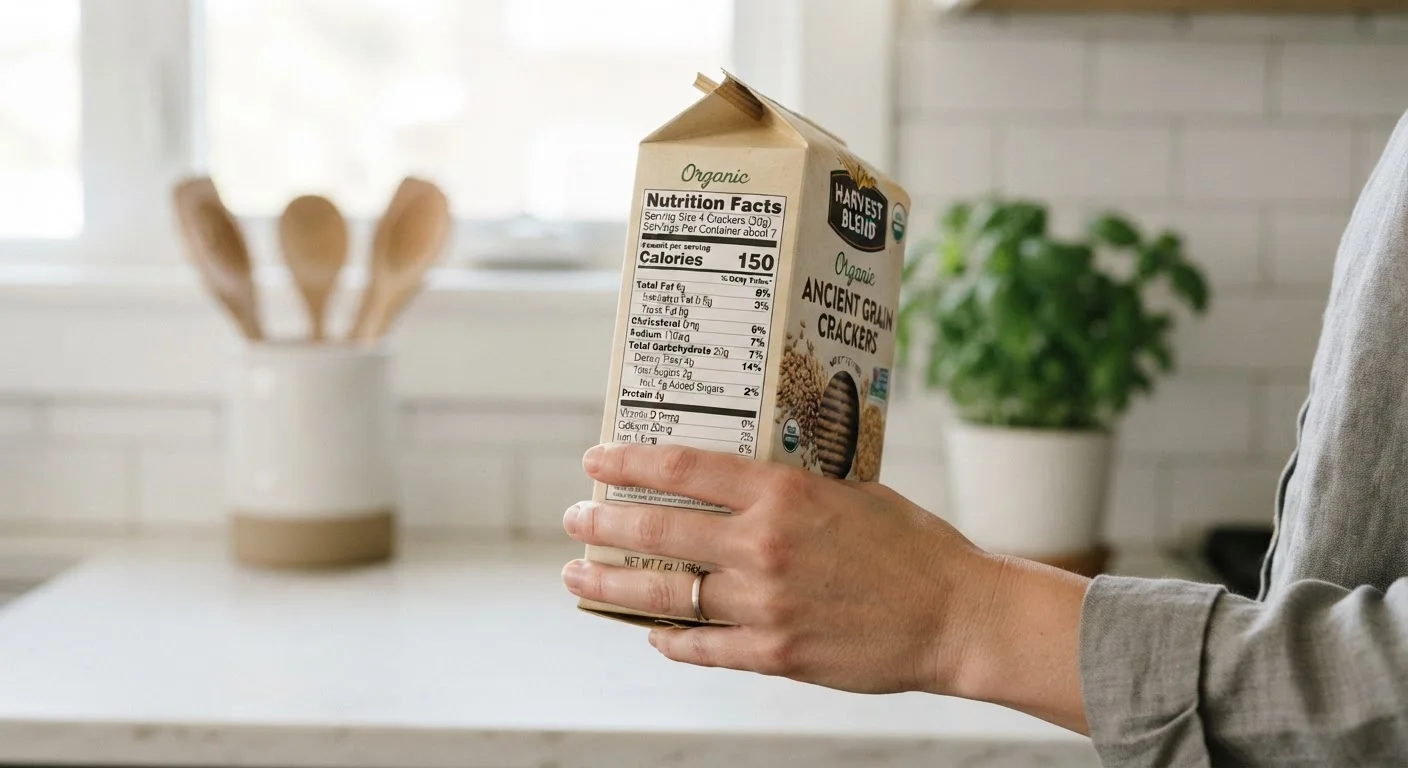
This is the single most consequential line on the label, and it's easy to overlook. All the numbers below it — calories, fat, sodium, everything — reflect one serving as the manufacturer defines it. A bag of chips might list 140 calories per serving, but if there are 3.5 servings in the bag, the whole bag contains nearly 500 calories. The updated label format now displays the number of servings per container more prominently, which helps.
Use % Daily Value as a Shortcut
The %DV column on the right side of the label tells you how much a nutrient in one serving contributes to a general daily diet based on 2,000 calories. A rough rule of thumb: 5% or less is considered low for a nutrient, and 20% or more is considered high. This is far more actionable than trying to calculate grams in your head. For a deeper look at how these numbers interact with individual nutrients, see our guide on common micronutrient misconceptions.
Prioritize a Few Key Nutrients
Rather than tracking everything, focus on nutrients most Americans tend to get too much or too little of. Aim for more of: dietary fiber, vitamin D, calcium, iron, and potassium. Aim to keep lower: added sugars, sodium, and saturated fat. These are the nutrients public health guidance — including from the USDA Dietary Guidelines — consistently flags as meaningful for general health.
Read the Ingredients List
Ingredients are listed in descending order by weight. If whole grains, lean proteins, or vegetables appear first, that product is largely made of those things. If added sugars appear under several different names in the first few ingredients, the product contains a meaningful amount of them. The ingredients list often tells a clearer story than the numbers panel alone. For more context on how macronutrient data can be misread, the article on reading macronutrient information accurately is worth consulting.
What You Can Reasonably Ignore
Calories from fat no longer appear on updated labels — that removal was intentional, since the type of fat matters more than the total amount. Trans fats are still listed but are largely absent from the food supply following regulatory changes. Vitamins A and C were removed from mandatory reporting because deficiencies are now rare in the U.S.; vitamin D and potassium replaced them.
You can also deprioritize total sugars in isolation — that number combines naturally occurring sugars (as in fruit or dairy) with added sugars. The added sugars line, listed separately beneath total sugars, is the more useful figure. And unless you have a specific clinical reason to track it closely, cholesterol on a label is less meaningful for most people than it was once thought to be, according to current dietary guidance.
Labels reflect averages and standardized serving sizes that may not reflect your actual eating patterns. They're most useful as a comparison tool and a general awareness aid — not a strict accounting system.
Putting It Into Practice
Reading labels becomes faster and less stressful with a consistent, lightweight habit. Before buying a product you haven't purchased before, glance at serving size, scan the %DV for sodium and fiber, and skim the first three to five ingredients. That takes about 15 seconds and gives you a reasonable sense of what you're getting.
For products you buy regularly, you likely already know what's in them — you don't need to re-read the label every time. Reserve closer attention for new foods, foods you're eating in large quantities, or situations where you're managing a specific health consideration under guidance from a healthcare provider.
Labels are one input among many. The broader context of your overall eating pattern — variety, balance, and regularity — matters more than any single product's numbers. If you find yourself anxious or overly focused on individual label details, that's a sign to zoom out rather than dig deeper. For perspective on how single data points can be misread more broadly, see our piece on common misreadings of body composition data.
This article is for general informational purposes only and is not a substitute for personalized medical or nutrition advice. Consult a qualified healthcare professional or registered dietitian for guidance specific to your health needs.