Why Macronutrient Numbers Are Easier to Misread Than You Think
Nutrition labels were redesigned by the FDA to be more consumer-friendly, yet confusion around the numbers persists. The biggest source of misreading isn't ignorance — it's context. A food that lists 12 grams of fat per serving looks very different when the package contains three servings, not one.
If you're new to reading labels, our practical introduction to macros is a helpful starting point before diving into label mechanics. And if you want a broader view of how macronutrients fit alongside vitamins and minerals, see our piece on the full nutritional picture.
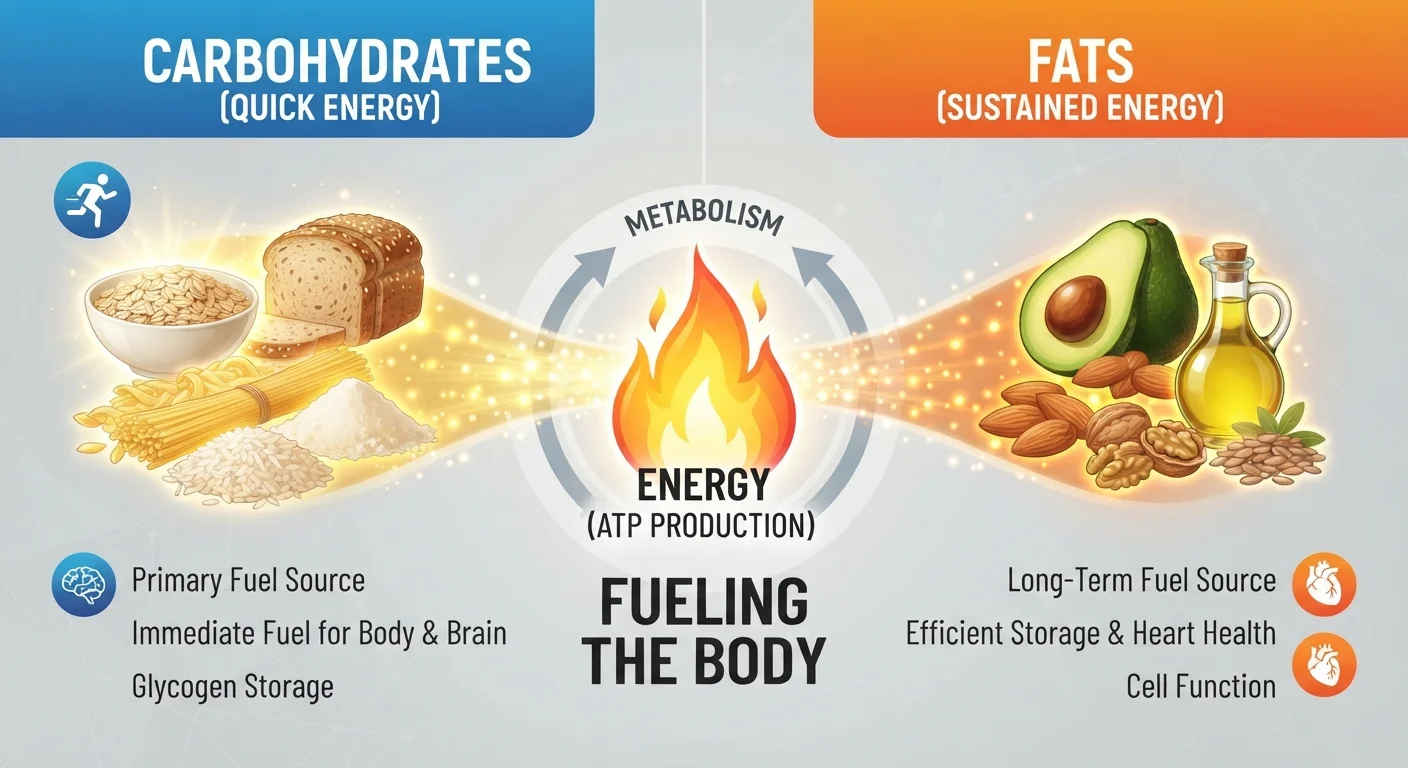
The three macronutrients — fat, carbohydrates, and protein — appear on every standard Nutrition Facts panel. Each contributes calories: fat provides 9 calories per gram, while carbohydrates and protein each provide 4 calories per gram. That calorie-density difference explains why a small amount of fat can add up quickly in total calories.
A Quick Sanity Check for Any Label
Before reading any other number on a label, confirm you know exactly what one serving looks like physically. Many misunderstandings about a food's nutritional content trace back to assuming the whole package is one serving. Taking five seconds to check servings per container prevents most label math errors.
What You Need Before Reading Any Label
Before interpreting any macronutrient numbers, gather a few quick reference points so the label makes sense in context.
What you will need
Once you have these reference points in mind, the label becomes a comparison tool rather than a disconnected list of numbers.
Step-by-Step: Parsing the Macronutrient Section
Follow these steps each time you read a nutrition label to build a reliable habit and avoid the most common misreading pitfalls.
Find and Read the Serving Size First
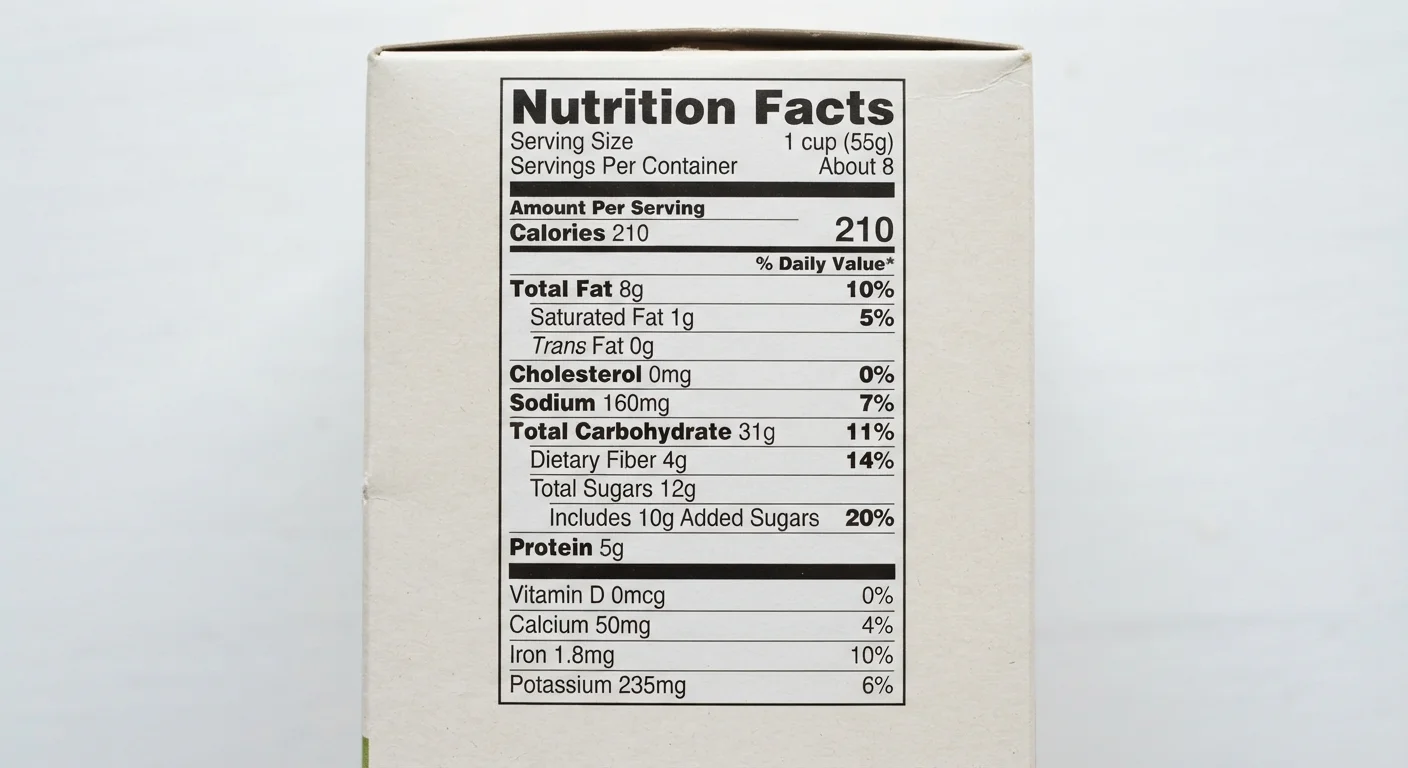
Locate the Serving Size at the very top of the Nutrition Facts panel. This is the unit to which every number on the label applies. Check the serving size in both the household measure (e.g., "1 cup") and the gram weight in parentheses.
Then look at Servings Per Container directly below it. If there are 2.5 servings in a package you'd typically eat in one sitting, multiply every macronutrient gram by 2.5 to get what you're actually consuming.
Read Total Fat and Its Subcategories
The label lists Total Fat in grams, followed by subcategories indented below it: saturated fat and trans fat are required; polyunsaturated and monounsaturated fat may also appear.
Saturated fat and trans fat are the subcategories most associated with cardiovascular risk in nutritional research. The DGA recommends limiting saturated fat to less than 10% of total daily calories. Trans fat, largely from partially hydrogenated oils, has no safe threshold according to established guidance, though naturally occurring small amounts exist in some animal products.
Decode Total Carbohydrates and Fiber vs. Sugars
Total Carbohydrates encompasses dietary fiber, total sugars, and added sugars — all listed as subcategories below the main line.
- Dietary fiber contributes to fullness and digestive health. Most Americans fall short of the recommended 28 grams per day (based on a 2,000-calorie diet).
- Total sugars includes both naturally occurring sugars (like those in dairy or fruit) and added sugars.
- Added sugars — now a required line on updated labels — tells you how much sugar was added during processing. The DGA recommends keeping added sugars below 10% of daily calories.
Evaluate the Protein Line
Protein is listed in grams but, unlike fat and carbohydrates, does not always carry a %DV on the label (it's required only when a protein claim is made on the package).
Protein needs vary meaningfully by body weight, age, activity level, and health status. The general population reference is 0.8 grams per kilogram of body weight per day, but this figure is a minimum baseline, not an optimal target for everyone. Use the grams-per-serving figure as a comparison tool between foods, not as a precise personal prescription.
Use %DV as a Relative Guide, Not an Absolute Target
The Percent Daily Value (%DV) column on the right side of the panel reflects how much of a nutrient a single serving contributes toward a 2,000-calorie daily reference diet. This reference is a population average used for standardization — it is not individualized.
%DV is most useful for quick comparison: a food with 25% DV of saturated fat uses up a large share of that reference limit in one serving, while one at 3% DV contributes very little. Think of the column as a directional signal — high or low — rather than a precise personal calculation.
For a deeper look at how to handle the micronutrient section below the macros — vitamins, minerals, and %DV thresholds — see our guide on reading a nutrition facts label for vitamins and minerals.
Common Label Claims and What They Actually Mean
Front-of-package marketing language is not regulated the same way the Nutrition Facts panel is. Terms like light, reduced fat, or high protein follow FDA definitions, but those definitions don't always align with what sounds intuitive.
- "Low fat" means 3 grams of fat or less per serving — but a product can be low in fat and still be high in added sugars or sodium.
- "High protein" (or "excellent source of protein") requires at least 20% of the Daily Value for protein per serving, which is 10 grams or more based on a 50-gram daily reference.
- "Reduced carb" or "low carb" are not standardized FDA terms for most foods, so these claims require you to check the actual label.
The reliable move is always to flip to the Nutrition Facts panel and read the grams directly. Front-of-package claims are designed to attract attention; the panel is designed to inform. For a broader take on what you can reasonably prioritize or skip on labels, reading nutrition labels without overthinking them offers useful perspective.
If you'd like to put label literacy into practice at the plate level, our guide on practical portioning without calorie counting shows how to translate nutrient awareness into real meal decisions. And for a quick lookup of calorie values and food sources per macronutrient, the macronutrient quick-reference guide is a convenient companion resource.
This article is for general informational and educational purposes only and does not constitute medical or dietary advice. Consult a registered dietitian or qualified healthcare provider for guidance tailored to your individual health needs.