Why Body Temperature and Sleep Are Tightly Linked
Sleep is not simply a passive state your brain falls into when tired — it is actively orchestrated by your circadian timing system. One of the clearest signals driving this system is core body temperature. In the hours approaching your habitual bedtime, your body initiates a drop in core temperature of roughly 1–2°F (0.5–1°C), a process driven by the release of heat through the skin via peripheral vasodilation. This cooling cues the brain that sleep time is near and supports the transition into the deeper, restorative stages of the sleep cycle.
When your bedroom is too warm, this heat-dissipation mechanism is blunted — your body struggles to offload warmth through the skin, core temperature stays elevated, and sleep onset is delayed. Conversely, an environment that is too cold can trigger thermogenic responses (such as shivering or increased metabolism) that also interfere with settled, consolidated sleep. This is not a comfort preference; it is physiology. For broader context on the habits that shape this system, see our overview of sleep hygiene and what the science actually says.
The relationship between temperature and sleep also intersects with your body clock. The circadian temperature rhythm is tightly coupled to the circadian alertness rhythm — which is why traveling across time zones or working night shifts disrupts both your temperature curve and your ability to sleep at the right times.
This Is General Information, Not Medical Advice
The guidance here is intended for general educational purposes. If you experience chronic sleep disruption, night sweats, or difficulty regulating body temperature, please consult a qualified healthcare provider. These symptoms can be associated with underlying medical or hormonal conditions that require professional evaluation.
How to Optimize Your Sleep Environment for Temperature
Understanding the mechanism is only useful if it translates into action. The steps below walk through the most evidence-supported environmental adjustments, roughly ordered from highest to lowest impact. None requires expensive equipment; most involve rethinking existing habits or making small changes to your bedroom setup.
What you will need
Set your thermostat to a cooler evening range
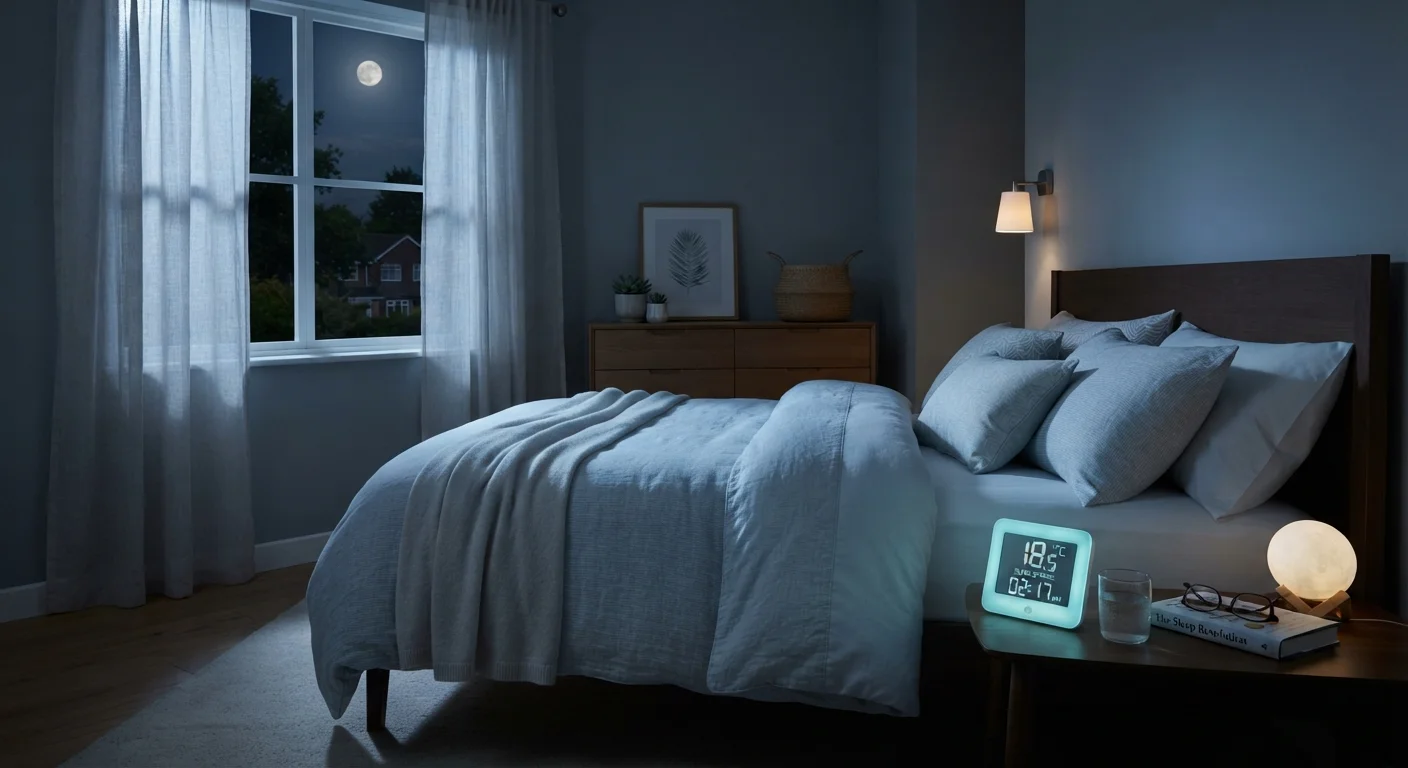
Begin lowering your room temperature in the hour before bed. Research published in journals such as Sleep Medicine Reviews generally supports a target bedroom temperature in the range of 65°F to 68°F (18°C–20°C) for healthy adult sleepers, though individual comfort varies. If a programmable thermostat is available, schedule it to drop a few degrees around an hour before your target bedtime.
Choose bedding that matches your sleep temperature needs
Swap heavy synthetic comforters for breathable natural-fiber options such as cotton or linen, which allow better heat dissipation. Conversely, if you tend to feel cold during the night, lightweight wool or a layered system lets you adjust without fully waking. The goal is to avoid bedding that traps heat and raises skin temperature above the level your body needs to stay in restorative sleep stages.
Improve bedroom airflow
Even in a temperature-controlled room, still air can trap radiated body heat near the sleeping surface. A ceiling fan on a low setting or a small box fan positioned to draw cool air across the room helps maintain convective cooling. If outdoor temperatures allow, briefly opening a window before sleep to exchange warm indoor air is effective and free.
Take a warm shower or bath 1–2 hours before bed
This step uses a well-documented physiological mechanism: exposure to warm water increases peripheral blood flow, and the rapid heat loss after exiting accelerates your core temperature drop. A meta-analysis of studies on passive body heating found that this practice was associated with faster sleep onset and improved subjective sleep quality. Aim for water temperature around 104°F (40°C) and limit the session to 10–15 minutes.
Limit heat-generating activities close to bedtime
Vigorous exercise elevates core body temperature and can keep it elevated for up to 90 minutes afterward, potentially delaying sleep onset if scheduled too close to bed. Similarly, large meals increase metabolic heat production. Wherever possible, finish intense workouts and heavy eating at least 2–3 hours before your intended sleep time. For more on habits that quietly erode sleep quality, see evening habits that work against a restful night.
Account for individual and life-stage differences
Children, older adults, and individuals experiencing hormonal shifts — including those in perimenopause or menopause — have meaningfully different thermoregulatory profiles. Older adults tend to have a reduced ability to dissipate heat, while hormonal fluctuations can cause night sweats that disrupt sleep regardless of room temperature. If standard environmental adjustments are insufficient, a conversation with a healthcare provider is the appropriate next step rather than experimenting further on your own.
Try a Warm Bath or Shower Before Bed
Counterintuitively, a warm shower or bath 1–2 hours before sleep can accelerate the core temperature drop needed for sleep onset. Warm water draws blood to the skin's surface; when you step out, heat dissipates rapidly, cooling your core. This mechanism is supported by multiple controlled studies and is one of the most evidence-backed behavioral sleep tips available.
For a comprehensive audit of your full sleep space — including light, noise, and clutter — the bedroom environment checklist offers a practical room-by-room framework. You can also explore the deeper science behind how environmental factors interact in our article on designing your bedroom for better sleep.
This article is for general informational and educational purposes only and does not constitute medical advice. Always consult a qualified healthcare professional for concerns about your sleep health or any related symptoms.